
10 tips: Dealing with higher fertiliser prices on grassland farms
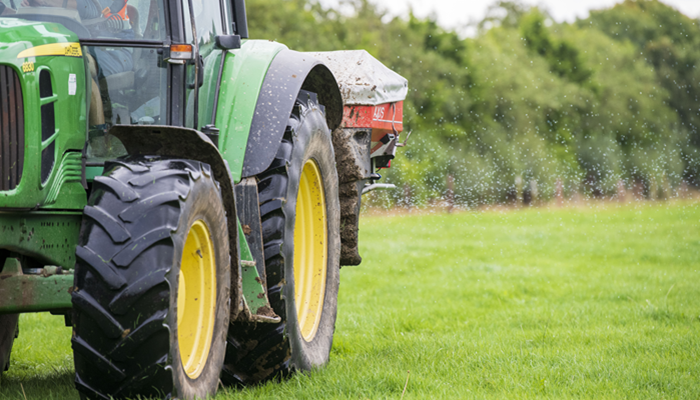
With the fertiliser market remaining volatile, Signpost Programme Training & Development Specialist, Mark Plunkett shares some essential reading for grassland farmers looking to manage through a year of high fertiliser prices.
Rising fertiliser costs are forcing many grassland farmers to rethink how they manage nutrient inputs. The good news is there are practical, farm-level steps you can take to reduce purchased fertiliser needs, protect yields, margins, while improving environmental performance.
Why act now?
Fertiliser is a controllable input: small changes in practice can give big savings. Improved nutrient use efficiency reduces waste, greenhouse gas emissions and run-off risk. Taking on different practices help reduce the global impacts which are outside our control. Read practical strategies below:
1). Start with a plan – soil test results
Get up-to-date soil tests for pH, P and K across your farm. This will form the basis for nutrient applications. It will provide a solid foundation as to where is best to apply different sources of available nutrients (manures and fertilisers). Where fertilisers have been purchased, use wisely to maximise utilisation. For example, apply maintenance rates of P and K and ensure adequate S applications to maximise utilisation of applied N.
2). Lime to the right pH
Correcting soil pH to target (~6.3-6.5 for ryegrass and 6.5-6.8 for clover/multispecies swards). This will ensure the best return on investment; it improves soil nutrient supply, fertiliser response, biological nitrogen fixation and persists for many years, reducing future fertiliser need.
3). Use organic nutrients efficiently
Make best use of slurry and farmyard manure. Apply in springtime with trailing shoe / band spreader to reduce N losses, and spread on most suitable days. Measure slurry nutrient content where possible and adjust application rates based on slurry quality (N-P-K). For example, diluting cattle slurry increases N availability but reduces P & K content.
4). Alternative sources of organic fertilisers
Consider importing organic fertilisers such as pig slurry or cattle slurry where available. Pig slurry is a well-balanced fertiliser and is ideal for grazing ground and can effectively replace the need for such fertilisers as 18-6-12 / 13-6-20 due to its similar nutrient profile. For example, 1,000 gals of good quality pig slurry is equivalent to one 50kg bag of 19-7-20.
5). Shift to legumes and mixed swards
Introduce clover (red clover in leys, white clover in grazing swards) to supply biologically fixed N. Well-managed clover can replace a substantial share (+100kg N/ha) of purchased N fertiliser over a year, lowering costs, improving animal performance and profitability.
6). Target inputs to performance
Apply N when conditions are most favourable to maximise uptake and utilisation by grass. For example, adjust fertiliser rates based on grass sward quality / seasonal demands. Favour high-performing paddocks (good soil fertility / reseeded in last 5 years) and reduce on poorer fields. Use PastureBase or farm records to match N to herbage demand and stocking rate.
7). Timing, placement and product choice
Split N applications to match grass growth and avoid heavy early-season single doses. Apply fertilisers when soils are warm and dry enough to reduce losses. Consider protected urea or urease/nitrification inhibitors to reduce costs and reduce total farm GHG emissions.
8). Improve slurry and fertiliser spreading efficiency
Set-up fertiliser spreader and calibrate to deliver correct rate and even fertiliser application. Calibrate LESS slurry technology to ensure correct rates of application. LESS technology reduces N loss and improves precision of slurry while reducing chemical fertiliser N use. Liquid fertilisers (UAN/Acidified N) are more precise and efficient forms of nutrients delivering productivity and environmental benefits.
9). Reseed and manage swards for efficiency
Carry out selective reseeding of poor performing swards; a younger, grass clover/multispecies swards typically return more grass per unit of N input. Good grazing management (optimum pre- and post-grazing covers) increases utilisation of home-grown forage and reduces purchased feed.
10). Reduce feed and input demand through herd management
Match stocking rate to grass growth, while maximising the production of grass silage to ensure sufficient quantities of quality winter feed while reducing input of concentrate feeds.
The above first appeared in the Farming Examiner as part of a Signpost Programme update.
For more from the Teagasc Signpost Programme, visit here.
More from Teagasc Daily: Reducing N inputs with multi species swards
More from Teagasc Daily: Sulphur improves efficiency of fertiliser N