Media
- Watch video of Ken describing his organic system
- Differences to conventional system
- What makes his farm profitable
Ken’s system demonstrates how organic suckler beef farming can achieve high performance through proactive management, strong genetics, and efficient grass utilisation.
Watch the video below where Ken highlights the differences between and organic and conventional system, and the key things that make his farm more profitable:
Maintaining strong animal performance in an organic suckler herd requires exceptional attention to detail. Ken focuses on herd health planning, excellent grassland management, and high-quality silage production. Careful sire selection is also key, with an emphasis on hybrid vigour, daughter milk, carcass weight, and finishing age traits to improve output efficiency.
Performance figures highlight this success. The 62 autumn-born calves were weighed pre-weaning on March 25th. Heifers averaged 252kg (0.98 kg/day), while bullocks averaged 264kg (1.01 kg/day). This represents an improvement of over 0.1 kg/day compared to 2024, driven by:
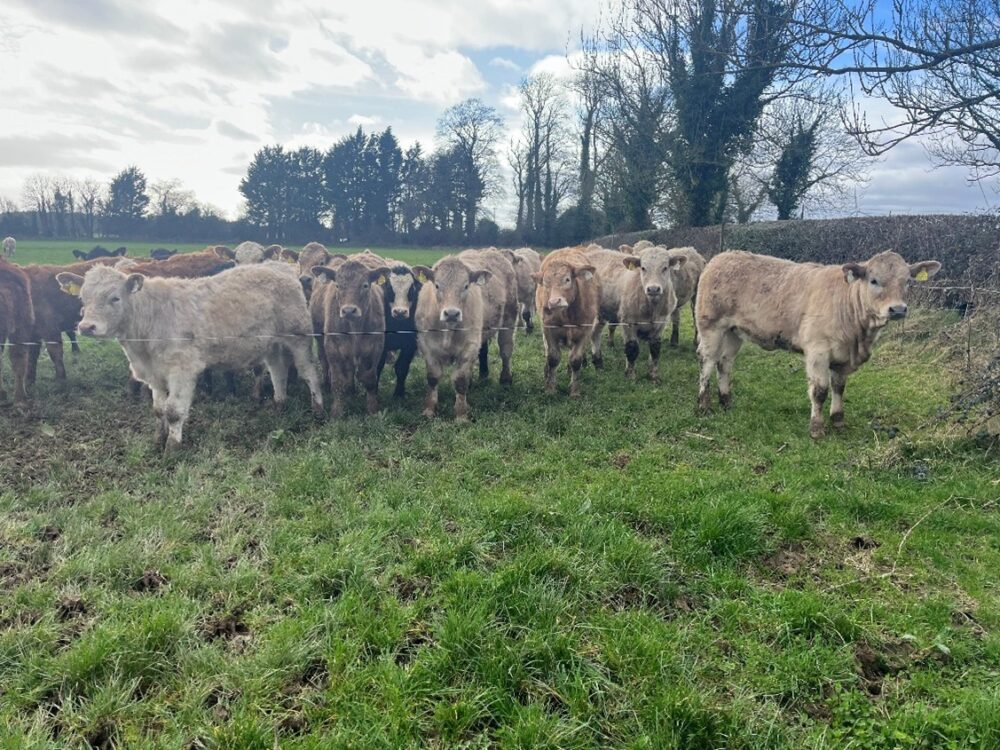
Figure 1: The 2025 calves are outperforming the 2024 born calves
The store cattle were also weighed on the same date. The 2024 born bullocks (31) averaged 513kg and gained 0.43 kg/day since housing on 26th November. The 2024 born heifers (29) averaged 452kg and gained 0.33 kg/day during the same period. They were fed red clover and grass silage over the winter period. In previous years they would have spent the month of December grazing turnips, rape and kale outdoors but that wasn’t available due to the crop rotation plan.
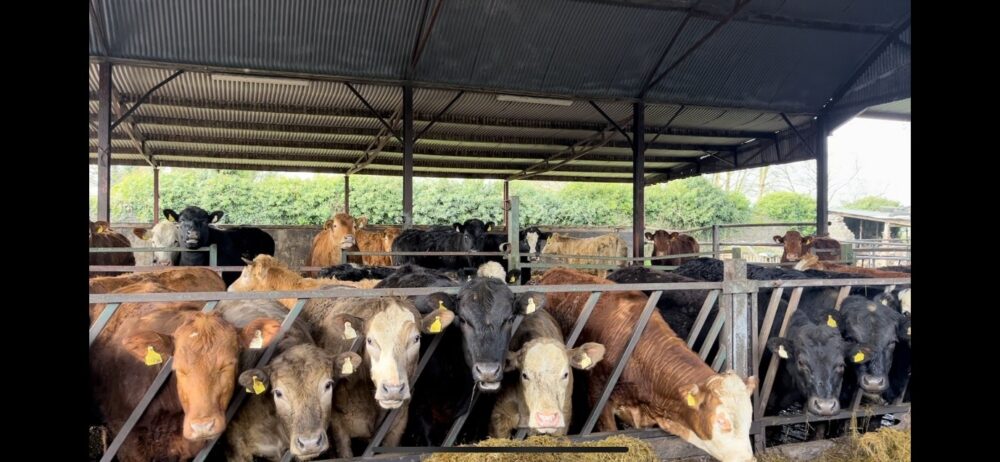
Figure 2: The 2024 born store cattle
The 2023 spring born cattle (4) that were born as a result of an uncastrated bull are weighing from 390 to 602kg. The 2 heifers averaged 0.1kg/day over the housing period and the 2 bullocks averaged 0.57kg/day.
Spring is a critical period for grass management on the farm. March and April create a grass supply pinch point, requiring careful grazing management. Post-weaning, calves are prioritised on the best grass, while store cattle utilise stubble ground. Dry cows are maintained on pea/wheat and grass silage indoors.
Silage ground management is also optimised, with slurry applied at 2,500 gallons/acre targeting high DMD (>74%) silage for May cutting. Red clover swards are managed separately to maximise yield and quality. Ken doesn’t graze the red clover, it was instead mulched in the autumn of 2025.
The grass wedge on 11th March shows an average farm cover of 472 kg DM/ha. The growth rate was 15 kg DM/ha/day since 26th February and demand was 14 kg DM/ha/day with the weanlings and store cattle at grass full time. It also showed 34 days of grass ahead which Ken is trying to build up for turning the cows out to grass in April. His main season grazing plan is that the weanlings graze a paddock on day 1 and move on, the yearlings graze the same paddock on day 2 and the cows clean it out on day 3 as they will be dried off by then. This prioritises the best grass for the younger stock and reduces parasite burdens.
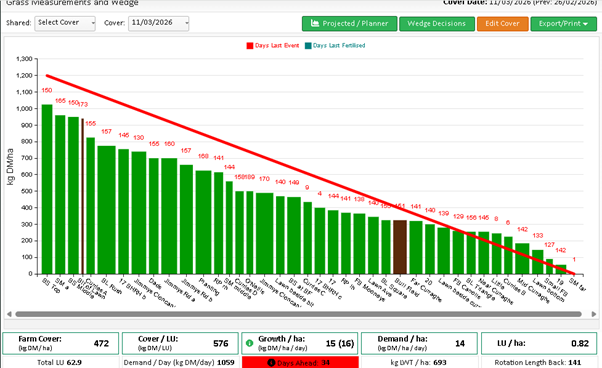
Figure 3: Grass wedge on 11th March 2026