

- NMP completed for the farm
- Current soil fertility status
- Lime, slurry & fertiliser plans

Soil Fertility
Grassland
This week’s grass wedge shows an average farm cover of 315 kg DM/ha, which is significantly below the Teagasc target of 600–700 kg DM/ha for late June on a suckler beef system. Demand is running at 26 kg DM/ha/day, while grass growth is only 13 kg DM/ha/day, creating a substantial grass deficit of approximately 13 kg DM/ha/day. The wedge highlights the impact of the current dry weather conditions, with growth failing to meet livestock demand and farm cover being drawn down rapidly.
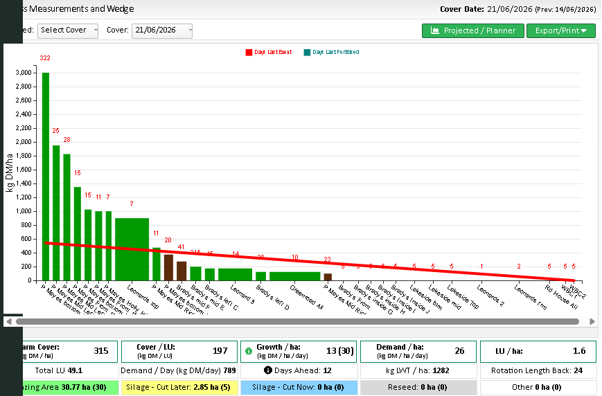
Figure 1: Grass wedge on 21st June 2026
The majority of paddocks are carrying covers below 1,000 kg DM/ha, with only a small number of heavier covers remaining. Several paddocks have covers below the optimum pre-grazing target, indicating that stock are likely grazing into lower residuals and reducing regrowth potential. Current stocking pressure is evident from the low average cover and the absence of a strong grass surplus anywhere on the farm.
For this time of year, Teagasc targets for a suckler-to-beef system are:
- Average Farm Cover (AFC): 600–700 kg DM/ha
- Pre-grazing yield: 1,300–1,500 kg DM/ha
- Residual: 4 cm (approximately 150 kg DM/ha)
- Rotation length: 18–21 days in normal conditions
- Growth rate: Expected 50–70 kg DM/ha/day during June
Given the drought conditions, management should focus on protecting grass plants and maintaining ground cover. Rotation length should be extended to 25–30 days where possible to allow paddocks additional recovery time. Trevor can avoid grazing paddocks too tightly, as this will further weaken plants and delay regrowth when rainfall returns.
Supplementary feeding may be required to reduce grazing demand. Introducing silage, hay or concentrates can help bridge the current feed deficit and protect remaining grass. Where possible, Trevor can identify the strongest paddocks and allow them to build cover for future grazing.
Nitrogen applications should be reviewed carefully. Applying chemical nitrogen during prolonged dry conditions is unlikely to give a response and may not be cost-effective until significant rainfall is forecast. Once moisture returns, grass growth can recover quickly if adequate leaf area has been maintained.
The priority over the coming weeks is to slow the decline in farm cover, reduce demand where possible, and preserve grass quality so the farm is well positioned to respond when rainfall returns.
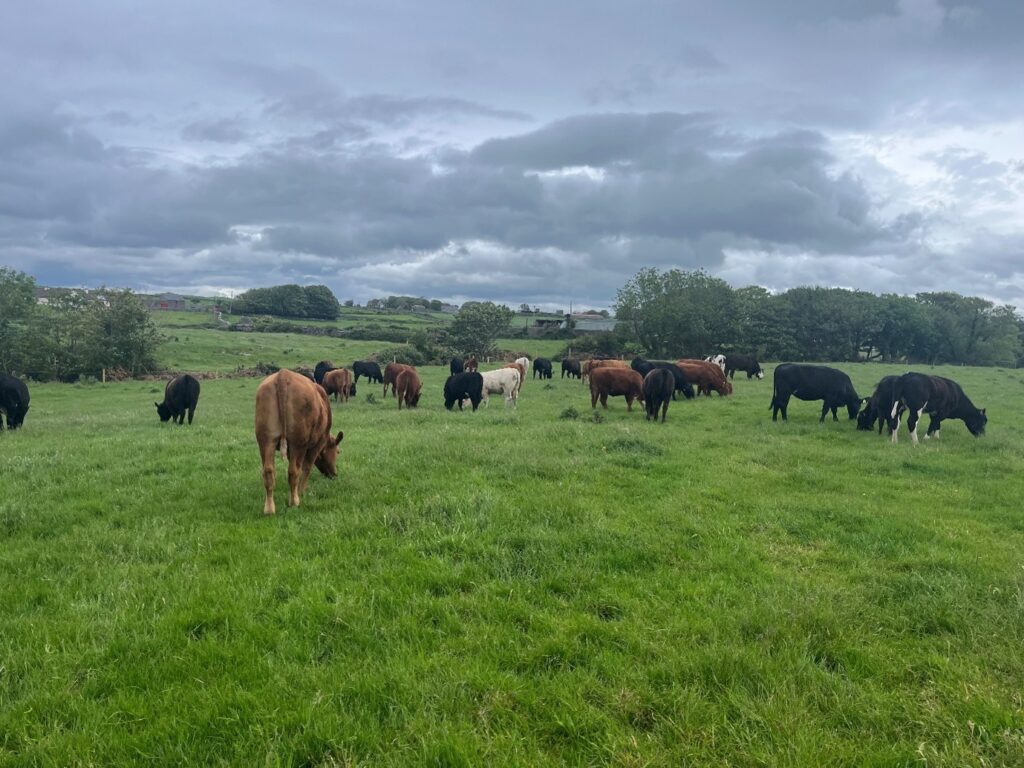
Figure 2: Dairy beef heifers grazing a freshly allocated paddock on 3rd June 2026
Soil Fertility
A Nutrient Management Plan (NMP) has been completed for Trevor’s farm based on current stocking rates, soil analysis results and available organic manures. The farm comprises 58.51 hectares with a stocking rate of 111 kg organic N/ha. The overall objective of the plan is to optimise grass production, improve nutrient use efficiency and maintain soil fertility while complying with environmental regulations.
Recent soil analysis indicates that 72% of the farm is at Index 1 and 2 for phosphorus (P), 19% is at Index 3 and 9% is at Index 4. Soil pH averages >6.2, while potassium (K) levels are satisfactory on 41% of the grazing platform.
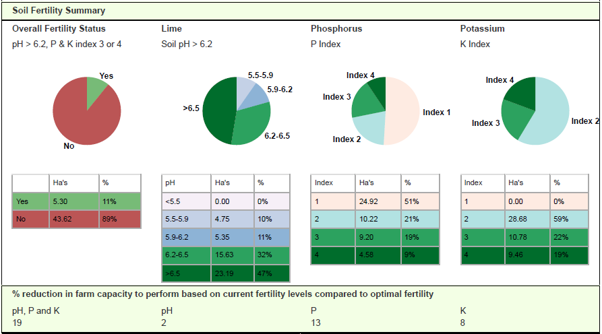
Figure 3: Soil fertility summary for Trevor’s farm
Based on the soil test results, a total of 49 tonnes of lime has been recommended to correct soil pH and improve nutrient availability. Lime applications will be prioritised on paddocks with pH levels below the target of 6.2 for mineral soils.
The farm is expected to produce approximately 476 tonnes of organic manure during the year. Slurry applications have been targeted towards silage ground and paddocks with low phosphorus and potassium levels to maximise nutrient recovery and reduce the requirement for purchased fertiliser.
The total nitrogen requirement for the grazing platform is estimated at 114 kg N/ha. Phosphorus and potassium requirements will be supplied through a combination of slurry and compound fertilisers, with planned applications of 17 kg P/ha and 26 kg K/ha on average.
Protected urea will be the primary nitrogen source used on the farm to improve nitrogen use efficiency and reduce ammonia emissions. Low-emission slurry spreading (LESS) equipment will continue to be utilised where possible to maximise nutrient retention and support environmental sustainability. Ps and Ks can also be spread in the form of 18-6-12.
The implementation of this Nutrient Management Plan is expected to support grass growth to match stocking rate, improve soil fertility across the farm and reduce fertiliser costs through more efficient nutrient utilisation. Progress will be reviewed throughout the grazing season, with fertiliser applications adjusted where necessary to reflect weather conditions, grass growth performance and stocking demand.
Key actions for 2026:
- Apply 49 tonnes of lime.
- Target slurry to silage ground, followed by Index 1 and 2 soils.
- Do not exceed N and P fertiliser limits.
- Complete soil sampling on 9.59 hectares due for testing.
- Review nutrient balances in July 2026.