
Soil Structural Degradation
Soil degradation processes
Soils are vulnerable to damage with wet and high precipitation levels in Ireland increase the likelihood of soil degradation. The two primary soil degradation processes found in Ireland are soil compaction and soil erosion.
Soil compaction
Soil compaction is simply the squashing of the soil aggregates together, reducing the amount of macro-pores and in severe cases, reducing the amount of micropores. Imagine that the cube of soil was compacted, not only does the cube now contain less air, but rain water will be restricted from draining through, leading to water-logging or water to run-off over the soil surface.
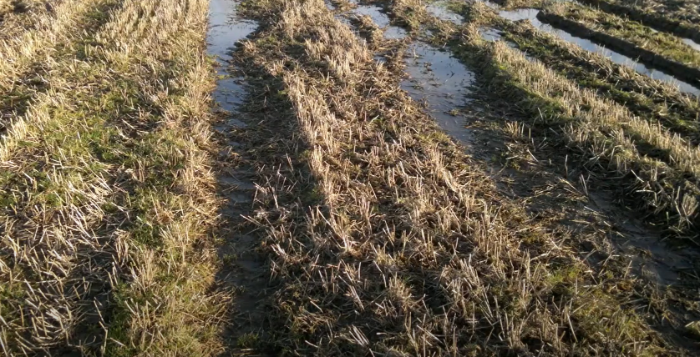
Water sitting on surface due to impeded drainage.
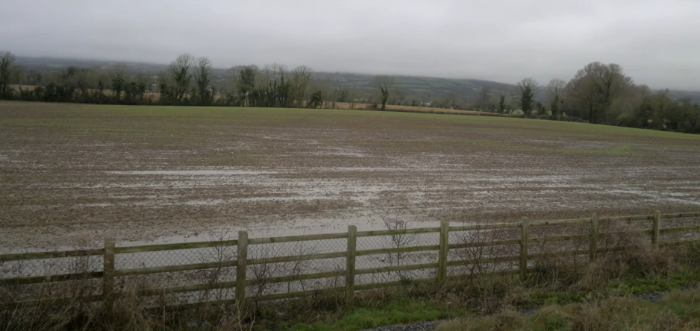
The presence of water across the field suggesting a compacted layer.
When a soil is compacted plant roots will stop functioning as they cannot breath or simply do not have enough space or strength to grow between aggregates. Research in Ireland showed that compaction, which caused a 12 % reduction in total soil porosity, a 15 % increase in bulk density (a measurement of the density of the soil), led to a 20 % reduction in winter barley yield compared to un-compacted soil.
Soil Erosion
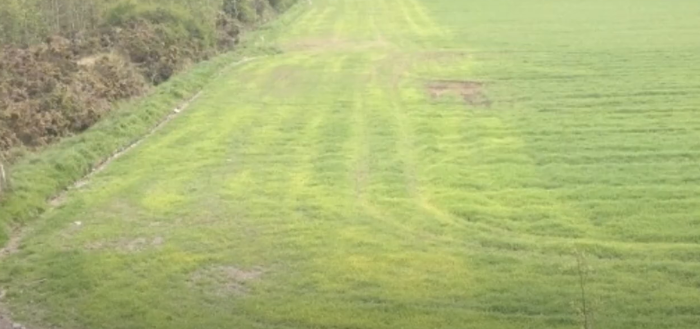
Soil erosion refers to the movement of soil particles by water across the soil surface. This topsoil particles, rich in nutrients, is worn away or displaced by natural forces like water, or human activities. This often occurs when protective vegetation is removed, leaving the soil exposed and vulnerable.
Erosion can lead to the loss of fertile land, reduced agricultural productivity, and increased sedimentation and eutrophication in rivers and streams, which can harm water quality and aquatic ecosystems.
The extent of soil movement is influenced by several factors. Environmental elements such as the duration and volume of rainfall and the topography of the land play a significant role. Growing crops can provide some protection, but the extent of soil erosion is worsened when soil compaction occurs, as rainwater struggles to infiltrate the soil.