

Edited By
Catherine Egan
Beef Specialist
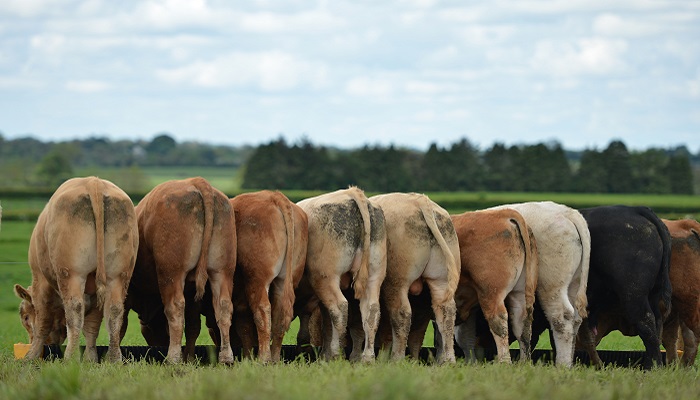
From grassland management, drafting for finishing and preparing for weaning, Teagasc Beef Specialist, Catherine Egan shares key management notes for beef farmers for the month of August.
Grassland management
Grass quality remains a challenge on many farms currently dealing with drought conditions, even before thoughts turn to building grass for the autumn.
- Walk the farm to assess grass growth and supply on farm
- Even where growth is low, walking the farm allows you to assess recovery of paddocks and make informed decisions
- Grass DM are above 20% across the country, avoid underestimating covers
- Implement a strip wire to correctly allocate grass to cows and maximise utilisation
- Paddocks that are brown to the base and not actively growing should be targeted for grazing
- Aim to stretch rotation length to 25 days
- Identify paddocks that are green to the base and are actively growing
- Mind these paddocks and graze over 1,000 kg DM/ha
- Feed this grass to priority animals (dairy beef calves, weanlings, lambs)
Consider lime application on your farm
Now is also a good opportunity to start thinking about lime application for your farm. Consult your soil results and apply lime to paddocks that require it before weather and ground conditions start to deteriorate later in the autumn.
Only apply lime based on a recent soil test report. Target lime to grazing paddocks with low covers (≤ 500 kg DM/ha), recently cut for round bales or reseeded ground. Apply final fertiliser application as per farm nutrient management plan.
Prepare for scanning
Pregnancy scanning spring-calving cows should be carried out about 30 days from when the last cow in the herd was served.
Scanning at this time will ensure accuracy, as it is difficult to pick up very early or late pregnancies within the herd.
Predicting expected calving dates is important when it comes to managing cows over the winter. Late-calving cows can be restricted on feed to stop them getting over fat. Thinner cows, in-calf heifers or cows carrying twins (usually detected at scanning time providing cows are not more than 12 -14 weeks in calf) can be taken out and given priority access to better quality silage or additional feed if necessary.
Identifying empty cows in the herd and selling them off the farm can result on a saving on feed and shed space. On highly stocked farms, selling cull cows early can help to reduce the overall organic Nitrogen produced on the farm.
Drafting for finishing
Slaughtering cattle off grass at the end of the second grazing season is an efficient system that can be implemented on farm with early-maturing calf-to-beef heifers, and similarly with their steer comrades who are advanced enough at this stage of the year.
Early finishing will allow more younger stock to be carried, free up shed space and negate the need for a more expensive winter finishing period.
For this system to work, be it with heifers or steers, a high level of animal performance is needed throughout the animal’s lifetime and a good weight for age is needed at the start of finishing.
A short meal feeding period at grass of six to eight weeks starting in the period mid-August to mid-September is optimal before slaughter in October.
Points to consider:
- Base finishing decisions on recent cattle weighing; all cattle should be within 60kg of slaughter weight at meal feeding start.
- Lighter cattle can begin finishing when housed later in autumn. Some dairy-bred steers with stockier builds may also suit an early finish.
- Split meal feeding into a morning and evening feed if more than 4kg is being fed.
- The meal fed should be high in energy (0.95UFV/kg), a protein content of 12-14% crude protein is adequate; and,
- Draft cattle for slaughter regularly to maximise percentage with correct fat score.
Planning for weaning
Weaning is a stressful time for calves, and poor management reduces performance. On one Future Beef farm, good weaning practices led to calves being 45kg heavier at housing. Effective weaning is vital for growth and especially important when preparing calves for sale. Preparing in August helps manage stressors like castration more calmly and welfare friendly.
Vaccination
Begin vaccination programmes well in advance; some (e.g. Clostridial vaccines, Mannheimia/Pasteurella vaccines) require up to 6 weeks to complete before weaning. Ensure vaccines are administered before any major stress events.
Castration
Ideally done at least four weeks before weaning. Alternatively, it can be carried out two weeks post-housing, when calves have adjusted and stress is reduced. Avoid castrating too close to vaccination, as stress may impair immune response.
Nutrition and Body Condition
Ensure calves are on a good plane of nutrition to support health, immunity and reduce post-weaning performance loss. Calves should be eating 1kg of creep feed per day before weaning to ensure a smooth transition. After weaning, increase to 2kg for heifers and steers and 3kg for bull weanlings.
Creep feeding
Introduce creep feed four weeks before weaning to ease the dietary transition and support continued weight gain.
Table 1. Weaning preparation calendar: August/September
| Date | Action | Details/Notes |
| August 1 | Start clostridial vaccination preparation | Begin two-shot primary course, if not done as calf |
| August 15 | Pneumonia vaccination (first dose) | Two-shot (Mannheimia): first dose |
| IBR vaccination | If one-shot programme, give IBR now. | |
| August 16 | Introduce creep feed | Build up to 1kg/head/day gradually pre weaning |
| August 30 | Castration of male calves + clostridial | Follow legal rules (further details in factsheet below) |
| September 15 | Pneumonia vaccination (second dose) | Two-shot pneumonia: second dose |
| Wean two weeks later | ||
For further information, view the Future Beef Programme’s factsheet on Plan for Weaning (PDF).
Dates for your diary
DairyBeef 500 Farm Walk
On Thursday, September 3, the DairyBeef 500 team will host a farm walk on the farm on James O’Sullivan, Co. Cork.
Further details on the event will be made available here.
Future Beef Programme Farm Walk
On Friday, September 4 at 6pm, the Future Beef team will host a farm walk on the farm of James Skehan, Ballynevin, Bridgetown, Killaloe, Co. Clare, V94 VW1H.
Topics to be covered include:
- Financials
- Breeding
- Soil health
- Herd health
- Red clover and grazing infrastructure
- Finishing cattle demonstration
Refreshments will be provided on the evening.
Further details on the Future Beef Farm Walk on James Skehan’s farm are available here.
Demonstration Farm Programmes
The Teagasc Drystock Knowledge Transfer Department run dedicated demonstration farm programmes in the areas of suckler and dairy beef.
For the latest from the DairyBeef 500 Programme, sign up to its frequent e-newsletter here.
For the latest from the Future Beef Programme, sign up to its monthly newsletter here.