
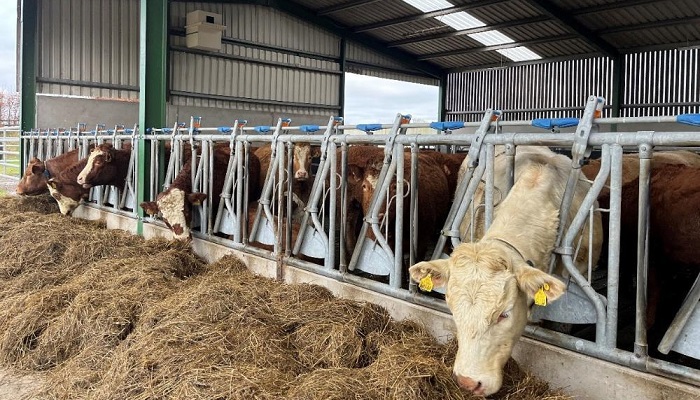
With cattle now housed, Beef Specialist at Teagasc, David Argue reminds us why lice and mite infestations shouldn’t be overlooked over the winter months.
Lice and mite infestations become a much greater risk when cattle are housed. These parasites cause intense itching and skin irritation, leading to restlessness and hair loss. As cattle spend more time scratching than eating, performance over the winter months can drop quickly. Spotting the problem early and taking action is essential.
Clipping cattle along the back and around the tail head is a simple but effective winter job. It reduces sweating, helps cattle stay cleaner and makes it harder for lice to move and multiply. Clipping also improves the effectiveness of pour-on products by helping them reach the skin properly.
Lice thrive during the winter because cattle grow thicker coats, providing an ideal hiding place. In contrast, during summer when coats are shorter and cattle are exposed to more sunlight, lice numbers tend to fall.
Their life cycle is straightforward. Adult lice live on the hair and move down to the skin to lay their eggs. Once these eggs hatch, young lice (nymphs) develop quickly and become adults in a matter of weeks. Without treatment, numbers can build rapidly, causing severe irritation and skin damage.
The signs of lice are usually easy to spot. Affected cattle will have patches of hair loss and appear itchy and unsettled. You may see them rubbing on gates, walls and barriers or stretching awkwardly to lick irritated areas.
There are two types of lice: biting lice and sucking lice and two main product groups used to control them:
- Pour-on synthetic pyrethroids
- Injectable or pour-on avermectins
Injectable and pour-on avermectins work well on sucking lice and mange mites, but only pour-on treatments are effective against biting lice. Pour-ons spread through the fat layer under the skin, which is where biting lice feed. For best results, always clip backs before applying pour-ons and avoid under-dosing.
Practical tips for effective control
- Clip thick coats along the spine at housing to improve product performance.
- Treat the whole group together to avoid reinfestation.
- Dose bought-in animals before mixing with the main housed group.
- Recheck cattle after 2–3 weeks and retreat if needed as newly hatched lice may not be killed by the first dose.
Good clipping and correct lice control help keep cattle clean, comfortable and thriving throughout the winter housing period.
New antiparasitic medicine rules
From December 1, new rules on veterinary medicines came into effect as part of Ireland’s national strategy to tackle antimicrobial and anti-parasitic resistance.
These changes mean that a range of commonly used products will now require a veterinary prescription, and all prescriptions will be issued and recorded through the National Veterinary Prescription System, or NVPS.
For more information on this, listen to the episode of the Beef Edge podcast below where Catherine Egan and Ciaran Lynch, Beef Edge and OviCast podcast hosts, were joined by Rebecca Fitzpatrick, Superintending Veterinary Inspector with the Department of Agriculture, Food and the Marine, who outlined the changes affecting beef and sheep farms this year:
More from Teagasc Daily: Achieving the perfect balance
More from Teagasc Daily: Controlling liver fluke in dairy beef animals this winter