
Finding the optimum summer stocking rate
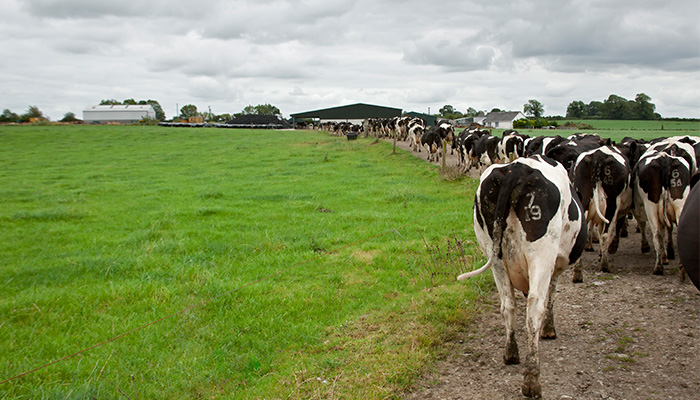
To correct/maintain grass quality through June, July and August, there must be flexibility in the grazing system, Teagasc Dairy Specialist, James Dunne writes on the importance of finding the optimum stocking rate.
Best practice grazing management over the summer months is to maintain pre-grazing herbage mass between 1,300 and 1,500kg DM/ha and target a post-grazing sward height of 4.5cm.
Grazing conditions have been difficult this spring, therefore grass quality on a lot of farms needs correction. To correct/maintain grass quality through June, July and August, there must be flexibility in the grazing system to allow for surplus paddocks to be taken as bales thus ensuring quality regrowth.
This flexibility will be determined by the herd demand throughout this period. On a lot of farms, this is dictated by the decision around how much land is closed for second cut silage on the grazing platform.
Table 1 below shows the daily grass demand per hectare at different stocking rates. The target grass allowance in this example is to maximise herd performance from grazed grass and would typically mean a grass DM daily intake of 16.5 – 17kg per cow prior to concentrate supplementation.
When you look at typical average growth rates across this period, they range from 55-65kg DM/ha/day. Setting herd demand above this will: increase pre-grazing yields; reduce grass quality; reduce animal performance; increase concentrate fed thus increasing the overall cost structure.
As a rule of thumb, farms that grow 12T DM/ha annually should stock the farm at 3.0 LU/ha during this period, while farms that grow 14T DM/ha annually should stock the farm at 3.5 LU/ha. This will allow approximately 25% of the grazing area to be taken as surplus during this 10-week period (1st June – 15th August).
Farms that have experienced reduced growth rates due to drought conditions over the last number of seasons should: set demand based on average growth rates over a 5-year period; make provisions for adequate silage stocks from other land sources rather than overstocking the grazing area; and target to have second cut silage crops made by 15th July.
Table 1: Daily herd demand at different stocking rates
| Stocking rate after second-cut ground closed (LU/ha) | 3 | 3.5 | 4 | 4.5 |
| Grass allowance (kg DM/LU/day) | 18 | 18 | 18 | 18 |
| Demand (kg DM/ha/day) | 54 | 63 | 72 | 81 |
More from Teagasc Daily: Breeding targets for 2026
More from Teagasc Daily: Measuring efficiency in the main grass growing season