
Grazing focus: Troubleshooting common issues with electric fences
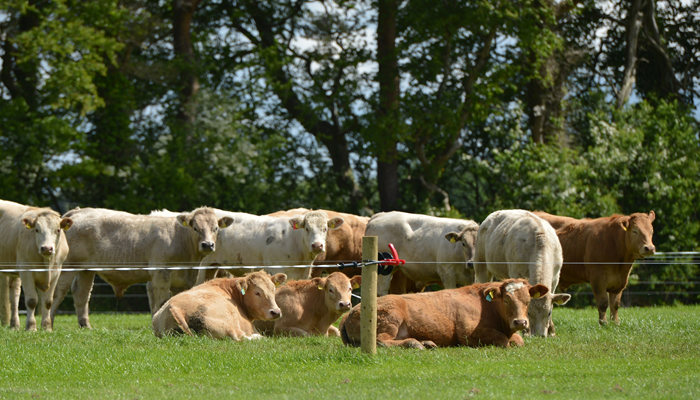
A go-to fencing system on many cattle farms, Teagasc Beef Specialist, Catherine Egan writes on some of the common issues that occur with electric fences.
Checking the installation
Ensure the connections between fencer and fence are firm and with a good connection. If the wires are passing through a wall you need to make sure that they are properly insulated. If this is not done, there is the possibility of power being diverted from the fence into the ground.
All installations must be open circuit with the outgoing wire fully insulated to avoid shorts to earth. All joints and connections should be made simply, firmly and above all be very tight, using the correct joiners for the purposes and good quality insulators.
Regular inspection of the line is essential of permanent fences. Weeds and branches touching the line should be removed. Avoid vegetation growth or other items touching the wire fence as this reduces efficiency and performance, particularly during damp and wet conditions or periods of lush growth.
Earthing system
Without an earthing system for the fencer, there would be no shock at the fence line. An earthing system works in much the same way as an aerial does for a radio but instead of collecting airwaves, the earthing system picks up electrons from the ground, which are transmitted with each pulse out along the fence line. The stronger the fencer the better the earth required.
Electrical current passes through soil but does so more easily in moist or mineral soils than would be the case in dry stony soil. Therefore, before deciding how many earth bars are required, take three factors into consideration:
- The type of soil.
- High power or low power fencer.
- The load one can expect on the fence system and the length of fence.
Earthing/grounding rod
Use the proper type of grounding rod. In most cases, pipe or rebar can be used. The grounding rod needs to be made of galvanized steel and also needs to be at least four feet in length for best results. Using copper rods will diminish the overall effectiveness of the electrical fence system.
In some cases, it may be necessary to add several grounding rods to the grounding system. In fact, the majority of electrical fence systems will actually require at least three grounding rods. These rods should be about 10 feet / 3m apart and should be placed at the start of the fence. Grounding rods can actually interfere with phone service as well as electrical lines that may be located on the farm. For this reason, it’s important to place grounding rods as far away as possible from utilities. This is especially true in relation to phone lines.
Installing the earthing system
For the exact number of earth bars to be used, refer to the manufacturer’s guide. Having decided on the number of bars required for the size of your fence, dig a trench 150mm deep from where the first bar is going to be, to where the last one is. Then using 1m galvanized rod earth bars, drive all bars, spaced 3m apart, down until they are flush with ground level. Connect heavy duty high tensile underground cable from one earth bar to the other until all earth bars are connected in a daisy chain manner – not breaking the connection from the first earth bar to the last. Ensure they are securely bonded. Double insulated cable is UPVC coated 1.6mm/2.6mm mild steel wire.
It is highly recommended for permanent electric fence installations to ensure all the energy from your electric fence fencer gets to your electric fence line. This versatile cable is used to also connect your fencer to your earthing system and to carry high voltage power under your gateways.
Checking earthing system
When the earthing system is installed, it is vital to test it. First, you need to simulate heavy vegetation loading on the fence line. Place an iron bar in the ground about 100m out along the fence and lean it against the fence wires. Plug in the fencer and check the voltage reading along the fence line. If it reads 1,000 volts or less, a sufficiently heavy load has been put on the fencer. If the voltage is still above this, place more iron bars along the line until the voltage drops to 1,000 volts or less.
Leaving this load on the line, take a voltage reading on the earthing system. A small reading on the earthing wire is ok as long as it does not exceed 300 volts. If it does exceed 300 volts, the earthing system is not sufficient, and you have to install more earth bars.
Lightning diverter system
It is recommended that all permanent fencers be fitted with a lightning diverter to help protect from lightning damage. It diverts lightning from the fence to the earth to protect the fencer.
Visibility and maintenance
Visibility of an electric fence is very important too. The animal will remember the shock it received and will respect the fence as a barrier. It is important to monitor the voltage of the fence on a weekly basis to ensure there is sufficient current throughout the fence line.
For further information, view the Teagasc Beef Farm Infrastructure Book here (PDF).
Related reading: Growing more grass with the wire: 4 steps for beef farmers
Related reading: Keeping enough ‘spark’ in your electric fence
Related reading: Don’t let water be the weak link on your farm