
Maximising lamb thrive
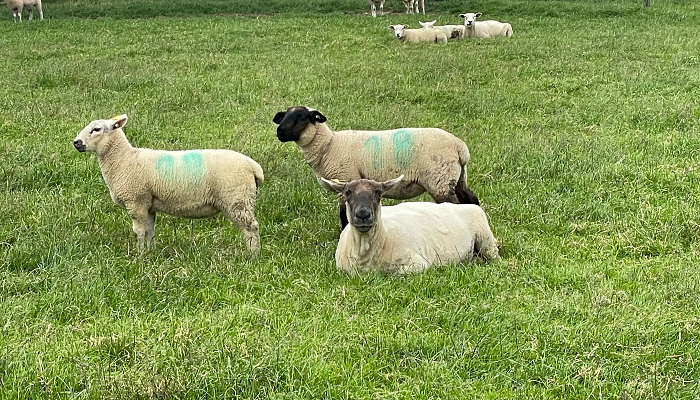
After a challenging spring, Damian Costello, Teagasc Sheep Specialist, outlines strategies to maximise lamb performance between now and weaning.
The inclement weather in late March/April has been challenging on lamb performance. However, with conditions thankfully improved, there is still time to get lambs on track to achieve good liveweights at weaning.
A realistic target for daily liveweight gain from birth to weaning on a grass-only system would be 325g/day for lambs reared as singles and 280g/day for twin reared lambs.
This would lead to an average weaning weight of around 38kg for singles and 32kg for twins.
If lamb performance is 50g/day below target, which doesn’t seem a lot, it will result in lambs being on average 5kg lighter at weaning. This will have a negative impact on lamb drafting pattern and overall flock performance for the rest of the year. We will now look at some of the main factors affecting lamb performance on grazed grass.
Lambs transition to a mainly grass diet
Lactating ewes reach their peak milk yield 3 to 5 weeks post lambing, meaning that when lambs reach 7 or 8 weeks of age, they are becoming more reliant on grass to meet their nutritional needs.
Lamb performance generally declines at this stage but this dip in performance can be kept to a minimum if high quality grass is kept in front of them. The aim should be to have ewes and lambs going into grass covers of 8 – 10cm and moving them when they have grazed down to about 6cm.
Allowing them to graze tighter will negatively impact lamb performance. Heavier grass covers tend to be more stemmy, which leads to lower energy content as well as lower intake characteristics. These types of swards should be cut as surplus bales or possibly grazed by cattle.
If grazing group size is not sufficient to graze out an area in about 3 to 4 days one option is to increase the group size. Where this is not practical, temporary electric fencing should be used to subdivide paddocks to the appropriate size for the grazing group.
Despite the increased fertiliser cost this year, a little and often application of nitrogen (N) in the form of protected urea should not just grow sufficient grass for livestock but will also maintain quality of grass.
Keep a step ahead of lameness
A study carried out in the UK suggested that each lame foot could result in up to 50g/day reduction in lamb liveweight gain. At this time of year, the most common cause of lame lambs is scald, identifiable as an irritated area between the digits of the hoof. Early intervention is key as it will spread rapidly.
In smaller flocks, individual treatment with topical sprays will be possible but in general a whole flock approach is best. If footbathing of the flock in a 10% zinc or copper sulphate solution is done correctly, there is an excellent response in treatment and prevention of scald.
For further insights on controlling lameness, listen to a recent episode of the OviCast podcast where Jake Delaney joined Ciaran Lynch to discuss scald in lambs:
Internal parasite control
Stomach worms are the main parasite causing ill-thrift in lambs. Lambs born in early March or before have probably been dosed for Nematodirus in mid to late April. For later lambs, treat with a white drench at five to six weeks of age once they are eating enough grass to ingest the infective larvae or as soon as any symptoms such as scouring are observed. The advice is to use a benzimadazole based product (white drench) for Nematodirus with a second treatment needed where there is a wide age range of lambs in grazing groups.
For further insights on Nematodirus control, read an article from Dr. Orla Keane here: Nematodirus in lambs
From now on, strongyle worms can become a challenge for lambs and testing faecal samples every two to three weeks can monitor worm burden and inform dosing decisions. Talk to your vet/advisor about carrying out a drench test to check the efficacy of the anthelmintic classes being used on your farm.
Shortage of grass
The provision of concentrates to lambs in creep feeders pre weaning adds significant cost to a mid-season lamb production system. However, in cases where grass availability is an issue, it may be the only option to keep lambs thriving. The other option where grass is tight is to consider weaning lambs early at say 10-12 weeks of age so that available grass can be prioritised for lambs and ewes can be dried off on lower covers or following the lambs.
More from Teagasc Daily: Blowfly control in sheep flocks
More from Teagasc Daily: Don’t let scald be a gateway to more costly lameness issues