
Mineral supplementation in lambs
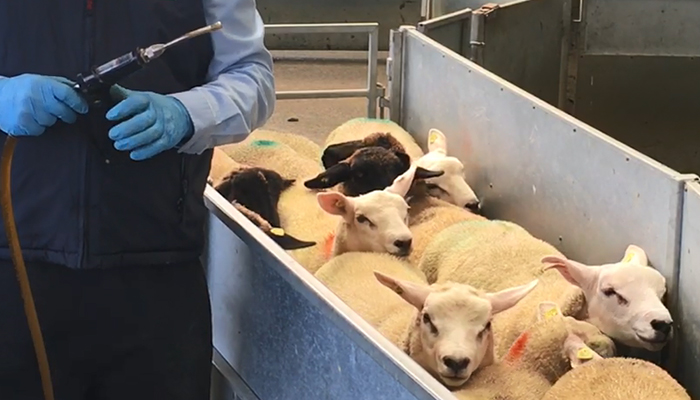
Michael Gottstein, Teagasc Head of Sheep Knowledge Transfer, discusses the importance factors to consider with mineral supplementation, focusing on supplementation routes, frequency and the importance of examining effectiveness from a cost and time perspective.
Post weaning is the time that many farmers experience the biggest challenges in terms of maintaining lamb performance. It’s important to remember that lamb performance is affected by many different factors of which mineral deficiency is only one.
The main factors affecting lamb performance are:
- Nutrition (quality)
- Dry matter intake (quantity of feed consumed)
- Weather
- Health status, parasite burden, absence of lameness etc.
- Minerals
The whole area of mineral deficiency and how minerals are supplemented is very complicated; there are lots of interactions between minerals and differences in mineral compound availability and how minerals are delivered (e.g. drench, bolus, loose mineral or mineral lick bucket).
The main minerals that are of concern from a sheep point of view are:
- Macro minerals: Calcium and Magnesium, which are required in grams per day.
- Micro minerals (milligrams/day): Cobalt, Copper, Iodine and Selenium are the other commonly supplemented minerals which are required in tiny amounts.
A farm-specific issue
Mineral deficiency is very farm specific and depends on soil type and fertiliser applied. It is, therefore, important to try to find out what minerals are lacking on your specific farm. A conversation with your vet and some blood/tissue samples will be required.
On Irish lowland sheep farms, the mineral that is most frequently found lacking in lamb diets is Cobalt. Extreme care should be taken if supplementing with other minerals as excess supplementation of minerals such as copper and selenium can lead to toxicity in sheep.
Therefore, unless there is strong evidence (laboratory blood sample results etc.) to show the need for supplementing other minerals, lamb mineral supplementation should revolve around cobalt only.
It is my opinion that supplements should be either ionic cobalt or cobalt sulphate based in the absence of manufacturer’s evidence of rumen availability of other cobalt based compounds. The reason for this is that the cobalt being supplemented needs to be available in the rumen to the bugs which use it to synthesise Vitamin B12.
Supplementation routes
In addition to the type of compound being supplemented, there are also many different mechanisms of supplementing minerals. Mineral supplementation can be given orally as a drench, in a lick bucket, in concentrate feed, as a bolus or dissolved in drinking water.
The latter is an unreliable method as grass fed sheep will drink very little water and virtually no water during wet weather.
The costs associated with mineral supplementation vary largely depending on the type of minerals being supplemented and also the mechanism used to supplement it. In general, using concentrate feed to carry minerals is the highest cost followed by mineral lick buckets, boluses and then oral drenches.
Frequency
When considering supplementing lambs, keep in mind that from a cobalt supplementation point of view, the more frequent supplements are given the better.
This is because the mineral is not stored in the body to any great extent. It is thought that it takes an oral drench of Cobalt approximately 48 hours to work its way through the rumen of the lamb.
After that, the cobalt has left and the benefit will last for the length of time that the bugs will continue to synthesis Vitamin B12.
In effect, this means we need a regular supply of cobalt in the rumen (probably every two weeks). So, if using a drench it would need to be given every two weeks.
Benefitting from the supplementation
If you are spending money on mineral supplementation, it is important to make sure that you are getting a benefit from that expenditure and the time involved in administering it.
The simplest way to verify if a particular mineral supplement is working on your farm is to treat a group of sheep and compare their performance to an untreated group. If the particular mineral deficiency is causing production loss on your farm and the mineral supplement is correcting that, then you should be able to see improved performance.
To do this, select 50 similar sheep and treat and mark every second sheep with the mineral supplement. The 25 untreated sheep are your control group. These also need to be identified. Run the group of sheep together and monitor the performance of both groups. The performance of the treated group needs to be large enough to not only cover the cost of the mineral supplement but also needs to cover the cost of the labour associated with giving the supplement.
Michael Gottstein is the Head of Sheep Knowledge Transfer Department, Teagasc, based in Macroom, Co. Cork.
More from Teagasc Daily: 70% of farmers complete most sheep tasks on a Saturday – survey
More from Teagasc Daily: CODD present on 49% of Irish sheep farms – survey
More from Teagasc Daily: Planning for weaning