
Mobility scoring of dairy cows
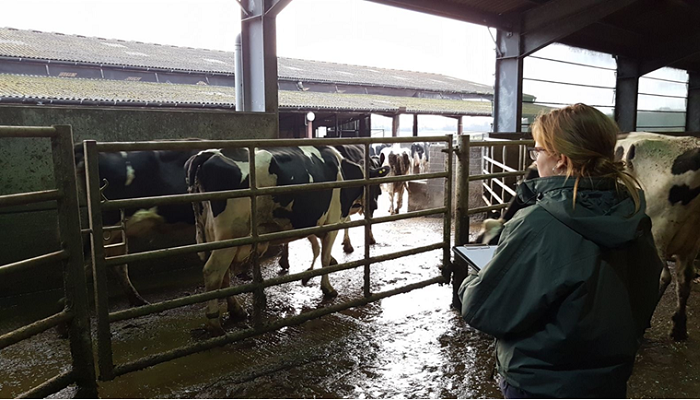
Lameness is a common problem on dairy farms and can have a major effect on cow health, welfare and overall performance. Padraig O’Connor writes on the role of regular mobility scoring – an effective tool available to dairy farmers to identify and reduce lameness.
Lame cows are often in pain, spend less time eating, produce less milk and can struggle to go back in calf. As well as affecting the cow, lameness can increase treatment costs and reduce herd profitability. One of the most effective tools available to dairy farmers for identifying and reducing lameness is regular mobility scoring.
Mobility scoring of dairy cows is a simple way of checking how well cows are walking and moving around the farm. Each cow is observed while walking and given a score based on how comfortably and freely she moves. There are a few different systems available, but the Agriculture and Horticulture Development Board (AHDB) mobility scoring system is the one most commonly recommended.
The main aim of mobility scoring is to pick up cows that may need their feet checked or treated. It is especially useful for spotting mildly lame cows early, before the problem becomes more serious. Early treatment by the hoof trimmer can improve recovery, reduce pain and help keep cows healthy and productive.
Regular mobility scoring also gives a good picture of the level of lameness in the herd. It helps farmers understand how big the lameness problem is on the farm and allows progress to be tracked over time as management and treatments improve cow mobility.
How to score
Scoring should be done in a flat even concreate nonslip surface where cows can walk at their own pace ideally after milking. It’s recommended that this should be done at monthly intervals. When scoring, observe cows from the side and behind if possible. Watch each cow individually, allowing them to take 6 to 10 uninterrupted strides. AHDB uses a four-point scale to score cows ranging from 0 to 3. The points to look out for when scoring are as follows:
- Speed – lame cows are slower and some will be unable to keep up with the herd
- Rhythm – lame cows will have interrupted rhythm while walking
- Weight bearing – in lame cows, weight bearing on lame legs is reduced
- Back arch – in a lame cow the back can often appear arched
- Head bob – is the head moving up and down more than normal, normally associated with a lame front foot
- Stride length – lame cows will have reduced stride length on the lame leg
Score sheet
| Score | Cow behaviour |
| 0 | Good mobility. Walks with even weight bearing on all four feet with a flat back and long fluid strides. Shows no signs of lameness |
| 1 | Imperfect mobility. Steps uneven and or strides shortened with a mildly arched back when walking. The affected limb or limbs not immediately identifiable. Needs to be monitored. |
| 2 | Impaired mobility. Uneven weight bearing on a limb that is immediately identifiable and or obviously shortened strides usually with an arch to the centre of the back. Needs attention. |
| 3 | Severely impaired mobility. Unable to keep up with the herd, lame leg easy to identify, limping, barely able to stand on lame leg, back arched when standing or walking. Needs urgent attention. |
What to do with the scores
Taking action quickly is the key to getting good results from mobility scoring. Cows with a score of 2 or 3 should be identified and treated as soon as possible, ideally within 24 hours. Record their tag numbers so they can be easily found and monitored. Cows with a score of 1 should be watched closely and checked again regularly to see if the condition improves or worsens.
Keep detailed records for all cows scored. Good records help you to:
- Track changes over time
- See how well treatments are working
- Measure the effect of management changes on herd health.
Summary
Regular mobility scoring is an important management tool for improving cow health, welfare, and herd performance on dairy farms. By checking cows routinely and identifying lame cows early, farmers can ensure prompt treatment, reduce pain and prevent more serious foot problems developing. Using the AHDB mobility scoring system helps monitor lameness levels within the herd and measure the success of treatments and management changes over time. Consistent scoring, quick action, and good record keeping all play a key role in maintaining healthy, mobile, and productive cows.
More from Teagasc Daily: Finding the optimum summer stocking rate
More from Teagasc Daily: Breeding targets for 2026