
Rapeseed by-products show promise for reducing methane emissions from beef cattle
New Teagasc research has found that including rapeseed cake or rapeseed oil in beef cattle diets can significantly reduce methane emissions without affecting animal performance.
The findings offer another potential tool to help the livestock sector meet climate targets while maintaining productive and efficient beef systems.
Methane produced during digestion is one of the largest sources of greenhouse gas emissions from cattle. As the agriculture sector works towards national and international climate targets, researchers are investigating practical feed-based solutions that can reduce these emissions on commercial farms.
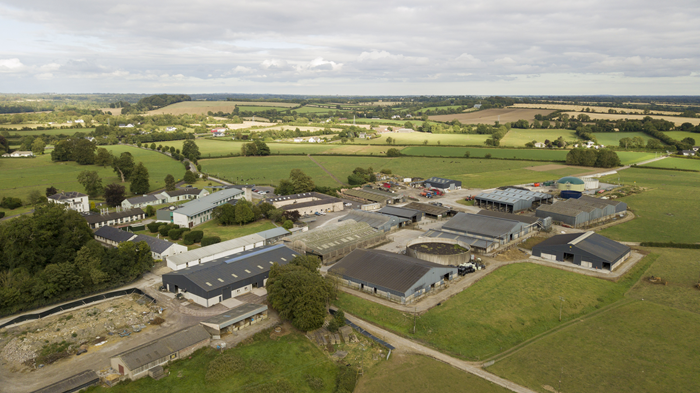
In this study, carried out at Teagasc Grange, researchers examined whether rapeseed-derived feed ingredients could lower methane production from beef cattle. Rapeseed is widely grown across Europe and produces valuable byproducts during oil extraction, including rapeseed cake, which can be used as livestock feed.
The trial involved 54 Charolais-cross steers and heifers fed a mixed grass silage and concentrate diet. Animals received one of three treatments: a standard control diet, a diet containing rapeseed cake, or a diet containing rapeseed oil. Researchers monitored feed intake, animal growth, methane emissions and a range of animal health indicators over a 72-day period.
Methane output
The results showed that both rapeseed treatments reduced methane emissions compared with the control diet. Cattle fed rapeseed cake produced almost 17.7 grams less methane per day, while those fed rapeseed oil produced around 16 grams less methane per day. This represented a reduction of approximately 8–9% in methane output without any reduction in feed intake.
Animal performance
Importantly, animal performance was maintained. Average daily liveweight gain was similar across all treatments, with cattle receiving rapeseed oil performing slightly better than those fed rapeseed cake. Researchers also found no negative effects on body weight, muscle development or fat deposition.
The methane-reducing effect
The methane-reducing effect is linked to the high levels of unsaturated fatty acids naturally present in rapeseed products. These fats can alter rumen fermentation and reduce the activity of methane-producing microbes. Unlike some emerging methane-reducing technologies, rapeseed products are already widely available and do not require regulatory approval before use in livestock diets.
The researchers noted that rapeseed cake may be particularly attractive from a practical farming perspective. As a byproduct of oil production, it is generally more affordable than refined rapeseed oil and does not compete directly with human food use. This supports a more circular approach to agriculture by making use of feed resources that are already available within existing production systems.
While the study did not find improvements in meat fatty acid composition, the ability to lower methane emissions while maintaining animal performance is an encouraging result. The researchers conclude that rapeseed cake and rapeseed oil have real potential as practical methane mitigation options for beef production systems. Future work will examine how these ingredients perform in finishing systems and their impact on overall carcass output.
Reference: Folliard N.T., Waters S.M., Roskam E., O’Flaherty V. and Kenny D.A. (2026). Inclusion of rapeseed cake or oil in the diet of beef cattle reduces enteric methane emissions without affecting animal performance. Animal. https://doi.org/10.1016/j.animal.2026.101780
More from Teagasc Daily: Associating climate change mitigation with protein security