
RED III Feedstock Requirements for Biogas Plants
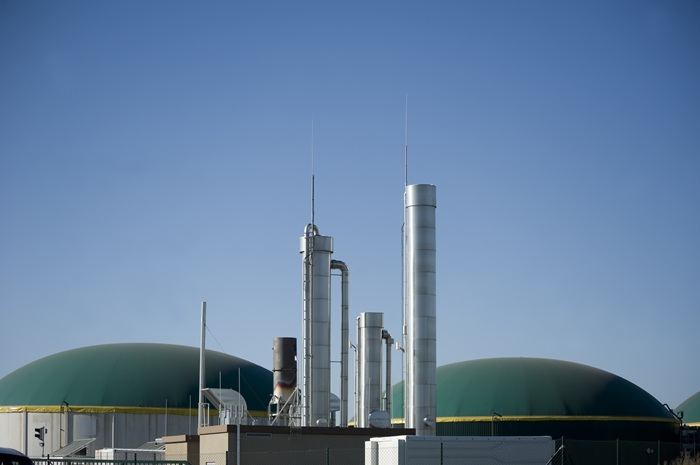
The new RED III rules mean certain feedstocks - mainly wastes and residues – are prioritised for biogas, with strict sustainability, traceability and greenhouse gas (GHG) savings requirements. Barry Caslin, Teagasc, Energy & Rural Development Specialist, with contributions from Ian Kilgallon, Gas Networks Ireland, Business Development and Innovation Manager, outline some of the key requirements.
Farmers and biogas plant operators must work together, keep good records and use certified systems to ensure compliance and market access.
Why RED III matters for farmers and biogas plants
The European Union’s Renewable Energy Directive III (RED III), published in October 2023, sets new, stricter rules for producing renewable energy – including biogas and biomethane. These rules are designed to ensure that renewable energy is truly sustainable, protects nature and delivers real climate benefits. For farmers and biogas plant operators, understanding and following these requirements is essential for selling feedstock and biomethane in the EU market.
What feedstocks are prioritised?
Preferred feedstocks
RED III strongly favours the use of wastes and residues as feedstocks for biogas plants. These are materials that would exist anyway, not grown just for energy. They include:
| Feedstock type | Examples | GHG Emissions Up to Collection? |
| Animal manure/slurry | Cattle, pig, poultry manure, liquid slurry | Zero |
| Sewage sludge | From wastewater treatment | Zero |
| Biowaste | Food scraps, garden waste | Zero |
| Forestry residues | Bark, branches, sawdust | Zero |
| Industrial residues | Food processing by-products | Zero |
| Agricultural residues | Straw | Zero |
Key point
These preferred feedstocks are treated as having zero GHG emissions up to the point of collection, making it much easier for biogas plants to meet climate targets.
What’s not allowed?
Feedstock must not come from:
- Primary forests or old-growth forests
- Protected habitats (e.g., Natura 2000 sites)
- Peatlands or wetlands converted after January 2008
- Recently converted agricultural land where conversion led to significant carbon or biodiversity loss
Tip: Always keep documents proving your land was in agricultural use before 2008 and not converted from protected or high-carbon areas.
The 80% GHG saving threshold – what does it mean?
RED III requires that new biogas plants achieve at least 80% greenhouse gas savings compared to fossil fuels. This is calculated by looking at the entire life cycle – from feedstock production or collection, through transport and processing, to the final use of the biomethane.
- Wastes and residues (like manure and slurry) are a big help, since their upstream emissions are counted as zero.
- Energy crops(like grass silage) must include all emissions from growing, harvesting, and transporting the crop.
Key finding: Using more wastes and residues makes it much easier to meet the 80% GHG saving requirement.
Land use restrictions – protecting nature
RED III sets strict rules to protect valuable land and habitats:
| Excluded Land Type | What It Means | Baseline Date |
| Primary forest | Never cleared or disturbed by humans | After Jan 2008 |
| Protected habitat | Legally protected for nature | After Jan 2008 |
| Peatland/wetland | Waterlogged, carbon-rich soils | After Jan 2008 |
| Recently converted agricultural land | Land converted from natural state after 2008 | After Jan 2008 |
Actions for farmers: Keep land registry documents, BISS maps and any proof that your land is eligible.
Certification – How compliance works across Europe
- Farmers and plants register with REDcert EU or ISCC EU.
- All feedstock deliveries are recorded in the Nabisy national database.
- Annual audits check compliance and traceability.
France – 2BSvs
- Farmers and plants use the 2BSvs scheme.
- All transactions are recorded in the Union Database (UDB).
- Certificates are valid for five years, with regular checks.
United Kingdom – RTFO certificates
- Certificates are issued for eligible renewable fuel sales and can be traded or used to demonstrate compliance
- Biomethane certificates are documents that attest to the production, ownership and consumption of biomethane, along with its sustainability attributes
Denmark – Energinet
- National certification and reporting systems
- Official administrator on Guarantee of Origin GoO
- Allows renewable energy generators to sell their energy with a “green” label
Netherlands – VertiCer and National Waste Registers
- Verticer issues Guarantees of Origin (GoO) for biomethane.
- National waste registers track all material flows.
- Integration with EU systems for cross-border trade.
Key takeaway: Certification is mandatory. Choose a scheme recognised in your country and market.
Different carbon schemes count your manure benefits differently
When you use manure to make biogas, you help prevent methane – a powerful greenhouse gas -from escaping into the atmosphere. However, under the EU’s RED III rules, this “avoided methane” is not counted as a negative emission. Instead, RED III simply treats manure as having zero emissions up to the point it’s collected and only counts the emissions from processing and using the biogas. This means you cannot get extra credit for stopping methane leaks from manure storage under RED III.
On the other hand, some voluntary carbon markets – like Gold Standard, Verra VCS and Climate Action Reserve – do reward you for capturing methane that would otherwise be released. These systems can give you carbon credits for the extra climate benefit, sometimes resulting in “negative emissions” (meaning your project removes more greenhouse gases than it produces). A few national schemes, such as the UK’s RTFO, and those in Denmark and Germany, also recognise and credit these negative emissions from manure-based biogas. In some cases, these credits can be claimed when biomethane is injected into the gas grid. However, it is important to note that these negative emission credits from voluntary or national schemes cannot be used to meet RED III requirements – they are separate systems, and the credits cannot be transferred between them.
Mass balance traceability – tracking every batch
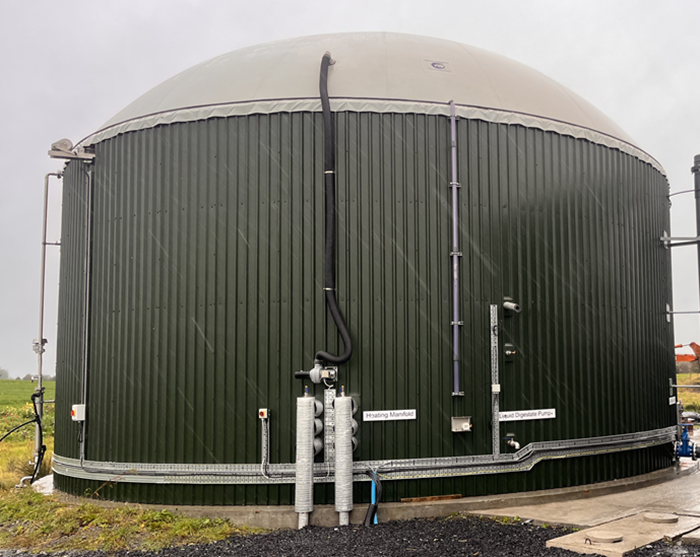
RED III requires a mass balance system – a kind of digital accounting that tracks every batch of feedstock and links it to the biomethane produced. This ensures that only certified sustainable feedstocks are used and that every unit of biomethane can be traced back to its source.
- Input tracking – every delivery is recorded with sustainability data.
- Production monitoring – biomethane output is allocated to input materials.
- Chain of custody – certified biomethane keeps its status through the supply chain.
Guarantee of Origin (GoO) – Proof of Sustainability
A Guarantee of Origin is an electronic certificate that proves biomethane is renewable and sustainable. It includes:
- Production facility and location
- Feedstock types and sources
- Production date and method
- Compliance with sustainability criteria
GoOs are recorded in national or EU databases and are needed for market access and support schemes.
Practical example – supplying grass silage and slurry
Let’s see how this works in practice for a typical German farmer supplying grass and slurry to a biomethane plant.
Scenario
Anna, a farmer in Germany, supplies:
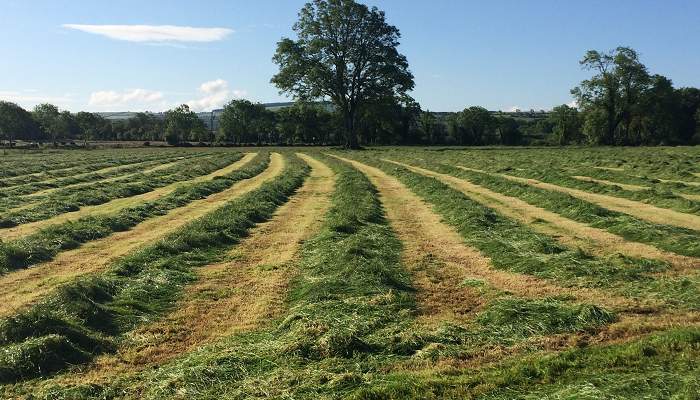
- 10 hectares of grass silage (about 200 tonnes/year)
- 1,000 cubic meters of cattle slurry per year to a local biomethane plant.
Step-by-Step Compliance
- Land check
- Anna provides documents showing her grassland was in use before 2008 and not converted from protected or high-carbon land.
- Certification
- She registers with REDcert EU. The plant is also certified.
- Mass balance
- Every delivery of grass silage and slurry is recorded in the Nabisy system, with sustainability data and batch numbers.
- GHG Calculation
- Slurry – Zero emissions up to collection.
- Grass silage – Emissions from fertiliser, field work and transport are included.
- The plant calculates the total GHG savings and confirms it meets the 80% threshold.
- Guarantee of Origin
- The biomethane plant receives GoO certificates for the biomethane produced, linked to Anna’s certified feedstocks.
- Audit
- An independent auditor checks Anna’s records, the plant’s mass balance system and the GoO certificates.
Result: Anna’s slurry and grass silage help the plant meet RED III requirements, and she can continue supplying the market.
Monitoring and enforcement – keeping the system honest
- Certification body audits – regular checks of farmers and plant operators.
- National oversight- government agencies monitor certification schemes.
- EU supervision – the European Commission oversees the whole system.
- Database cross-checks – automated systems flag inconsistencies.
Non-compliance can mean loss of certification, exclusion from support schemes and inability to sell biomethane as sustainable.
Practical tips for farmers
- Document your land history (maps, registry, photos)
- Choose a recognised certification scheme
- Prioritise wastes and residues for easier compliance
- Keep detailed records of all inputs and practices
- Work closely with your biogas plant
- Prepare for audits – keep your paperwork organised
| Step | What to do |
| Feedstock selection | Use only approved wastes, residues, and eligible crops |
| Land eligibility | Prove land was not converted after 2008 |
| Certification | Register with an EU-recognised scheme |
| Mass balance traceability | Record all batches and link to biomethane output |
| GHG calculation | Use approved methods; meet 80% savings |
| Guarantee of Origin | Ensure GoO certificates are issued and recorded |
Conclusion
RED III sets a high bar for sustainability in biogas production. By focusing on wastes and residues, protecting valuable land and using robust certification and traceability systems, farmers and biogas plant operators can meet these new requirements and access premium markets. The key is good documentation, strong partnerships and a commitment to genuine sustainability.
For more information, contact your local agricultural extension office or visit the EU’s official RED III guidance pages.
Key takeaway
By understanding and following RED III’s feedstock requirements, farmers and biogas plant operators can ensure compliance, protect the environment, and secure their energy future.
More from Teagasc Daily:
Also read: ReNure: A New Opportunity for Irish Dairy Farmers Facing Nitrates Limits
Also read: Support needed to bring small-scale biogas into the mainstream
Also read: The rise of hydrogen-fuelled tractors and vehicles
Also read: Diversifying Irish agriculture – navigating new paths to farm resilience
Also read: Exploring Farm Diversification: Renewable Energy
Also read: Unlocking Ireland’s rural income potential
Also read: Harvesting renewable energy with SRESS