
October 2026 Future Beef Newsletter
Sign up to receive the Teagasc Future Beef Newsletter
Technical Updates: Have you a winter health strategy in place? | Shed Ventilation: Keeping Cattle Healthy During Winter
Farm Updates: Autumn Management and Winter Preparation on Oliver’s farm | New Slatted Shed Supports Ger’s Beef Finishing System
Top Tips | Upcoming Events | Upcoming Deadlines | The Beef Edge Podcast
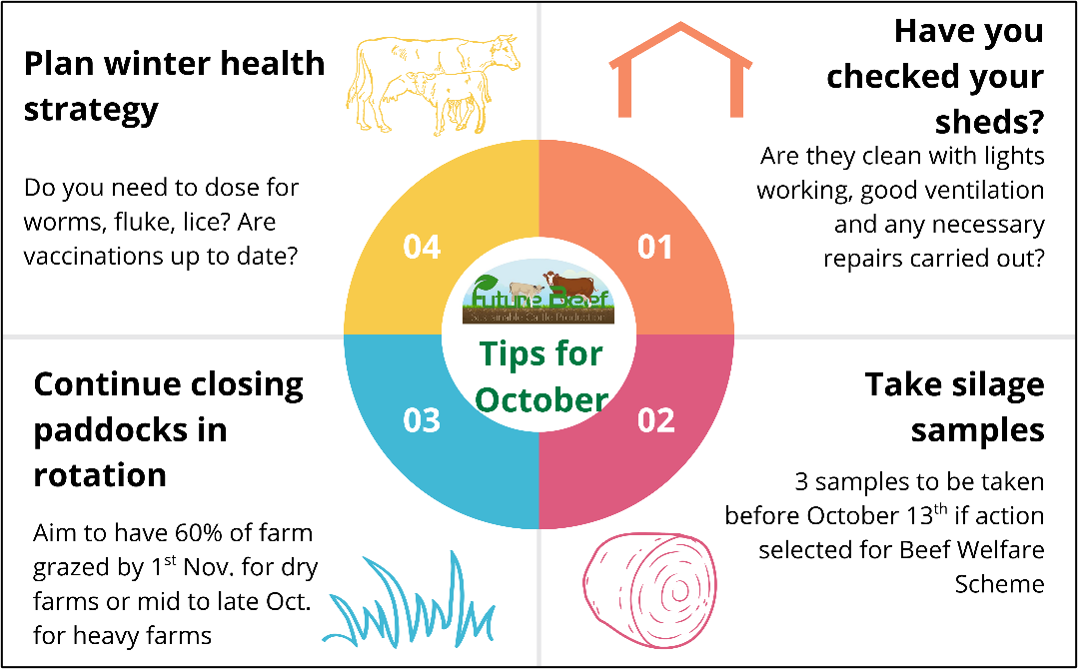
Top Tips for October
Upcoming Events
- Thurs 8th October at 8pm: Future Beef ‘Getting Winter Performance Right’ webinar on Zoom. It will focus on managing weanlings and finishing cattle during the winter housing period. Click to register here.
- Watch back on ‘Maximising Profit from Weanlings’ webinar here:
Upcoming Deadlines
National Beef Welfare Scheme:
- 13th October 2026: Purchase silage sampling kit for National Beef Welfare Scheme
- 13th October 2026: Purchase faecal egg sampling kit for National Beef Welfare Scheme
Others:
- 1st November 2026: All suckler cow and calf weights to be submitted for SCEP
- 1st November 2026: Dairy beef calf weights to be submitted for NDBWS
- 6th November 2026: Claims for National Farm Safety Measure to be submitted
- 4th December 2026: Closing date for TAMS 3 tranche 14
Technical Update: Have you a winter health strategy in place?
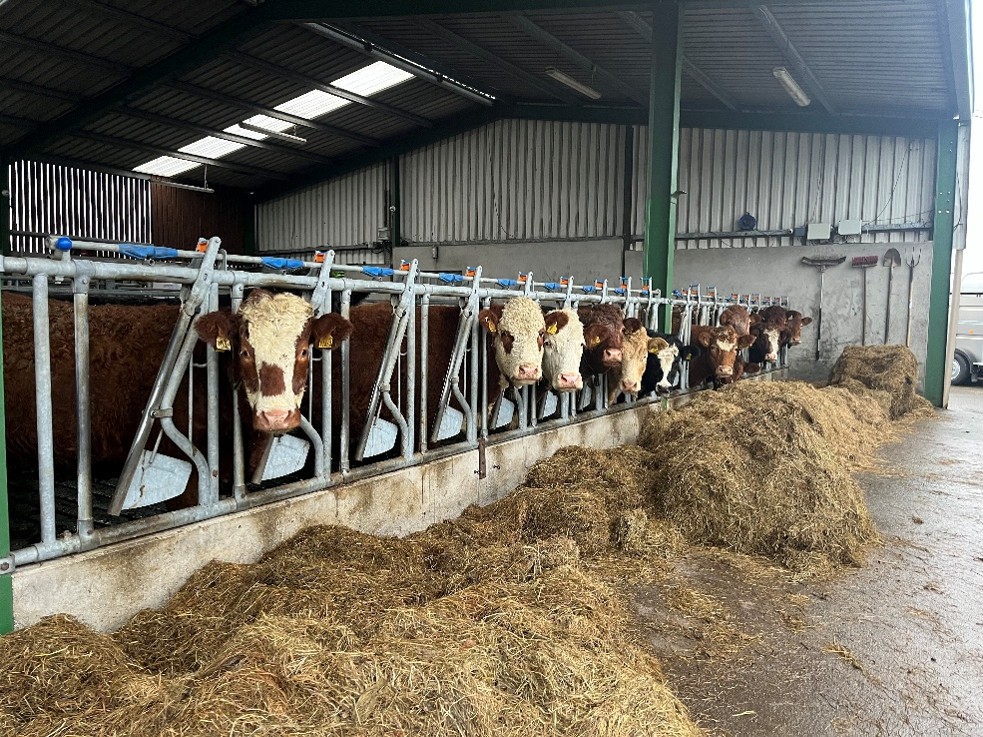
A dosing & vaccine plan can reduce health issues over winter
- Plan animal health before housing. Diet, health status, ventilation, lying space, feed space and water access all affect performance once cattle are housed.
- Lungworm: Consider treatment at least 4 weeks before housing to allow lung damage to recover. Some products provide persistent protection, so check the product label.
- Stomach worms: Don’t routinely use the same wormer. Anthelmintic resistance is widespread, particularly to ivermectin. Use faecal egg counts (FECs) to establish whether treatment is needed and whether it is working.
- Liver fluke: Consider fluke treatment at housing. The correct product depends on the stage of fluke present and how long cattle have been housed. Some products require a second treatment later. Always check withdrawal periods.
- External parasites: Lice and mange are more common during winter. Treatment choice matters because pour-ons are required for biting lice, while injectable and pour-on products can treat sucking lice and mange.
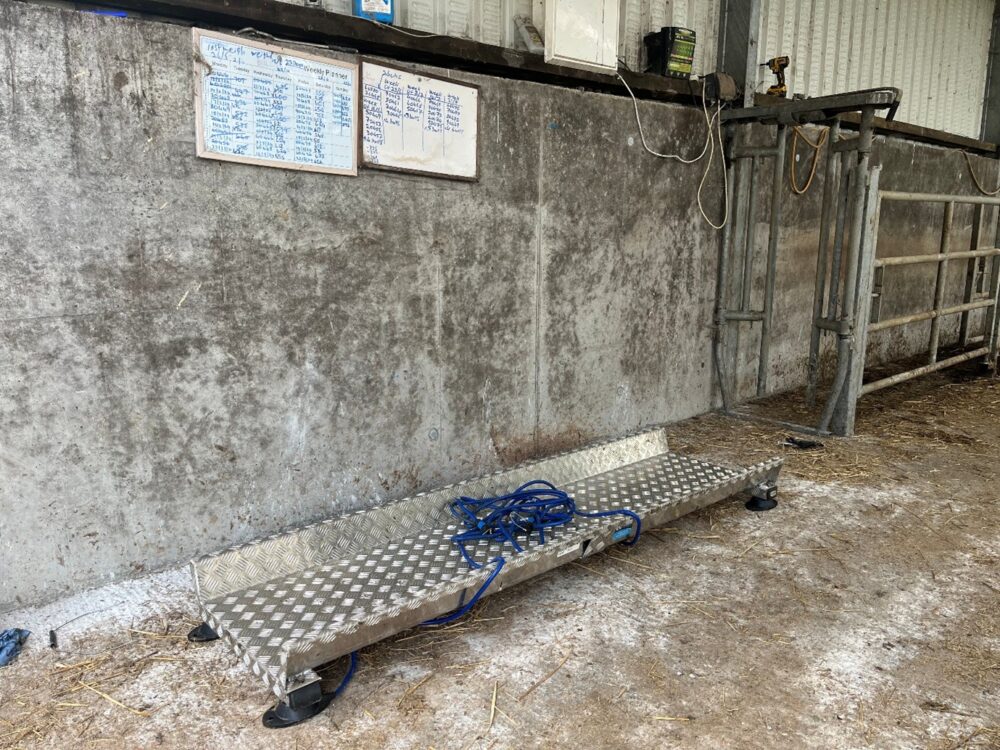
Regular weighing of cattle can help to detect parasite burdens
6. Vaccination: Housing and weaning stress can trigger respiratory disease such as IBR, RSV and Pi3. Where vaccination is appropriate, cattle should ideally receive it at least one month before housing.
7. Check wormer effectiveness: A drench test using FECs before and after treatment can identify resistance. Less than 95% reduction in egg count indicates resistance.
8. Dose correctly: Weigh cattle where possible, use the correct technique and equipment, and dose to the weight of the heaviest animal in the group.
9. Reduce resistance: Avoid continuous use of the same wormer class and only use combination wormer/flukicide products when both worms and fluke need treating.
You can read more here.
Technical Update: Shed Ventilation: Keeping Cattle Healthy During Winter
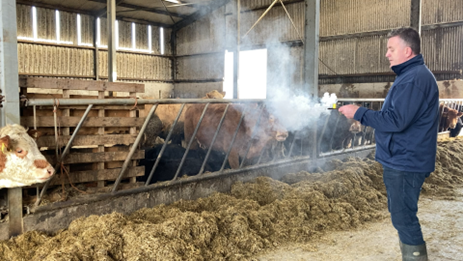
Smoke bombs are a great way of assessing air flow in sheds
- Good cattle shed ventilation is essential for Irish beef farms, particularly when cattle are housed during the winter. Effective ventilation removes moisture, heat, dust, pathogens and harmful gases such as ammonia.
- Poor ventilation can increase the risk of respiratory disease, particularly in young calves and weanlings. It can also contribute to condensation, damp bedding, wet coats, mould and poor air quality.
- Check your cattle shed for warning signs: condensation on the roof or walls, mould, damp bedding, strong or stale smells, and cattle with wet or dirty coats can all indicate inadequate ventilation.
- The objective of cattle shed ventilation is straightforward: bring fresh air into the building and allow warm, stale air to escape, while avoiding excessive draughts at animal level.
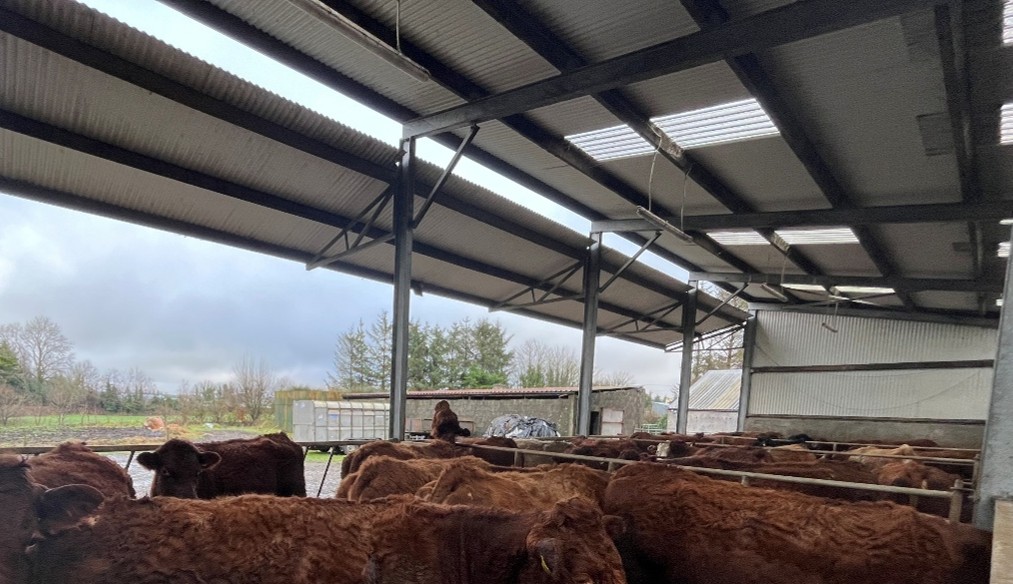 The space above the overhang acts as an air outlet in this shed
 - Airflow is affected by shed design, including inlet and outlet areas, eaves height, ridge height, roof pitch, shed width and nearby buildings, trees or hedges.
- Ideally, air inlets should be approximately twice the size of the outlet. Continuous openings along the eaves can help provide more even airflow.
- A continuous open ridge allows warm, moist air to escape. A roof pitch of approximately 12–15° or greater can assist the natural movement of warm air upwards.
- Test ventilation before housing cattle. A smoke test carried out in calm conditions can help identify stagnant air or excessive draughts.
- Existing beef cattle sheds can often be improved by increasing side inlets, improving ridge outlets or removing obstructions around the building.
- Good ventilation is particularly important for calves and weanlings, helping to reduce the build-up of moisture and airborne pathogens during winter housing.
You can read more here.
Farm Update: Autumn Management and Winter Preparation on Oliver’s farm
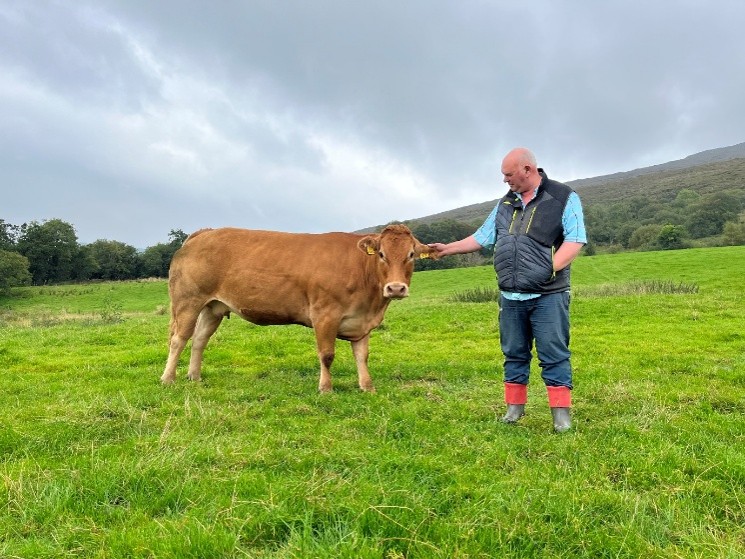
Oliver O’Hara farms in Co. Leitrim
Oliver farms 43ha (adjusted) near Manorhamilton, Co. Leitrim, with his wife Christine and their children Shane and Karen. The farm operates a 31-cow suckler herd and 120-ewe flock, with cattle primarily sold as weanlings or stores. The predominantly Limousin-cross suckler cows are bred to a Limousin stock bull or Limousin and Belgian Blue AI sires. Oliver also operates a farm contracting business.
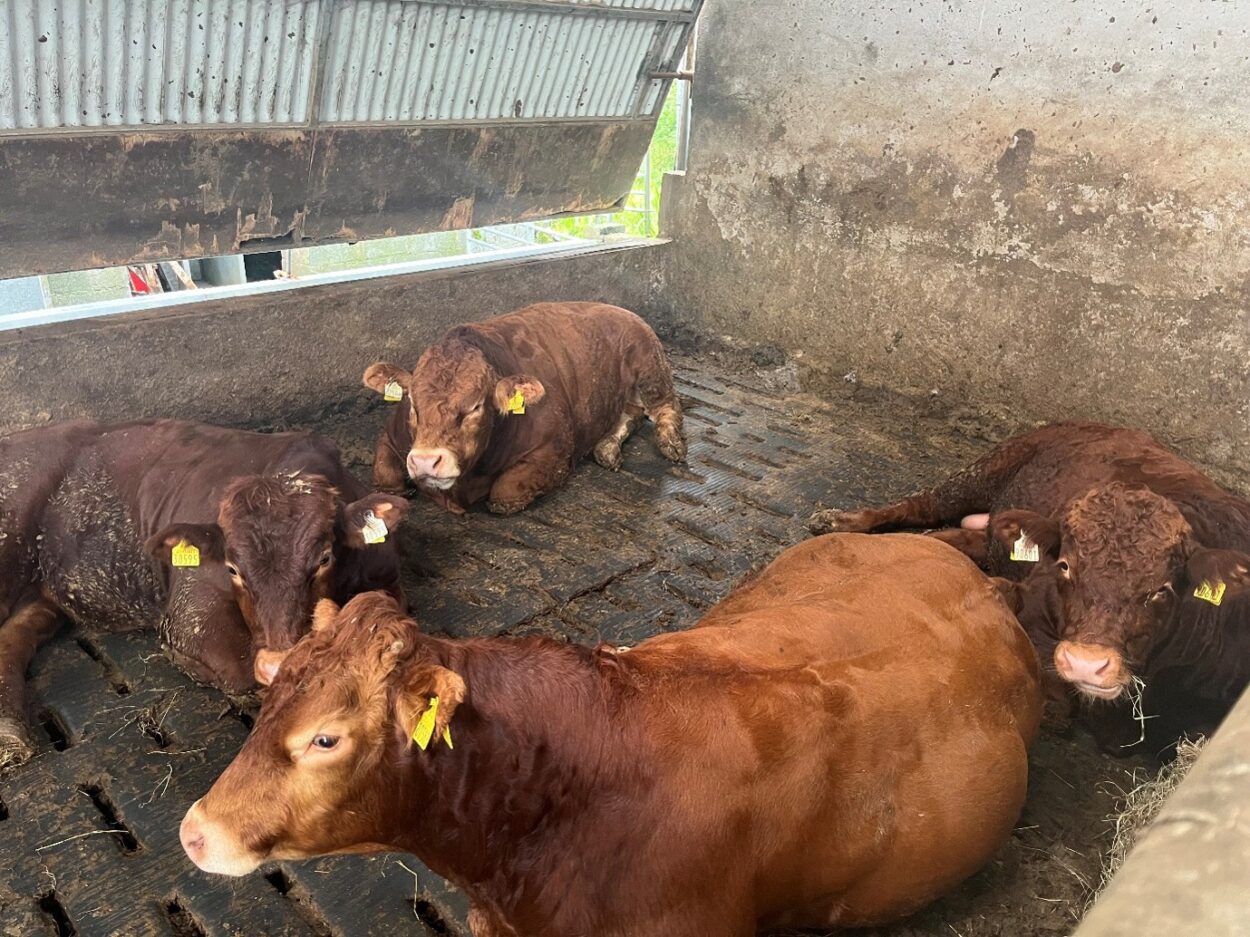
Some of the bulls for sale this autumn
Autumn priorities on the farm
- Breeding: Pedigree rams were turned out with pedigree hoggets and ewes on 22 August.
- Show and sale cattle: Cattle selected for autumn shows and sales have been housed and are being fed good-quality silage and ration, with halter training underway.
- Winter fodder: The farm’s fodder budget has been updated, with silage and feed stocks currently on target for winter requirements.
- SCEP compliance: Suckler cows and calves will be weighed before weaning, with the SCEP weighing deadline of 1 November approaching. Outstanding SCEP animal surveys will also be completed through ICBF or paper forms.
- Parasite control: Cattle will be treated at housing for lungworm, stomach worms, lice, liver fluke and rumen fluke, based on farm requirements.
- Silage quality: Silage samples will be taken and submitted for analysis to help plan winter diets and ensure cattle receive appropriate nutrition.
Key focus: Preparing cattle and feed stocks now will help set the farm up for a healthy and productive winter.
You can click here to read more about Oliver’s farm.
You can watch a video update from Oliver as he discusses the preparation and management of cattle for the autumn show and sales here:
Farm Update: New Slatted Shed Supports Ger’s Beef Finishing System
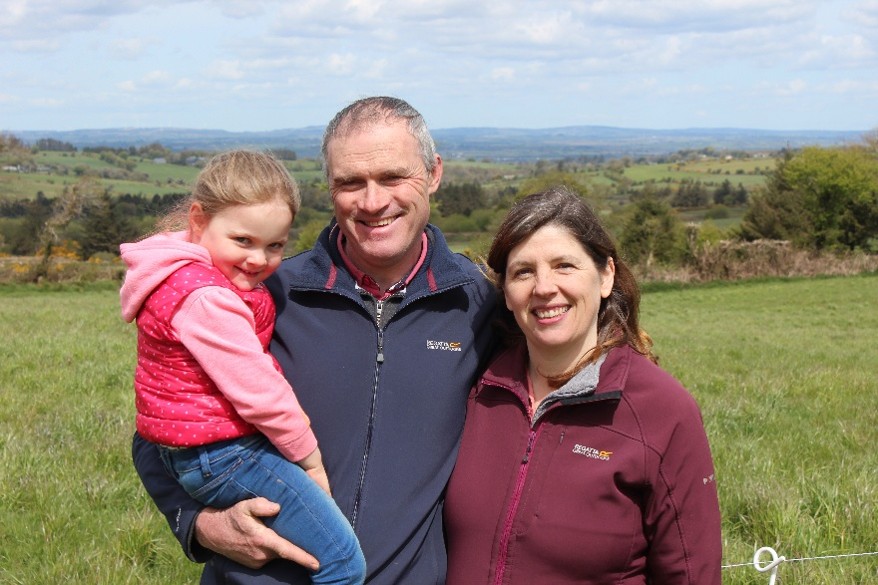
Ella, Ger and Karen McSweeney
Ger McSweeney is farming 41ha with his wife Karen and their daughter Ella in Toorenbawn, Millstreet, Co. Cork. They have 40 spring-calving cows with bulls finished under 16 months of age and heifers finished at 21 months.
Alongside the usual autumn tasks, they are investing in the facilities on the farm. Construction of a new slatted shed has commenced, with TAMS funding secured before work began. The new unit will provide additional slatted accommodation, calf lie-back space and slurry storage, while its location beside the existing shed will allow cattle to be moved efficiently, an important consideration for a one-man Irish beef farming operation.
Increased slurry storage capacity will provide greater flexibility around slurry spreading, allowing nutrients to be applied when soil and weather conditions are suitable and reducing the need for early spring applications.

Slatted tank under construction
The farm’s finishing heifers, approximately 20 months old, have been housed for five weeks and are nearly fit for sale. They are currently receiving 7kg concentrates and good-quality 70% DMD silage daily. At their latest weighing, they averaged 610kg liveweight and are achieving 1.52kg liveweight gain per day.
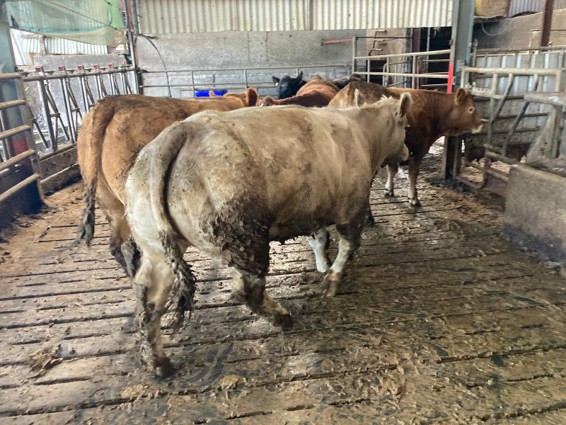
The heifers that will be finished from the shed
Spring-born bulls have been weaned and housed, receiving 3kg of 16% protein concentrate alongside 70% DMD silage, with meal gradually increasing to 4kg. Heifer calves remain suckling but will be weaned shortly and introduced to meal. All weanlings will be faecal tested, with dosing carried out based on results.
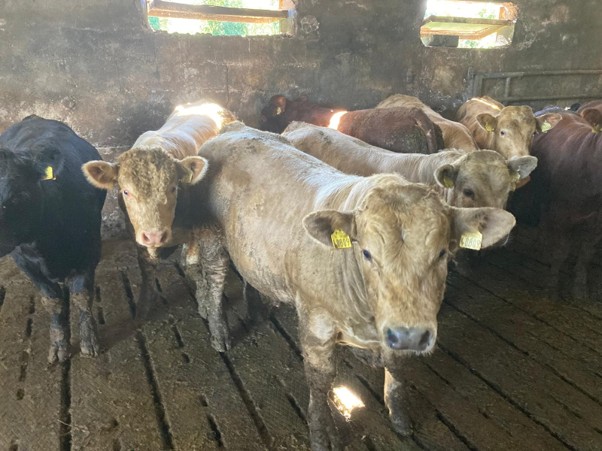
Some of the bulls that are weaned
You can read more about Ger’s progress here.
The Beef Edge
The Beef Edge is Teagasc’s weekly podcast covering news, information, tips and advice for beef farmers. It is available on iphone, Android and Spotify. Scan the QR code below or visit the Teagasc Beef Edge podcast.