March 2026 Future Beef Newsletter
Sign up to receive the Teagasc Future Beef Newsletter
Technical Updates: Protecting Cattle from Bluetongue | Spring Grazing 2026
Farm Updates: Wesley Browne – Hygiene & Health Focus | Proinnsias Creedon – Finishing Performance
Top Tips | Upcoming Events | The Beef Edge Podcast
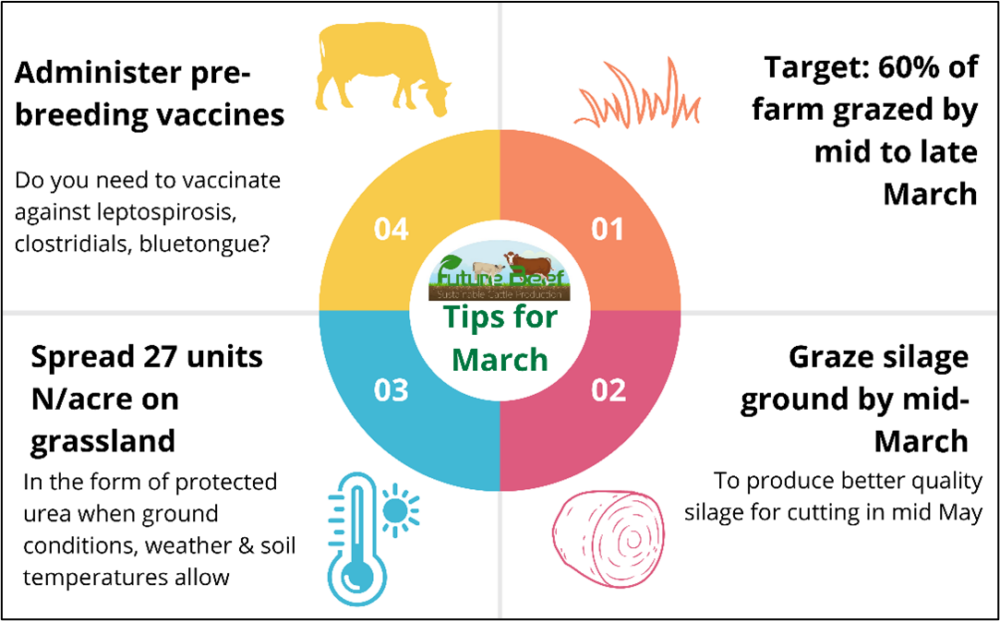
Top Tips for March
Upcoming Events
- 24th March: Breeding webinars starting – further details to follow
- Watch back: A recent webinar provided an insight into the Suckler & Dairy Beef Research Highlights from Teagasc Grange. Featuring Dr. Peter Doyle and Jamie O’Driscoll, Teagasc Grange; and Dr. Doreen Corridan, CEO at the National Cattle Breeding Centre (NCBC), a recording of the webinar which provided an update on the Derrypatrick Suckler Calf to Beef Herd and the Dairy Calf to Beef Research Programme is available to view at:
Technical Update – Protecting Cattle from Bluetongue
Bluetongue is a viral disease affecting cattle and sheep. It is transmitted by biting midges (Culicoides species) and cannot spread directly between animals.
Bluetongue does not affect humans and does not pose a food safety risk.
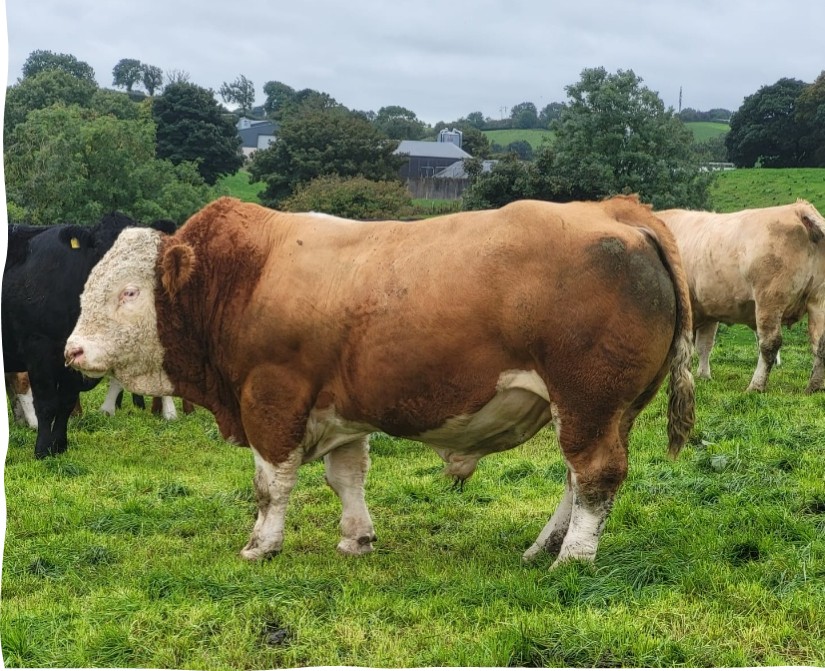
Stock bulls, breeding cows and breeding heifers are the highest priority for vaccination
How Bluetongue Spreads
- A midge bites an infected animal and takes in the virus.
- The virus multiplies inside the midge.
- After 6–8 days, the infected midge can transmit the virus when biting another animal.
- An infected animal remains infectious to midges for approximately 60 days after infection.
Environmental Conditions
The bluetongue virus can only replicate inside midges when temperatures are above 12–15°C.
In Ireland, the typical risk period is from April to November, when temperatures are suitable for midge activity and virus replication.
Clinical signs to watch for:
General signs
- Fever
- Inappetence (loss of appetite)
- Drop in milk yield
- Lameness
- Reduced performance
Characteristic signs
- Reddening of the mucus membranes
- Sores on the nose, gums and dental pads
- Swelling of the face, lips and tongue (“bluetongue”)
- Breathing difficulties if the tongue swells
- Drooling
- Discharge from the eyes and/or nose
Fertility Impacts of Bluetongue
Bluetongue infection can significantly affect herd fertility even where clinical signs are mild or absent.
Possible fertility impacts include:
- Reduced conception rates
- Increased numbers of empty cows and ewes
- Increased return to service
- Extended calving or lambing intervals
- Early embryonic loss
- Abortions
- Premature births
- Weak or dead calves/lambs
- Congenital deformities in calves and lambs
- Reduced bull fertility and poor semen quality
Animals infected early in pregnancy may lose the pregnancy, while infection later in pregnancy may result in malformed or weak offspring.
Breeding animals are therefore the highest-risk and highest-priority group for protection.
What should you do if you suspect a case?
- Report suspected cases immediately to your vet
- Follow movement restrictions if introduced
- Monitor stock closely
- Reduce midge exposure where possible (housing at peak midge times, slurry management, avoiding wet ground)
Vaccinations
BTV-3 vaccines are permitted in Ireland under licence. BTV-3 vaccines do not fully stop infection/disease but greatly reduce viremia and severity of clinical symptoms.
Advice is as follows:
- Discuss with your vet in advance.
- Follow the vaccine manufacturer’s guidelines.
- Stock bulls, breeding cows and breeding heifers are the highest priority for vaccination in a suckler herd to avoid infertility in early pregnancy or congenital defects if infected later in pregnancy.
- Vaccination programmes require two injections given 3 weeks apart.
- Immunity develops approximately 3 weeks after the second dose.
- Vaccinate at least 6 weeks before the breeding season or risk period.
- Breeding stock in both spring- and autumn-calving herds should be vaccinated.
- Vaccination can be used during pregnancy.
- Only vaccinate healthy animals
- Do not give at the same time as any other vaccines
- Vaccination can also be used in store and finishing cattle to prevent performance losses.
Additional Fertility Protection
- Fertility-test stock bulls before the breeding season.
- Avoid introducing unvaccinated breeding animals during the risk period.
- Monitor breeding performance closely.
- Investigate unexpected infertility early.
Technical Update – Spring Grazing 2026
The Spring Rotation Planner is a key grassland management tool for Irish beef farmers, helping to organise the first grazing rotation on drystock and suckler farms. A structured spring grazing plan ensures paddocks are grazed early enough to allow adequate regrowth for the second rotation, while also preventing grass shortages before growth rates exceed demand. Importantly, the plan is based on percentage of farm area grazed, rather than individual paddock grass heights, making it practical and results-driven for Irish beef systems.
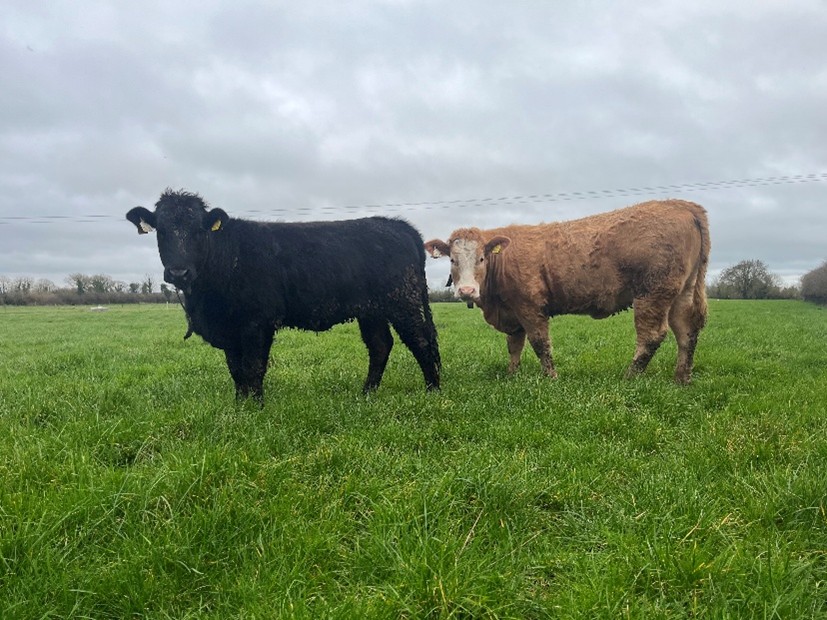
Breeding heifers & younger stock will cause less poaching than heavier cattle
Spring Grazing Targets
The targets are to:
- Graze 30% of the farm by 1st March (dry farms) or mid-March (heavy farms)
- Graze 60% by mid-March (dry farms) or late March (heavy farms)
- Graze 100% by early April (dry farms) or mid-April (heavy farms)
These targets help stretch grass supplies and set up high-quality swards for the second rotation, driving animal performance and reducing concentrate costs.
Adjusting for Poor Weather Conditions
With challenging spring weather affecting turnout on many Irish beef farms this year, flexibility is essential. Key priorities include:
- Turning out calved cows, breeding heifers and youngstock onto dry, sheltered paddocks first
- If behind target, grazing lighter covers earlier and/or increasing stock numbers at grass
- Using a backing fence to minimise poaching and protect soil structure
- Housing cattle if paddock damage becomes excessive
- Calved cows should be fed >72% DMD silage + 1-2 kg of ration/head/day indoors
- Ensuring silage ground is grazed by mid to late March to allow cutting in mid-May
When soil temperatures exceed 5°C and conditions are trafficable, apply 23–27 units/acre of protected urea, followed by a second fertiliser application 4 weeks later, adjusted for stocking rate.
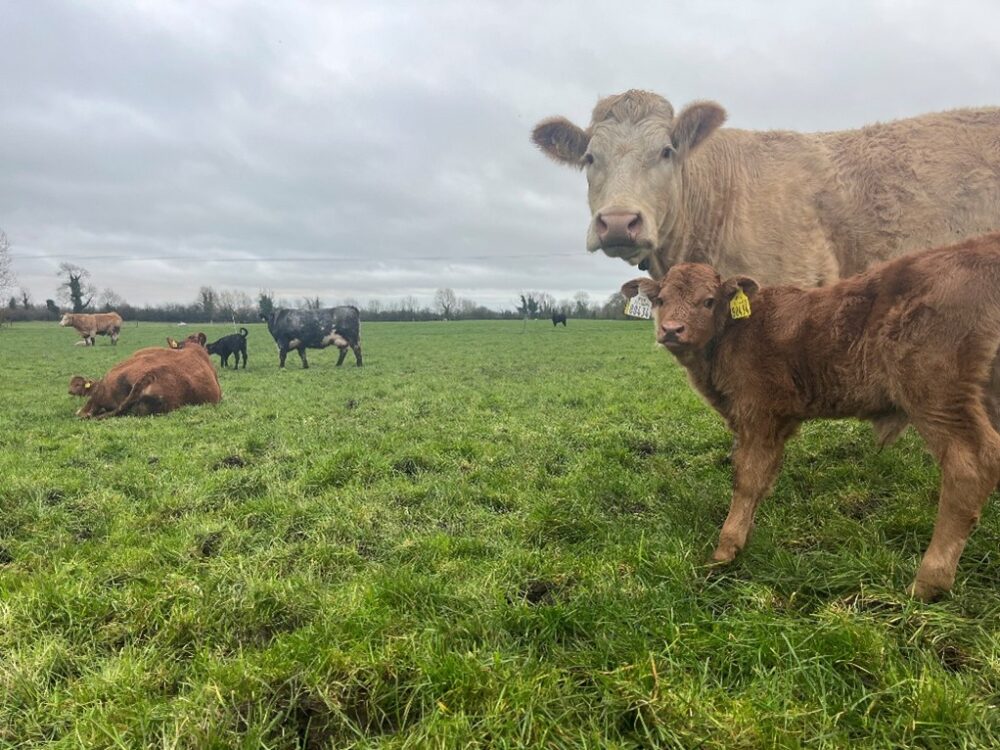
Calved cows should be prioritised for turnout
You can read more about the spring rotation planner and print one for your farm here.
Farm Update: Wesley Browne’s Hygiene and Herd Health Focus
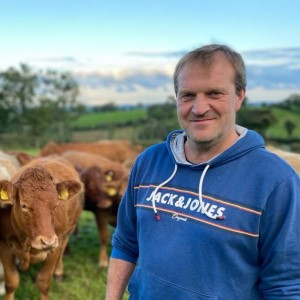
Wesley Browne
Wesley Browne, a suckler beef farmer based in Co. Monaghan, is farming 58 hectares and operates an 88-cow spring calving suckler herd. With a strong focus on herd health, hygiene, and performance, Wesley finishes his male progeny at an average of 15.3 months of age, while replacement-quality heifers are sold for breeding.
Calving began in mid-February and despite challenging weather conditions, the calving season is progressing smoothly. For Wesley, health and hygiene are the foundations of a successful calving season. Disease prevention not only protects calf performance but also safeguards cow fertility and overall herd productivity.
Here are the key measures implemented on the farm:
- IBR vaccination – All cows and in-calf heifers are vaccinated against Infectious Bovine Rhinotracheitis (IBR) pre-calving to reduce disease risk.
- Tail clipping – Tails are clipped before calving to improve cleanliness and reduce contamination in calving pens.
- Well-bedded calving pens – Pens are generously bedded with fresh straw to ensure comfort and minimise infection risk.
- Naval dipping – Calves’ navels are dipped with iodine immediately after birth to prevent joint ill and infection.
- Early colostrum intake – Every calf receives at least 2 litres of colostrum within two hours of birth, preferably for Wesley by natural suckling rather than stomach tubing.
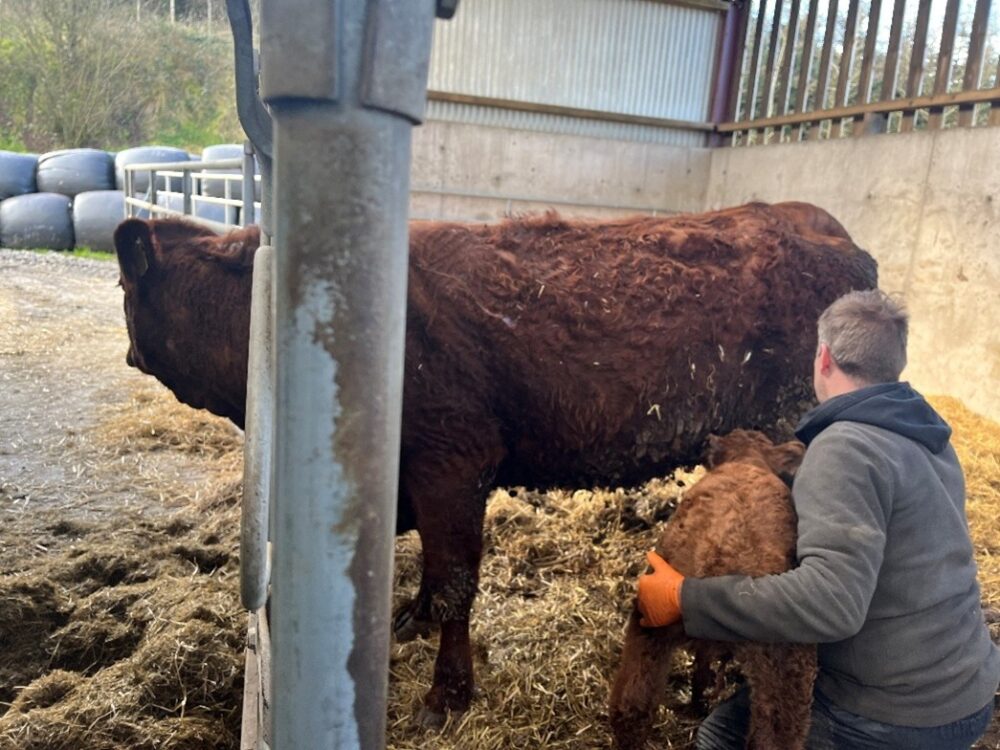
Good facilities allow Wesley to help calves suck when necessary
- Pen sanitation – Calving pens are cleaned, disinfected, and freshly bedded between calvings.
- Clean calving equipment – Equipment is kept clean and hot water is readily available when needed.
- Personal hygiene – Wesley wears gloves daily during calving to reduce disease transmission.
- Visitor biosecurity – Boot disinfectant and handwashing facilities are available to minimise disease risk from visitors.
- Early turnout – Calved cows and calves are turned out to sheltered paddocks within 24–48 hours, weather permitting, reducing pressure on housing and improving animal health.
Watch the video below, where Wesley Browne provides an in-depth overview of his calving facilities, equipment, and hygiene practices on his farm.
You can read more about Wesley’s cattle performance and recent presentation here.
Farm Update: Proinnsias Creedon – Finishing Performance
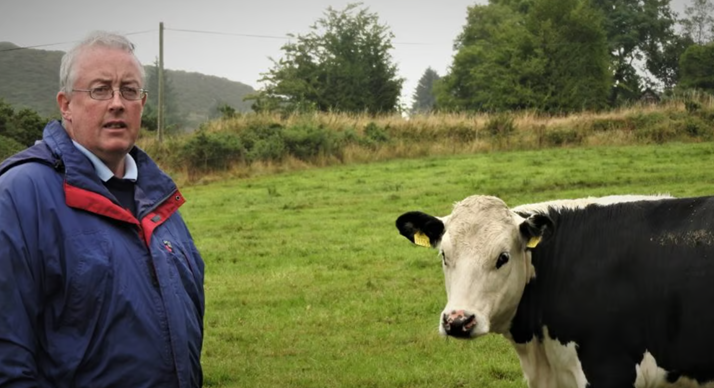
Proinnsias Creedon
Proinnsias farms with his wife Máire and sons Ciarán, Aodhán and Diarmuid. The farm is located in Barrathanaknock, Clondrohid, Macroom, Co. Cork. The Creedons are farming 33ha, buying in dairy cross beef heifer calves which are mainly Hereford and Angus crosses.
The Creedons are continuing to make strong progress within their under 24-month heifer finishing system.The 2023-born heifers finished in 2025 averaged 268kg carcass weight at 25 months of age, grading O=3+. Performance has improved further from the 2024 born group, with the first 19 heifers drafted at 23 months averaging 283kg carcass weight and grading O=4-. Remaining heifers are currently averaging 490kg liveweight and gaining 1.07kg/day on 69% DMD silage plus 6kg of a 13% crude protein ration.
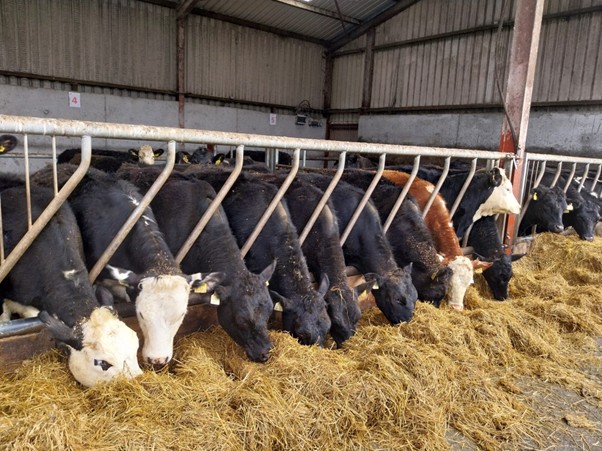
Heifers are weighed regularly over winter to monitor performance
The 67 spring 2025-born weanlings averaged 253kg in mid-January, with 77% exceeding 240kg. These heifers are receiving 2–3kg of a 17% crude protein ration and will be turned out in groups when conditions allow. Heavier heifers are targeted for finishing in September at approximately 540kg liveweight to achieve a 280kg carcass weight.
Commercial Beef Value (CBV) continues to guide calf selection. A comparison of the top and bottom 10 calves for CBV shows a 0.03kg/day advantage in lifetime average daily gain, equating to 22kg extra liveweight and approximately €86 per head. Performance, genetics and calf health remain key drivers of system efficiency.
The focus this spring will be on calf selection and health using:
- CBV to guide purchasing decisions
- Strict biosecurity, direct sourcing from three dairy farms
- Structured transition feeding of calves on arrival
- Robust vaccination programme in place
You can read more here.
The Beef Edge Podcast
Available to listen to below, this spring, the Teagasc Beef Edge podcast shared practical advice with farmers.
- On the most recent episode insights were shared by Mark Plunkett Teagasc Signpost Programme discussing soil fertility and planning for the year ahead. Click to listen:
- Grass10 Advisor, Nikki Kennedy, and Grass10 Manager, John Maher, discussed the current grass situation around the country and planning for the spring ahead. Click to listen: