April 2026 Future Beef Newsletter
Sign up to receive the Teagasc Future Beef Newsletter
Sign up to receive the Teagasc Organics quarterly Newsletter
Technical Updates: Stock Bull Fertility: Pre-Breeding Checklist | GROfarmS – Organic Beef Finishing Trials
Farm Updates: Ken Gill’s High-Performance Organic System | Kay O’Sullivan – Improving animal performance through breeding & winter diet
Top Tips | Upcoming Events | The Beef Edge Podcast
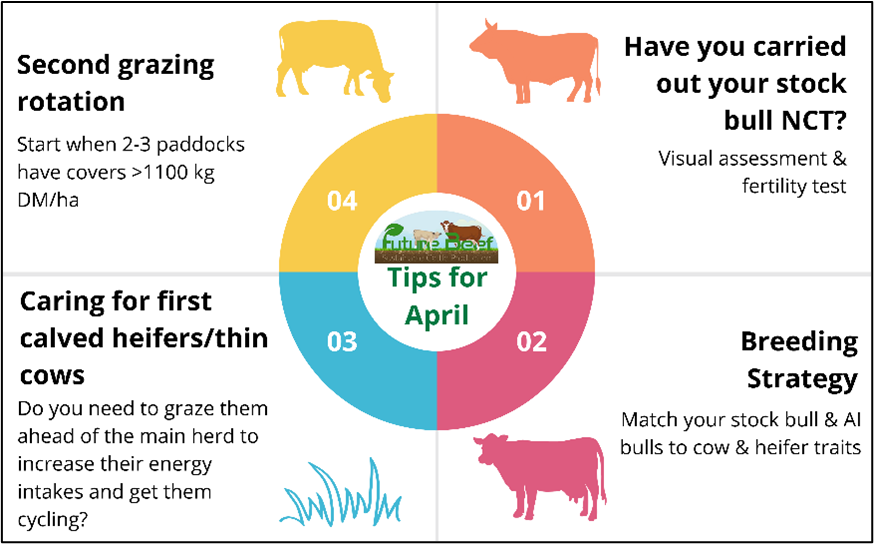
Top Tips for April
Upcoming Events
- Future Beef Breeding Webinars 2026 – Click here to register for the webinars!
- Tuesday, 31 March at 8pm: Breeding the Ideal Cow for Your System
- Chair:Chris Daly, Irish Cattle Breeding Federation (ICBF)
- Speakers:
- Rose Goulding, National Cattle Breeding Centre (NCBC)
- Donnchadh McCarthy, Future Beef Programme participant who produces bulls for finishing
- John Barry, Future Beef Programme participant and weanling producer
- This webinar will focus on how farmers can develop a cow that truly works within their system – one that is fertile, docile, milky, efficient to maintain and capable of producing a high-value calf each year. As you know, the cow contributes 50% of the genetics of every calf born, so breeding decisions are central to long-term herd performance.
-
- Tuesday, 7 April at 8pm: Breeding Technologies in Practice
- Speakers:
- Daire Markham, Veterinary Practitioner
- Edwin Carroll, Teagasc Grange
- Aonghusa Fahy, Future Beef farmer
- This webinar will focus on how breeding technologies can be used in practical farm situations to improve genetic gain, simplify breeding management and improve labour efficiency — an important consideration for many suckler farmers who are also working off-farm.
-
- Tuesday, 14 April at 8pm: Clover and research update from the Teagasc Derrypatrick herd, chaired by Dr. Peter Doyle.
Click here to register for the webinars!
- Watch back on last week’s webinar on ‘Maximising Output on the Suckler Farm’, featuring Alan Kelly (UCD), Frank O’Sullivan (Veterinary practitioner in Co. Meath) and Ruairi Cummins (Future Beef farmer) here:
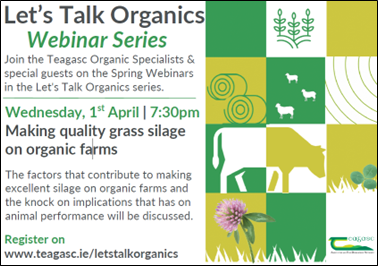
- Wednesday, 1st April at 7:30pm: Join the Teagasc Organics team and guest speakers online on Wednesday, 1st April for an episode of Let’s Talk Organics which will focus on making quality grass silage on organic farms. Click here to register: Webinar Registration – Zoom
- Organic Farm Walks ‘Making quality grass silage on organic farms’:
- Wednesday 8th April at 4pm: John Healy & family, Cooleclevane, Kilmichael, Macroom, Co. Cork P12YD37
- Wednesday 8th April at 6pm: Michael & Ann Edgeworth, Bohey, Drumlish, Co. Leitrim N39F8N1
- Tuesday 14th April at 2.30pm: Niall Slattery, Lecarrow, Enfield, Co. Meath A83NP77
- Thursday 16th April at 6pm: Thomas McCauley, Ballyarden, Boyle, Co. Roscommon F52X064
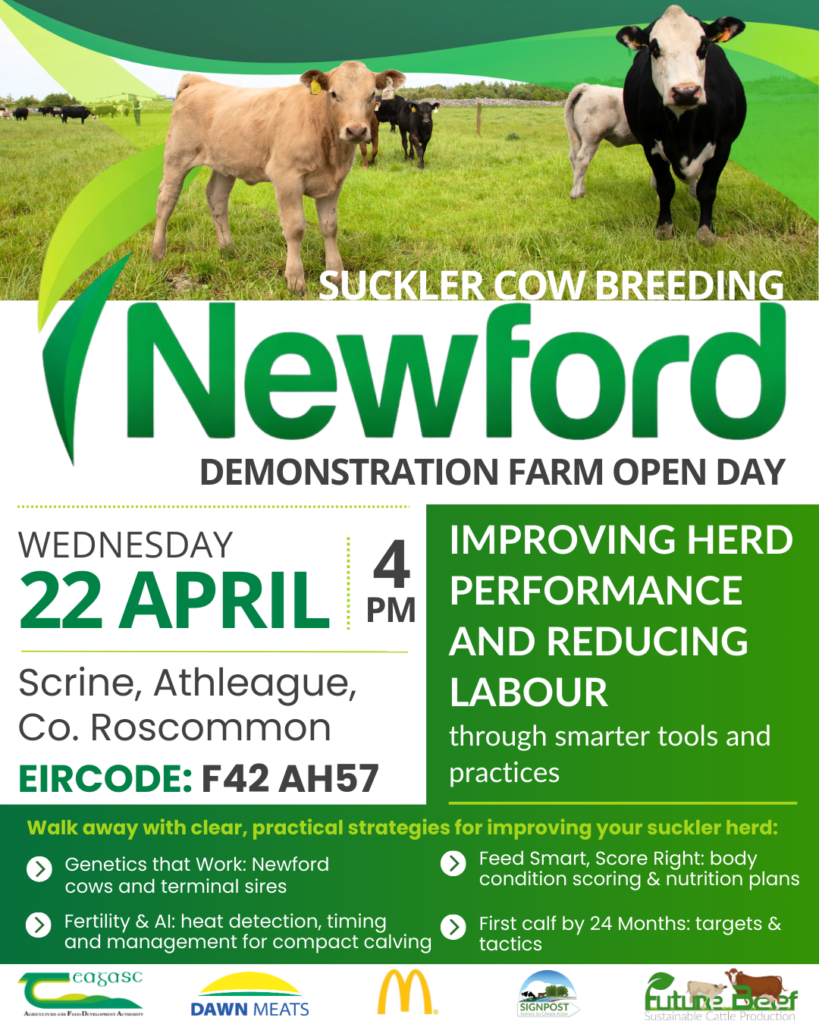
- Weds 22nd April at 4pm: Farm walk in Newford Farm, Athleague, Co. Roscommon F42AH57; ‘Improving herd performance and reducing labour’
- Organic Farming Principles Courses: Any farmer who joined the Organic Farming Scheme in 2026, must ensure that they complete this as part of the Organic Farming Scheme requirements, by 1st October 2026. The list of courses can be found at: Training – Teagasc | Agriculture and Food Development Authority
Technical Update – Stock Bull Fertility: Pre-Breeding Checklist
Ensuring stock bull fertility is critical for a successful breeding season. Your bull contributes up to 50% of herd performance, so he must be fit, fertile, and ready to work.
Key facts:
• Only 5% of bulls are infertile, but up to 25% are sub-fertile
• Sperm used today was produced 6–8 weeks ago
• Fertility is strongly linked to scrotal size, health, and nutrition
• 55–60% of pedigree bulls are culled due to feet and leg issues
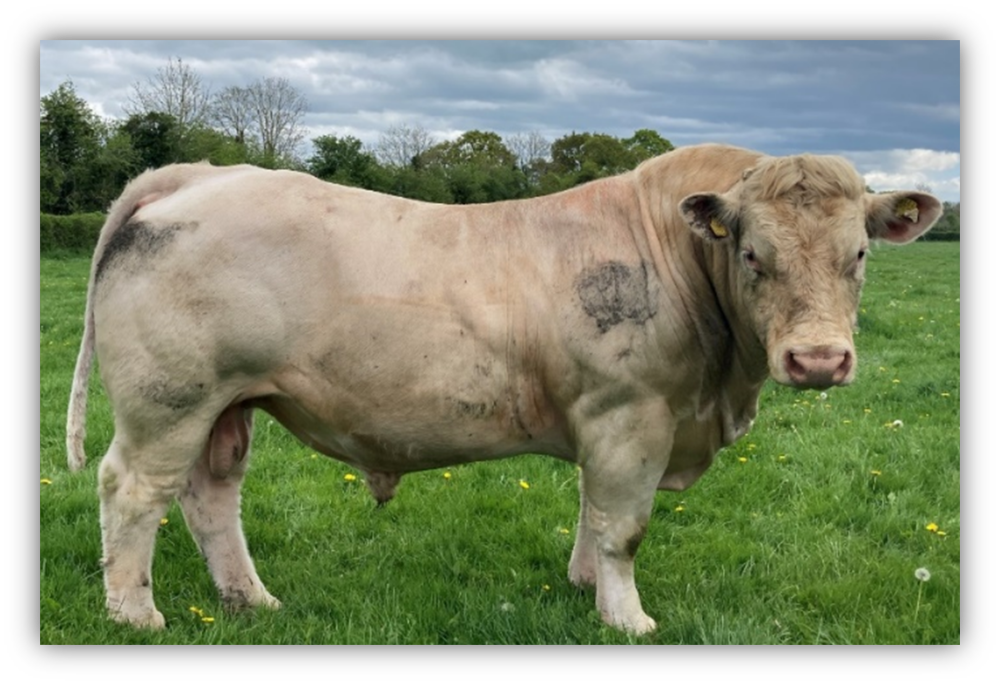
Lameness and feet issues are the main reason for culling stock bulls
1. Complete a Bull “NCT”
Carry out a full physical check before breeding:
• Feet & legs: Soundness is essential—lameness reduces serving ability
• Mobility: Bull must walk freely and mount cows
• Scrotum: Even, clean, min. 34cm (mature), 31cm (young bulls)
• Penis: Free from injury or discharge
👉 Poor condition leads to lower conception rates and a spread-out calving pattern
2. Fertility Test (Bull MOT)
Test bulls 6–8 weeks pre-breeding:
• Assesses semen quality, count, and motility
• Identifies sub-fertile bulls early
👉 Issues now reflect problems from weeks earlier
3. Nutrition & Body Condition
Bulls should be fit, not fat:
• Overfat = reduced stamina
• Thin = poor performance
• Feed quality silage and balanced minerals
• Gradually reduce meal feeding in newly purchased bulls
4. Health & Disease Control
• Vaccinate in advance
• Avoid stress and sudden diet changes
• Monitor for illness or injury
👉 High temperatures can damage sperm production
5. Monitor During Breeding
• Observe serving activity and libido
• Check repeats at 21–28 days
• Bull power: Young bull:~15 cows, Mature bulls: Up to 40 cows
👉 Each missed cycle can cost €90 per cow
Technical Update – GROfarmS – Organic Beef Finishing Trials
The GROfarmS project is the Teagasc flagship organic research project which is run in conjunction with UCD and is funded by DAFM. Last spring in Teagasc Grange, an organic beef finishing trial looked at a number of organic diets to evaluate animal performance and other key metrics. The diets included red clover silage on its own (RC only), red clover silage with concentrate (RC + Org. Conc.), PRG silage with concentrate (PRG + Conc.), intercropped silage (barley and peas) on its own (Bi-crop). The provisional results are presented in Table 1 below.
Table 1: Comparison of winter diets against AGD and intakes
| PRG + Conc* | RC + Org. Conc.* | RC. Only* | Bi-Crop* | |
| ADG (kg) | 1.09 | 1.33 | 0.85 | 1.01 |
| Forage DMI (kg/day) | 5.5 | 8.1 | 9.2 | 12.7 |
| Concentrate DMI (kg/day) | 3.0 | 3.0 | 0 | 0 |
| Total DMI (kg/day) | 8.5 | 11.1 | 9.2 | 12.7 |
From the above table, the best animal performance was achieved from the red clover silage when fed with 3kgs of organic concentrate. This led to an increased finished carcass weight of 30kgs over the almost 100day finishing period. Allowing for the relatively high costs of organic feed, this trial would suggest that the 3kgs of concentrate fed in this trial were justified. There were, however, significant differences in intakes across the diets, which may impact financial performance. Our team in Teagasc Grange are currently examining the financial and environmental metrics of each diet.
Farm Update: Organic Suckler Beef Farming in Offaly: Ken Gill’s High-Performance System
Ken Gill
Ken Gill farms organically on 120 hectares in Clonbullogue, Co. Offaly, operating a profitable autumn-calving suckler-to-beef system with 63 cows. Alongside beef production, Ken also grows organic oats for Flahavan’s, integrating tillage and livestock to maximise farm sustainability.
Maintaining strong animal performance in an organic suckler herd requires exceptional attention to detail. Ken focuses on herd health planning, excellent grassland management, and high-quality silage production. Careful sire selection is also key, with an emphasis on hybrid vigour, daughter milk, carcass weight, and finishing age traits to improve output efficiency.
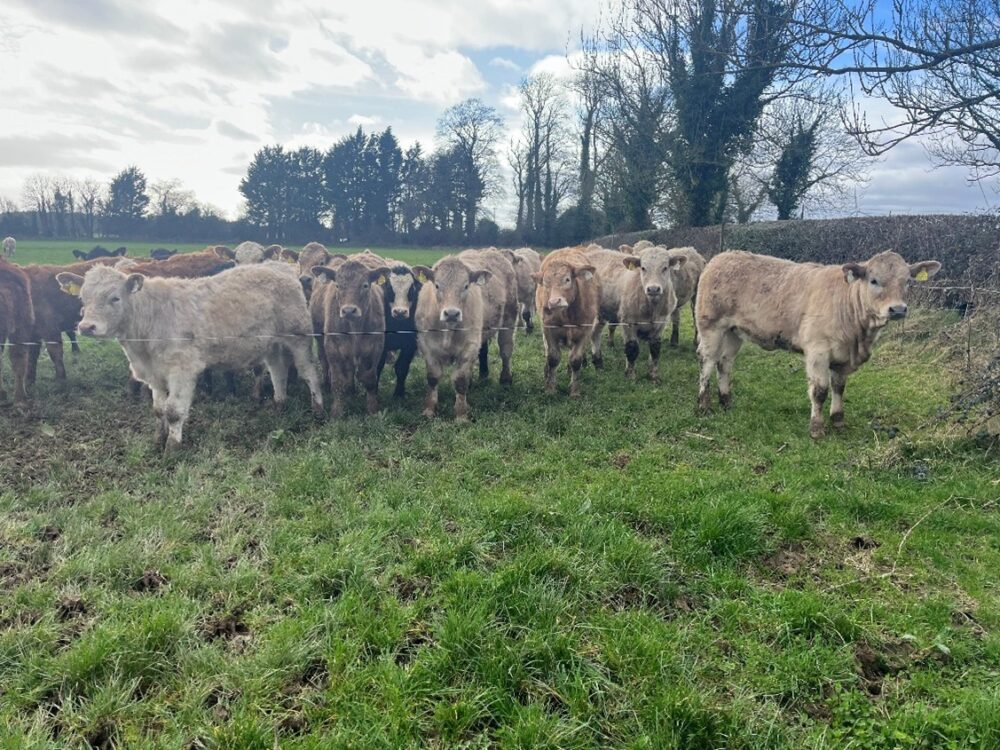
The 2025 calves are outperforming the 2024 born calves
Performance figures highlight this success. The 62 autumn-born calves were weighed pre-weaning on March 25th. Heifers averaged 252kg (0.98 kg/day), while bullocks averaged 264kg (1.01 kg/day). This represents an improvement of over 0.1 kg/day compared to 2024, driven by:
- Increased use of terminal genetics
- Fewer twin births
- Access to grass during winter
- High-quality silage fed during housing
Spring is a critical period for grass management on the farm. March and April create a grass supply pinch point, requiring careful grazing management. Post-weaning, calves are prioritised on the best grass, while store cattle utilise stubble ground. Dry cows are maintained on pea/wheat and grass silage indoors.
Silage ground management is also optimised, with slurry applied at 2,500 gallons/acre targeting high DMD (>74%) silage for May cutting. Red clover swards are managed separately to maximise yield and quality.
Ken’s system demonstrates how organic suckler beef farming in Ireland can achieve high performance through proactive management, strong genetics, and efficient grass utilisation.
Watch the video below where Ken highlights the differences between and organic and conventional system, and the key things that make his farm more profitable:
Click here to read more about Ken’s spring activities.
Farm Update: Kay O’Sullivan – Improving animal performance through breeding & winter diet
Kay O’Sullivan
Kay O’Sullivan is organically farming 63.2ha, including 11.16ha forestry. The soil type is a free draining loam. She runs a spring calving suckler to beef system, along with a lowland ewe system. Kay has increased the suckler cow numbers to 30 cows. The cows are all bred to 100%AI, typically to pedigree Angus bulls. Male offspring are overwintered on redstart for their first winter and finished at 18 to 20 months off a multispecies sward. Surplus heifers are often sold for breeding.
Kay’s latest update outlines steady progress across animal performance, soil fertility and breeding within her organic beef system. Over the winter, calves weaned in mid-January were introduced to a redstart (kale × rape hybrid) forage crop, supplemented with high-quality red clover and multispecies silage. This system operates without concentrate input. Animal performance has been strong, with average daily gains of up to 1.2 kg/day recorded on redstart. Weights taken in March show that 2025-born steers and heifers are ahead of their 2024 counterparts (+24kg for heifers and +43kg for steers) reflecting improved forage quality and overall system management.
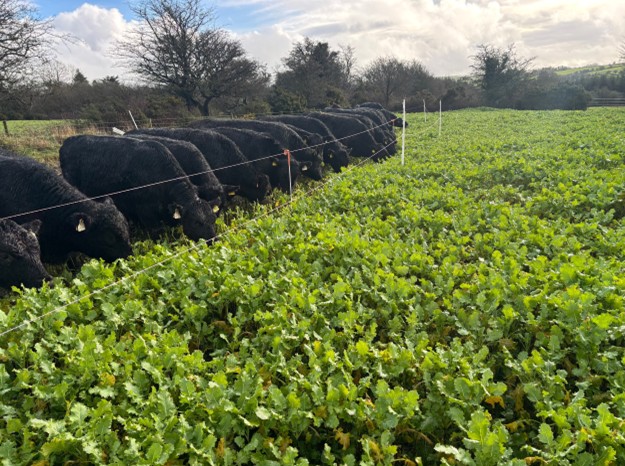
Weanlings grazing the Redstart crop
Soil test results from late 2025 indicate continued improvement in soil fertility. Soil pH has been corrected across the farm, with all areas now above pH 6.5, supporting optimal clover performance and nitrogen fixation. The proportion of land at Index 3 and 4 for phosphorus and potassium has increased, driven by targeted use of imported slurry and farmyard manure in line with organic system requirements.
Her breeding strategy remains focused on improving carcass weight and reducing age at finish, while maintaining strong maternal traits such as milk and fertility. Sire selection is being refined accordingly, with gradual improvements evident in herd performance.
Overall, the system reflects a consistent focus on optimising forage utilisation, soil fertility and genetic performance.
For further information on Kay’s farm, click here.
The Beef Edge Podcast
With many beef farmers balancing part-time work off farm, our new monthly series, ‘Managing Labour on Farm’ starts with Future Beef Programme participants Eamon & Donnchadh McCarthy on how they run their suckler-to-beef system. Listen & Follow on Apple/Spotify: https://podfollow.com/the-beef-edge
Keep up to date on all things beef on The Beef Edge Podcast weekly at the Teagasc Beef Edge podcast.