Sign up to receive the Teagasc Future Beef Newsletter
Technical Updates: Making Quality Silage | Using a synchronisation programme to reduce labour & tighten the calving spread
Farm Updates: Farm Update: Strong Calving, Early Grazing and Breeding Season Ready on John Pringle’s Farm | Compact breeding = Compact calving: Reducing labour at breeding on John and James Dunne’s farm
Top Tips | Upcoming Events | Scheme Closing Dates | Catch Up | The Beef Edge Podcast
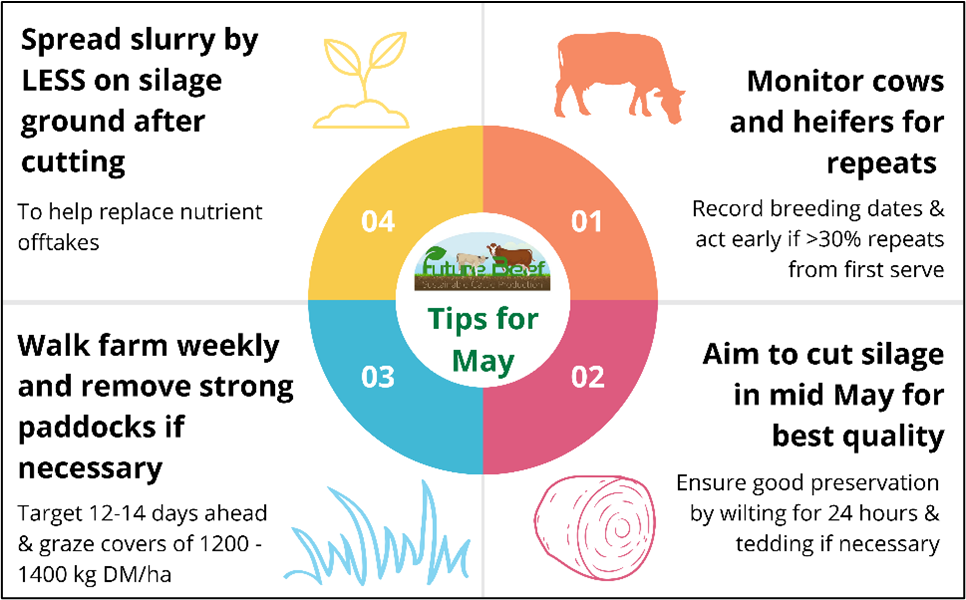
Top Tips for May
Upcoming Events
- Fri 29th May at 6.30pm: Farm walk on John Pringle’s Farm in Kilacloran, Aughrim, Co. Wicklow.
- Fri 5th June at 6.30pm: Farm walk on John and James Dunne, Tinnacrannagh House, Portarlington, Co. Offaly.
- Weds 1st July: Beef2026 Open Day at Teagasc Grange, Dunsany, Co. Meath
Scheme Closing Dates
- May 15: BISS & area-based schemes
- May 15: National Dairy Beef Weighing Scheme
- May 15: National Sheep Welfare Scheme
- May 28: Fuel Support Scheme (Expected to open on May 5)
Technical Update: Making Quality Silage
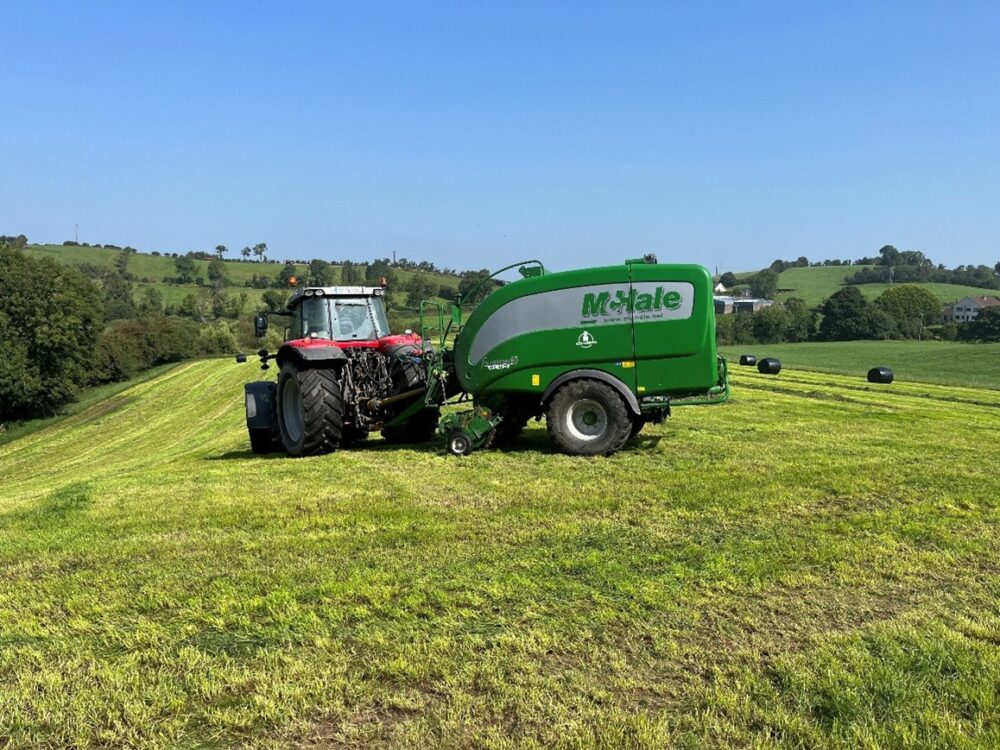
High-quality silage reduces concentrate feeding, lowers costs, and improves weight gain in suckler systems
High-quality silage is critical for suckler beef farms, influencing animal performance, winter feeding costs, and profitability. Key tips for making quality silage include:
- Aim to cut silage in mid-May for optimum quality and high dry matter digestibility (DMD)
- Silage DMD drops by 2–3% per week if cutting is delayed, reducing feed value
- Target 72–74% DMD silage for growing cattle and spring-calving suckler cows
- Lower quality silage (66–68% DMD) is only suitable for dry cows in good body condition
- Maintain good soil fertility (P, K, lime) to support grass growth and silage quality
- Apply nitrogen early to promote leafy, high-quality swards
- Consider reseeding to improve grass productivity and feed value
- Wilt grass to around 30% dry matter before ensiling to improve preservation
- Ensure rapid harvesting and airtight sealing of the pit or bales to reduce spoilage
- Plan silage cutting dates and winter feed budgets in advance
You can read more here.
Technical Update: Using a synchronisation programme to reduce labour & tighten the calving spread
AI usage in Irish suckler herds is low (18% of calves), mainly due to labour demands around heat detection. Oestrous synchronisation uses hormones to control the cow’s heat cycle, allowing planned and more efficient breeding.
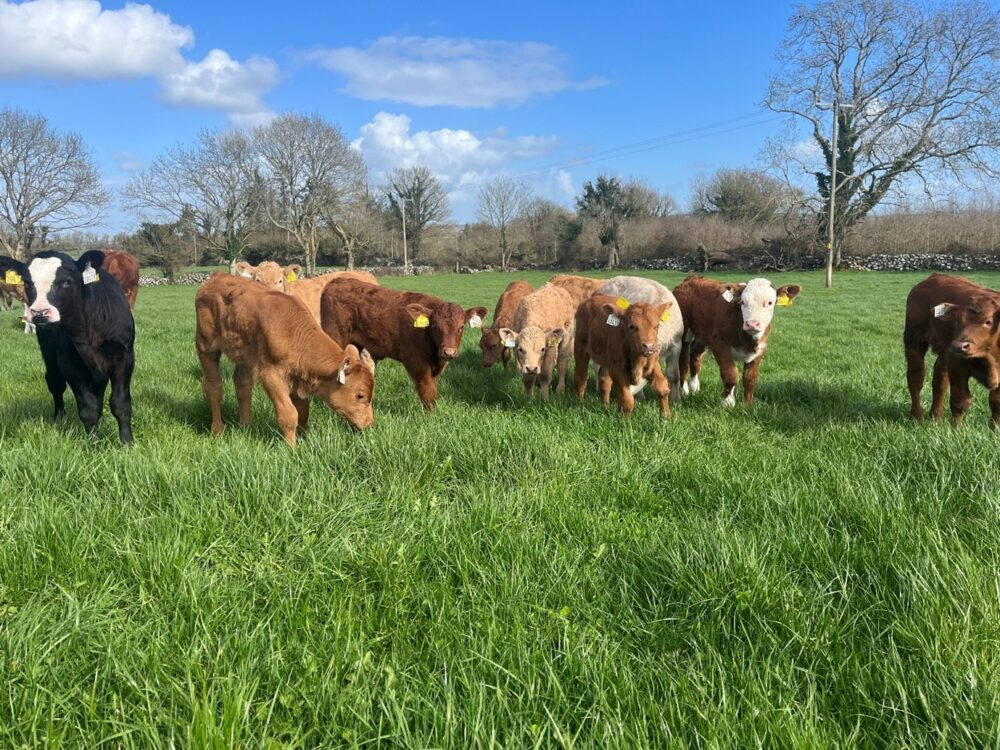
Synchronisation can help to tighten the calving spread on a farm o produce a uniform group of calves
Benefits for suckler farms
- Enables fixed-time AI, so all cows can be bred on a set day without relying on heat detection
- Helps reduce labour and simplify breeding management, especially on fragmented farms as animals are only handled 3 times, excluding repeat serves
- Allows use of high genetic merit AI bulls, improving herd performance
- Shortens the breeding season, leading to a more compact calving pattern
- Can induce heat in anoestrous cows
Performance expectations
- Around 55% conception rate to first timed AI
- Up to 80% of cows in calf within 3 weeks when repeats are included
Key management requirements
- Cows should be ≥35–40 days calved, in good body condition (BCS 2.5–3.0)
- Maintain good nutrition before and during breeding
- Strictly follow the timing of injections and protocol steps
- Ensure access to an AI technician and proper handling facilities
Heifer considerations
- Use prostaglandin-based programmes where possible (more cost-effective)
- Heifers must be cycling and at target weight (350–400kg+)
You can read more here.
Farm Update: Strong Calving, Early Grazing and Breeding Season Ready on John Pringle’s Farm
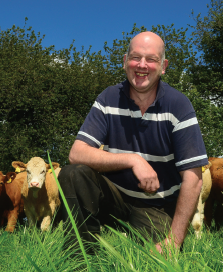
John Pringle
John farms full time with his wife Linda, daughter Lucy and sons William and Scott in Aughrim, Co. Wicklow. They farm 58.42 ha in one block and run a suckler calf-to-beef system consisting of 45 spring calving suckler cows. The males are finished as under 16 months bull beef, while the heifers, not retained for breeding, are finished at 23-24 months. He also has a mid-season ewe lambing flock of 225 ewes.
Calving is nearly complete on John’s farm, with a strong focus on herd health and fertility driving performance into the 2026 breeding season. Despite a longer housing period due to poor spring weather, calf health remained excellent, helped by the use of the Rotavec Corona vaccine, good colostrum management and quality straw bedding. Pre-calving nutrition, including soya supplementation, also supported calf vitality and cow performance. The lambing season also went well, thanks to a similar strong focus on health and hygiene.
Early turnout to grass has been key, particularly for maiden and first-calving heifers. Achieving target weights of over 400kg before breeding ensures heifers are cycling and ready for service. Grazed grass remains the most cost-effective feed, supporting cows with calves at foot and improving body condition ahead of breeding.
The breeding season begins on 10 May, with stock bulls and AI programmes playing a central role. Fixed-time AI using easy-calving Limousin sires has delivered compact calving and improved genetics. Mineral deficiencies in selenium, iodine and copper are addressed through bolusing to optimise fertility. All breeding stock, including ewes and ewe lambs have been vaccinated against bluetongue to prevent any fertility issues.
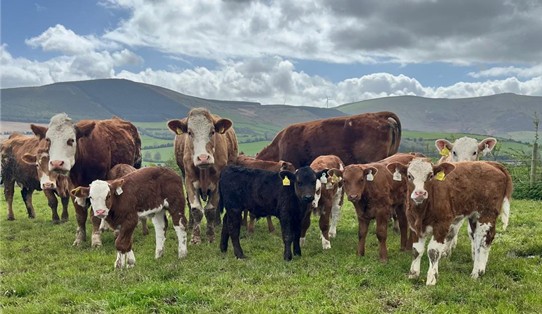
All breeding stock have been vaccinated against bluetongue
Grassland management and timely fertiliser application are supporting strong growth, while silage ground is set for a late May cut. The cattle and sheep are mixed grazing on the farm which helps to reduce parasite burdens for both groups.
Watch the video below where John tells us about his spring performance and outlines the plans for his farm walk on 29th May at 6.30pm::
Click here to read more about the performance of John’s finishing bulls.
Farm Update: Compact breeding = Compact calving: Reducing labour at breeding on John and James Dunne’s farm
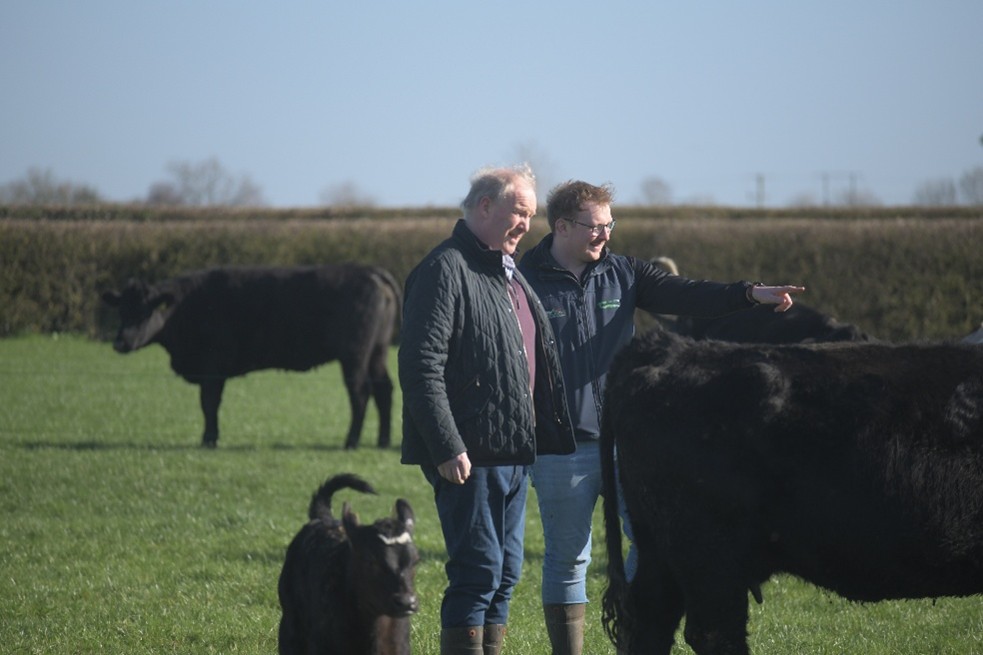
John and his son James
John Dunne is farming with his son James in Portarlington, Co. Offaly. This spring they are calved over 80 suckler cows in a system where all the progeny are sold around 24 months as forward stores to the mart or finished for factory sale. They also rear over 140 dairy bred calves per year and will be growing over 15ha of spring barley which is fed back on the farm.
Oestrous synchronisation and fixed-time AI are central to improving labour efficiency and breeding replacements on John and James’s busy farm. By using a structured synchronisation programme, they only handle cows three times — significantly reducing labour while achieving strong breeding results. Their programme began on 13 April, using a proven protocol developed across 2,200 suckler cows. This includes insertion of a progesterone device and GnRH injection on Day 0, followed by device removal with prostaglandin and eCG on Day 7, and fixed-time AI with a final GnRH on Day 10.
54 cows, all over 35 days calved, were bred to two high-index maternal sires – Lis-Na-Ri Gucci (SI4250) and Rubyjen Here’s Johnny (SI4350), selected for fertility, milk and calving ease on 23 April. Heifers will be bred to the Angus stock bull to ensure easy calving. The remaining cows will be bred to the Charolais stock bull who will be turned out at the beginning of May.
The tight breeding and resulting calving season help John and James to plan their workload around those times, and also help with other routine tasks like disbudding, castration and vaccination when calves are around the same age group.
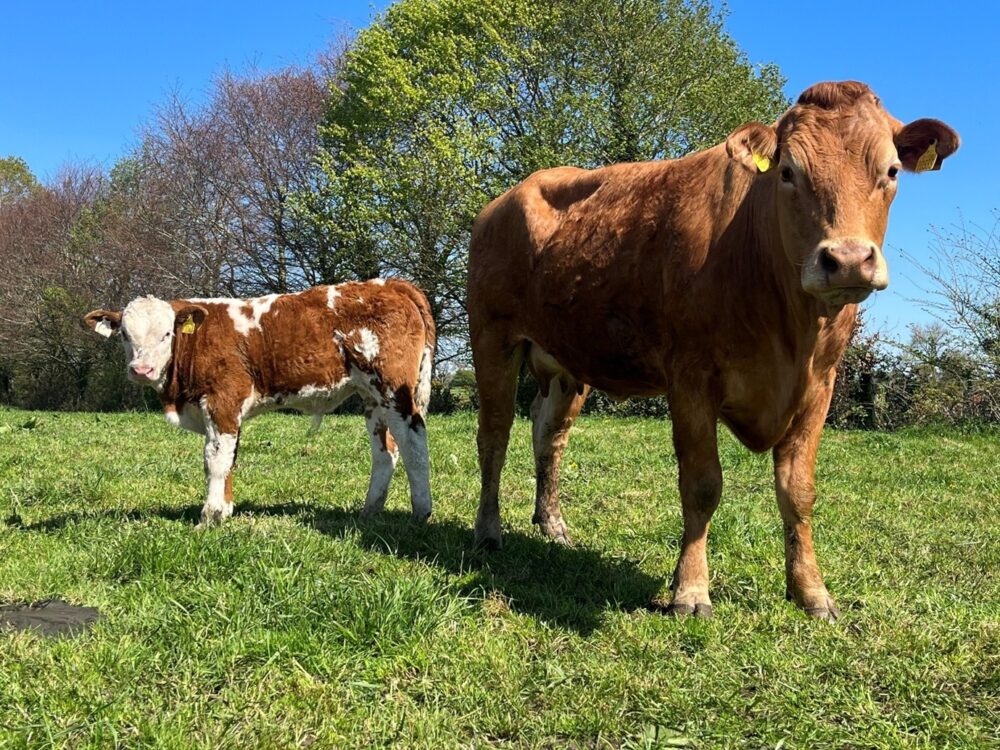
A SI4350 calf born on 8th February 2026 from last year’s synchronisation & AI programme
The cows bred to AI will be scanned before the farm walk on Friday 5th June so come along to find out the results, along with stands on lots of other topics which are highlighted in the video below:
You can read more about the latest farm sales and weights here.
Catch up
Watch back on the spring series of Future Beef webinars:
- Maximising output on the suckler farm– featuring Alan Kelly (UCD), Frank O’Sullivan (Veterinary practitioner in Co. Meath) and Ruairi Cummins (Future Beef farmer):
- Breeding the ideal cow for your system – featuring Rose Goulding (NCBC), Donnchadh McCarthy (Future Beef farmer), John Barry (Future Beef farmer) and chaired by Chris Daly (ICBF):
- Breeding technologies in practice – featuring Daire Markham (Veterinary practitioner in Co. Roscommon), Edwin Carroll (Teagasc Grange) and Aonghusa Fahy (Future Beef farmer):
- The role of clover on beef farms – featuring Peter Doyle (Teagasc Grange), Shane Keaveney (Future Beef farmer) and chaired by Pearse Kelly (Head of Drystock KT, Teagasc):
The Beef Edge Podcast
Keep up to date on all things beef on The Beef Edge Podcast weekly.