
Every great drink has a story – few begin four generations deep in the clay of County Kildare. At Athgarrett Malt, Garrett Headon is rewriting that lineage, transforming his family’s farmland from commodity barley fields into a factory for premium craft malting. Garrett’s vision is deceptively simple: grow crops regeneratively and turn them into high-value ingredients that brewers and distillers want to build with. The ambition runs up against a stubborn truth – nature doesn’t follow a recipe. Weather, soil biology and varietal quirks make each harvest different, while the beverage industry prizes repeatable flavor and consistent performance. That tension is what drives Athgarrett’s approach. The farm pairs regenerative practices with careful agronomy and technical analysis so that every sack of grain can be understood, tuned and malted to exacting standards. The result is malts that carry the character of place without sacrificing the consistency craft producers need. Athgarrett Malt is proof that the next wave of the bioeconomy will be grown locally and refined scientifically: rooted in soil stewardship, elevated by technical know-how, and destined to change how ingredients are valued from field to glass.
Challenge:Unlocking the Grain’s Potential
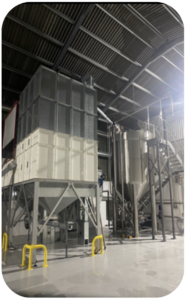
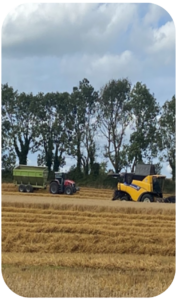
Athgarrett Malt is a fourth-generation family farm in Co. Kildare that has evolved into a unique enterprise, a regenerative tillage farm combined with a craft malting business. Growing wheat, barley, oats and other break crops within a carefully managed rotation system, the farm prioritises soil health, biodiversity, reduced diesel use and nutrient cycling. Garrett Headon, grower and maltster of premium Irish barley continually sought to move further up the value chain, producing high-quality craft malt from his own sustainably grown grain. However, the challenge was in optimising malting parameters to achieve consistent modification and maximise alcohol yield across barley, oats, wheat and rye.
Solution:From Micro-Trials to Macro Success
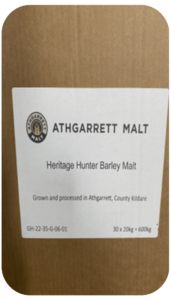
Athgarrett Malt collaborated with Teagasc’s National Centre for Brewing and Distilling (NCBD) to scientifically refine its malting protocols. Grain samples are supplied to NCBD for micro-malting trials, where steeping times, germination temperatures and airflow conditions are adjusted to optimise degree of modification. This directly influences enzymatic activity, extract potential and alcohol yield.
Through this R&D partnership, Athgarrett received data-driven feedback to fine-tune commercial malting operations. The collaboration now extends beyond barley to optimising oats, wheat and rye, positioning the farm at the forefront of diversified, sustainable craft malt production.
Impact: Cultivating the Future of Sustainable Production
- Sustainable Value Addition: Enables a regenerative tillage farm to capture added value through craft malting.
- Scientific Validation: Applies research-grade micro-malting to optimise performance and ensure brewing and distilling standards.
- Diversification: Expands innovation into oats, wheat and rye malting.
- Bioeconomy Contribution: Strengthens Ireland’s premium, low-input, sustainable grain-to-glass supply chain.
This collaboration demonstrates how Teagasc R&D supports primary producers in transitioning from commodity supply to specialised, high-value ingredient production grounded in sustainability.

“As both a tillage farmer and craft maltster, my goal is to produce the highest quality malt from grain grown sustainably on our own farm. Working with Teagasc gives us the scientific insight to optimise malting across barley, oats, wheat and rye, helping us refine our processes and consistently deliver performance to brewers and distillers.”
— Garrett Headon, Athgarrett Malt