
New framework could help target soil carbon farming across Ireland
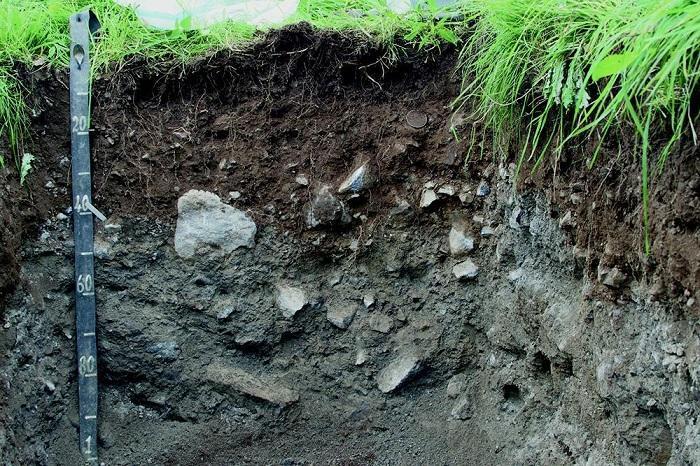
A new study led by Teagasc researchers in the European Journal of Soil Science has developed a practical framework that could help identify where soils have the greatest potential to store additional carbon, supporting future carbon farming initiatives and climate policy decisions.
Soils are one of the largest carbon stores on land. Soil carbon sequestration has the dual benefit of offsetting atmospheric CO2 emissions, while also benefitting soil quality and ecosystem functions. However, not all soils have the same capacity to store additional carbon.
This research, carried out by researchers at Teagasc and UCD, examined mineral soils across the northern half of Ireland using data from more than 10,000 soil samples collected through the Tellus survey. Advanced mapping techniques were used to estimate both current soil carbon levels and the potential for future carbon storage.
The study looked at two different aspects of soil carbon storage. The first focused on carbon that is strongly attached to soil minerals, known as mineral-associated organic carbon. This form of carbon is particularly valuable because it can remain stored in soil for very long periods. The second approach examined the overall amount of carbon that soils could realistically achieve under similar climate and land-use conditions.
A simple four-category framework
By combining these two approaches, the researchers developed a simple four-category framework that identifies areas with different carbon sequestration opportunities.
Around one-third of the study area fell into a category where soils are already close to their carbon storage capacity. In these locations, the priority should be protecting existing soil carbon through careful land management and avoiding practices that could lead to carbon losses.
A second group of soils showed potential to increase total soil carbon but had limited capacity to store additional long-term stable carbon. These areas may benefit from management practices that maintain a steady supply of organic matter, although gains may be more vulnerable to future losses.
Another category included soils with good capacity to stabilise additional carbon but where overall carbon levels are currently limited by climate or management factors. In these areas, practices that improve soil structure and encourage the formation of stable carbon pools could deliver long-term benefits.
The most promising category accounted for almost one-third of the mapped area. These soils have significant potential to increase both total carbon storage and long-term stable carbon. The researchers suggest these areas could be priority locations for carbon farming projects and targeted climate measures.
The researchers emphasise that a “one-size-fits-all” approach to carbon farming is unlikely to be effective. Instead, understanding the specific characteristics of different soils can help direct investment and management efforts where they are most likely to deliver lasting results.
As Ireland continues to develop climate and agricultural sustainability policies, this new framework offers a practical tool for identifying where carbon gains are most achievable and where protecting existing soil carbon should be the priority. By matching management practices to soil potential, farmers and policymakers can make better-informed decisions that support both farm productivity and climate action.
Full publication: Shi, L., O’Rourke, S. and Daly, K., 2026. A Classification Framework for Carbon Sequestration Potential: Modelling Soil Carbon Pools With Environmental Data. European Journal of Soil Science. https://doi.org/10.1111/ejss.70310
To learn more about Climate and Biodiversity research at Teagasc, visit the Teagasc Climate Centre webpage.
The Farming for a Better Future Open Day took place at Teagasc, Johnstown Castle on Wednesday, 10th June, centred on the theme of ‘Innovating for Healthy Soils and Clean Water”. All the information presented at the event is available here
More from Teagasc Daily: Rapeseed by-products show promise for reducing methane emissions from beef cattle
More from Teagasc Daily: Associating climate change mitigation with protein security