
The role and reach of Ireland’s SSRH scheme
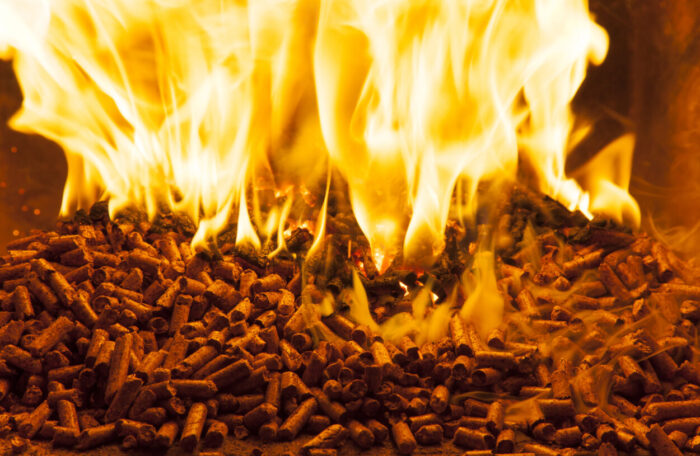
The Support Scheme for Renewable Heat (SSRH), writes Barry Caslin, Energy and Rural Development Specialist, plays a crucial role in Ireland’s transition away from fossil fuels towards renewable energy, particularly biomass boilers.
Since its launch in 2019, the scheme has provided operational support to businesses switching to biomass heating, offering financial assistance up to 15 years based on actual heat usage. It is expected that the scheme will cost more than €300 million over 15 years.
By 2025, the SSRH scheme had brought 66 projects onto the payment cycle, delivering over 113 gigawatt (GWh) hours of renewable heat. These projects span various sectors, including agriculture – such as pig farms, poultry and mushroom growers – as well as hospitality, hotels, nursing homes and education. The scheme has committed around €26 million in tariff payments to support these businesses in adopting cleaner heat technologies.
The scheme has continued to grow. By July 2026, there were 77 projects fully operational. Based on this growth, it’s estimated that the scheme has delivered approximately 132 gigawatt hours of renewable heat to date.
Despite these achievements, the pace of new applications has slowed, with challenges such as the complexity of the application process and uncertainty around future tariff changes affecting uptake.
To address these issues, recent updates to the scheme aim to make it more accessible and attractive, including potential tariff increases and support for external project management to help guide applicants through the process.
Furthermore, the scheme is potentially being extended to include larger energy users in the EU Emissions Trading System (ETS) sector. This expansion is expected to significantly boost renewable heat uptake, supporting Ireland’s renewable heat targets and strengthening the biomass supply chain for all users.
What is the Support Scheme for Renewable Heat (SSRH)?
The SSRH is a government scheme that provides financial support to renewable heat generators for a 15-year period. It was formally introduced on June 16th, 2019. The scheme is administered by the Sustainable Energy Authority of Ireland (SEAI) and covers non-domestic technologies including solid biomass, anaerobic digestion heating systems, and air/ground-/water-source heat pumps.
The SSRH is open to commercial, industrial, agricultural, district heating operators, or other non-domestic heat users at sites not covered by the ETS (at present).
Ireland has committed to reducing its carbon emissions, and the use of biomass or renewable heating helps farm businesses contribute to these targets. The scheme aims to support up to 1,300 GWh of renewable heat per year – equivalent to the heating needs of approximately 120,000 homes.
Operation of the SSRH
For heat pumps, a 30% grant investment aid is available, including:
- Air source heat pumps
- Ground source heat pumps
- Water source heat pumps
For biomass and anaerobic digestion heating systems, supports are provided as an operational aid based on eligible heat use.
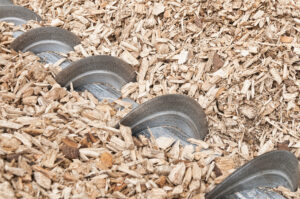
An auger system feeds wood chips into the combustion chamber of a biomass boiler, ensuring a controlled and consistent fuel supply. The chips are ignited in the primary combustion zone, where high temperatures facilitate efficient gasification and heat release, powering the boiler to generate renewable energy for heating applications
Ongoing quarterly payments are made for 15 years, based on a tiered tariff (which reduces as heat output increases). There are no minimum or maximum heat capacity limits for projects, except for district heating (minimum eligible size: 70 kW). An estimate of annual eligible heat is required, typically based on gas, oil, or coal bills for the previous 12 months. Projects must also demonstrate energy management and identify opportunities for energy reduction.
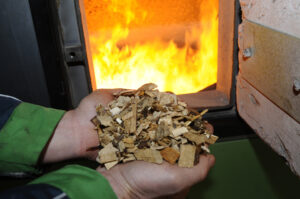
Wood chip, with its consistent particle size and high energy content, is an ideal biomass fuel for combustion systems supported under the SSRH.
What is Eligible Heat?
To qualify, heat must be both useful and used for eligible purposes. The heat demand must be economically justifiable. Eligible areas include space heating, water heating and process heating. Exclusions include open spaces, wood fuel drying, and electricity generation. SEAI has example case studies its website.
SSRH Tariffs (August, 2026)
| Tier | Lower Limit MWh/ year | Upper Limit MWh/year | Biomass heating systems tariffs € per MWh | Total available for biomass on each tariff level | Anaerobic Digestion heating systems tariffs € per MWh | Total available for AD heating systems on each tariff level |
| 1 | 0 | 300 | €56.60 | €16,980 | €29.50 | €8,850 |
| 2 | 300 | 1000 | €30.20 | €21,140 | €29.50 | €20,650 |
| 3 | 1,000 | 2,400 | €5 | €7,000 | €5 | €7,000 |
| 4 | 2,400 | 10,000 | €5 | €38,000 | ||
| 5 | 10,000 | 50,000 | €3.70 | €148,000 | ||
| 6 | 50,000 | N/A | 0 | N/A | 0 | N/A |
Recent Updates to the SSRH (July 2026)
1. Launch of External Project Management Support
- Project management costs are now eligible for support, capped at 7% of the total project cost.
- A 40% grant rate applies to eligible project management costs.
- Eligible costs include fees for services directly related to the development, approval and delivery of the project.
- This support is classified as De Minimis aid and requires an additional declaration and a short application. (Agricultural and non Agricultural applicants)
- Full details are available in the SEAI Guidance Note
2. Updated Project Start Date Rules
- Once SEAI has provided written confirmation of a valid application, applicants may now:
- Place orders for equipment
- Pay deposits up to 50% of equipment value and external project management costs
- This can be done without a Letter of Offer, offering greater flexibility in project start dates.
- SEAI still recommends awaiting a Letter of Offer before incurring expenditure, as there is no formal commitment until the Letter of Offer is issued.
Example – Poultry Unit Switching to Biomass
If a poultry unit currently using kerosene or propane switches to wood chip in a biomass boiler, they can apply for the SSRH. Assume:
- Annual heat usage – 1,200 Mega Watt hours (MWh)
- Oil price – €130/MWh (€1.35 per litre)
- Woodchip price – €43/MWh (€173 tonne at 20% moisture content)
- Project cost (boiler + storage) – €330,000
- Annual O&M cost – €5,000
Financial Summary Table
| Item | Value |
| Heat Usage | 1,200 MWh/yr |
| Fuel saving per MWh (oil − woodchip) | €87/MWh |
| Annual fuel saving | €104,400 |
| SSRH Tier 1 (300 MWh × 5.66 c/kWh) | €16,980 |
| SSRH Tier 2 (700 MWh × 3.02 c/kWh) | €21,140 |
| SSRH Tier 3 (200 MWh × 0.50 c/kWh) | €1,000 |
| Total annual SSRH payment | €39,120 |
| Total annual savings / income | €143,520 |
| Annual O&M cost | €5,000 |
| Net annual savings | €138,520 |
| Project cost (boiler + storage) | €330,000 |
| Simple payback (excl. interest) | 2.4 years |
In Brief
The SSRH, combined with fuel savings, can deliver a net annual saving of €138,520 and a simple payback period of just 2.4 years for this example. The higher the price of fossil fuels, the quicker the payback to switch to biomass (wood chip or wood pellets).
Overall, the SSRH scheme has laid important groundwork for renewable heat adoption in Ireland. The recent changes to the scheme reflect a commitment to overcoming current challenges and accelerating the transition to sustainable heat across a wider range of industries.
Full details are available online at SEAI Business Grants
More from Teagasc Daily
Also read: RED III Feedstock Requirements for Biogas Plants
Also read: ReNure: A New Opportunity for Irish Dairy Farmers Facing Nitrates Limits
Also read: Support needed to bring small-scale biogas into the mainstream
Also read: The rise of hydrogen-fuelled tractors and vehicles
Also read: Diversifying Irish agriculture – navigating new paths to farm resilience
Also read: Exploring Farm Diversification: Renewable Energy
Also read: Unlocking Ireland’s rural income potential
Also read: Harvesting renewable energy with SRESS