

Breeding
- New Charolais stock bull bought
- Nose ring fitted for safety
- 1 copy of the Q204x myostatin gene


Shane and Gráinne have bought a new pedigree Charolais bull for next year’s breeding season. He was born in August 2025 and is sired by Cavelands Fenian (LZF). He was bought to replace the old Charolais stock bull on the farm and will be used on cows to produce terminal cattle. He has a terminal index of €166 and s 5 stars across all breeds for this. He is 5.2% calving difficulty for beef cows at 69% reliability, 35.9kg PTA for carcass weight and 2.03 PTA for carcass conformation which is good. He is carrying one copy of the Q204x myostatin mutation which can produce heavier, more muscular calves at birth so Shane and Gráinne will be mindful of that when matching cows to him.
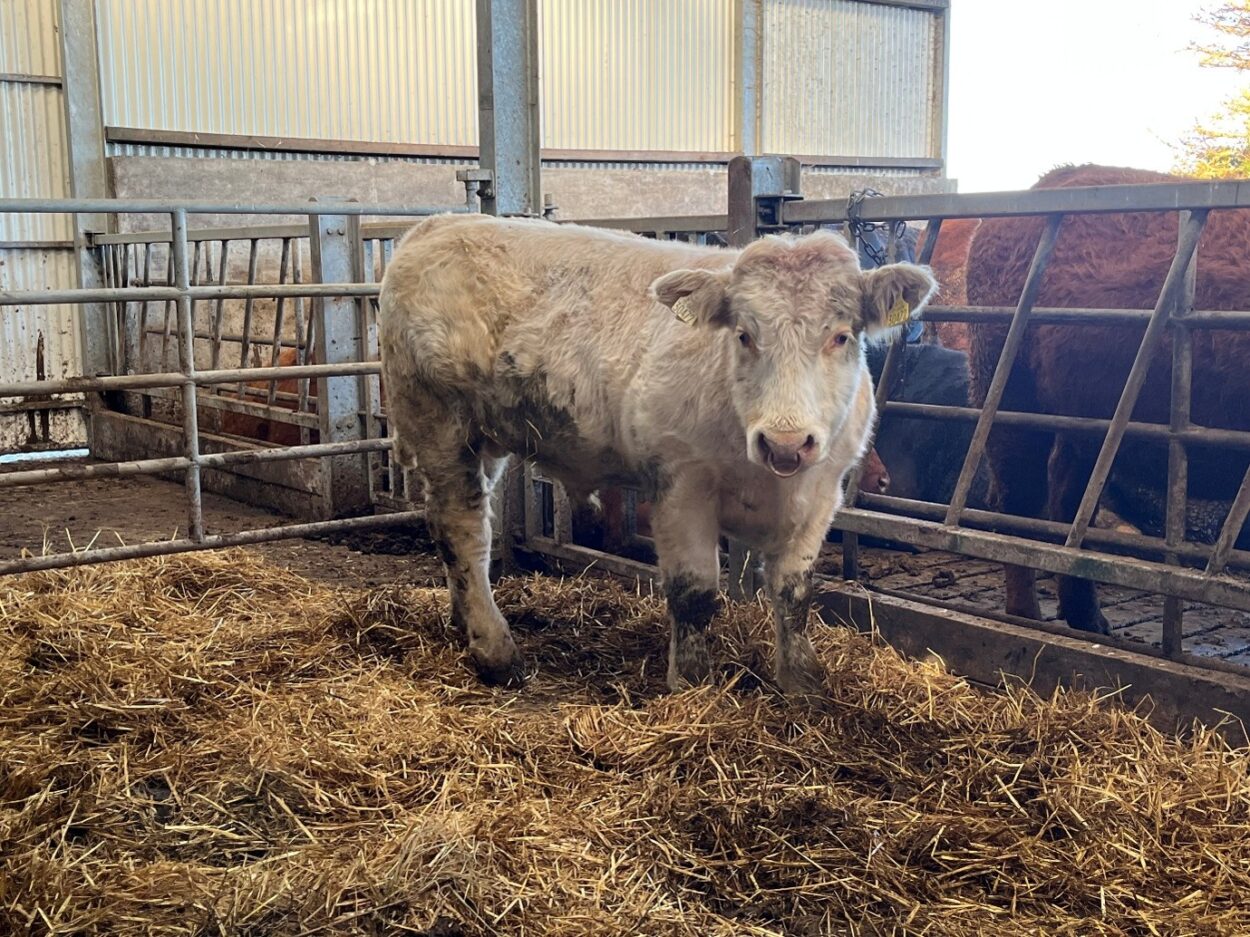
Figure 1: New Charolais stock bull
While he is €150 on the replacement index, his daughter milk is -1.9kg and Shane and Gráinne do not plan to breed replacements for him. He is also high calving difficulty on heifers at 10.1% with 65% for reliability.
Visually he has good feet and shape and has more growing to do. He weighed 449kg on 14th November. He is quiet to handle so far, which is a priority on the farm. His nose ring was in place before he was bought as an extra precaution. He is penned in a calving pen beside the cows while he adjusts to his new home and diet. He will be fertility tested before the breeding season starts in 2027 and will be vaccinated against bluetongue.
The suckler weanlings were dosed at the end of October against stomach worms and lungworms. They had a low coccidiosis burden at that time, but Shane did not treat them on veterinary advice. They were given a multimineral injection before housing with their Bovipast booster vaccine and had their backs clipped at housing.
Historically, rumen fluke has been an issue on the farm. This year’s autumn weights continue to show the trend with only 0.94 kg/day gained in 15 bulls from 12th August to 26th October. A housing weight on 14th November showed a weight gain of 0.76kg/day in 16 matched bulls since 26th October, despite being on 4 kg of ration/head/day. 21 bulls averaged 318kg on that date. They will be treated with an oxyclozanide dose for rumen fluke which can be administered 2 weeks after housing to kill immature and mature rumen fluke.
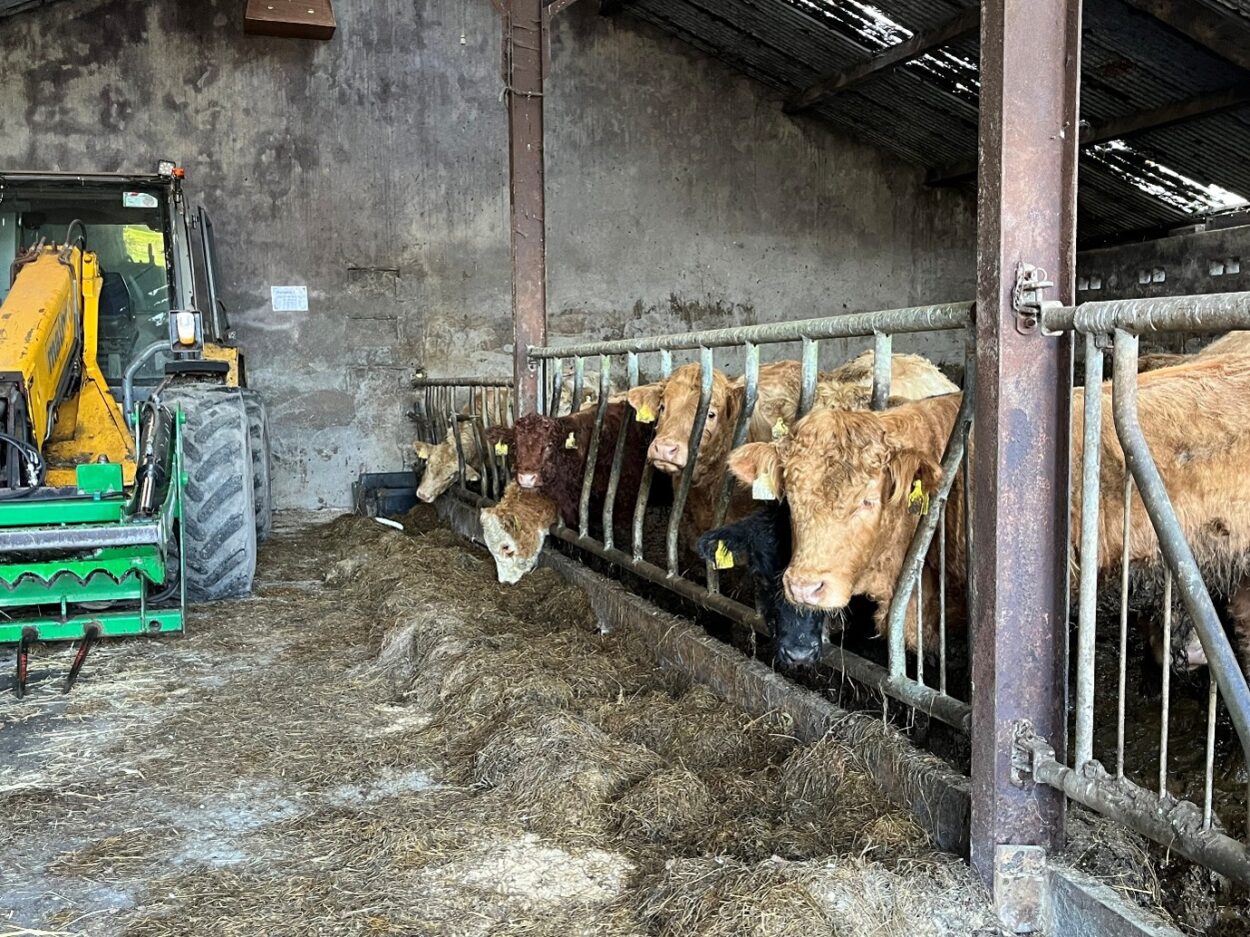
Figure 2: Some of the 2026 born bulls
The dairy beef calves were dosed with Topimec which treated them for lung worms and stomach worms on 7th November. They had been coughing and continued to do so for 7 days after treatment as they cleared their lungs. They are grazing their final paddock before moving to the redstart crop.
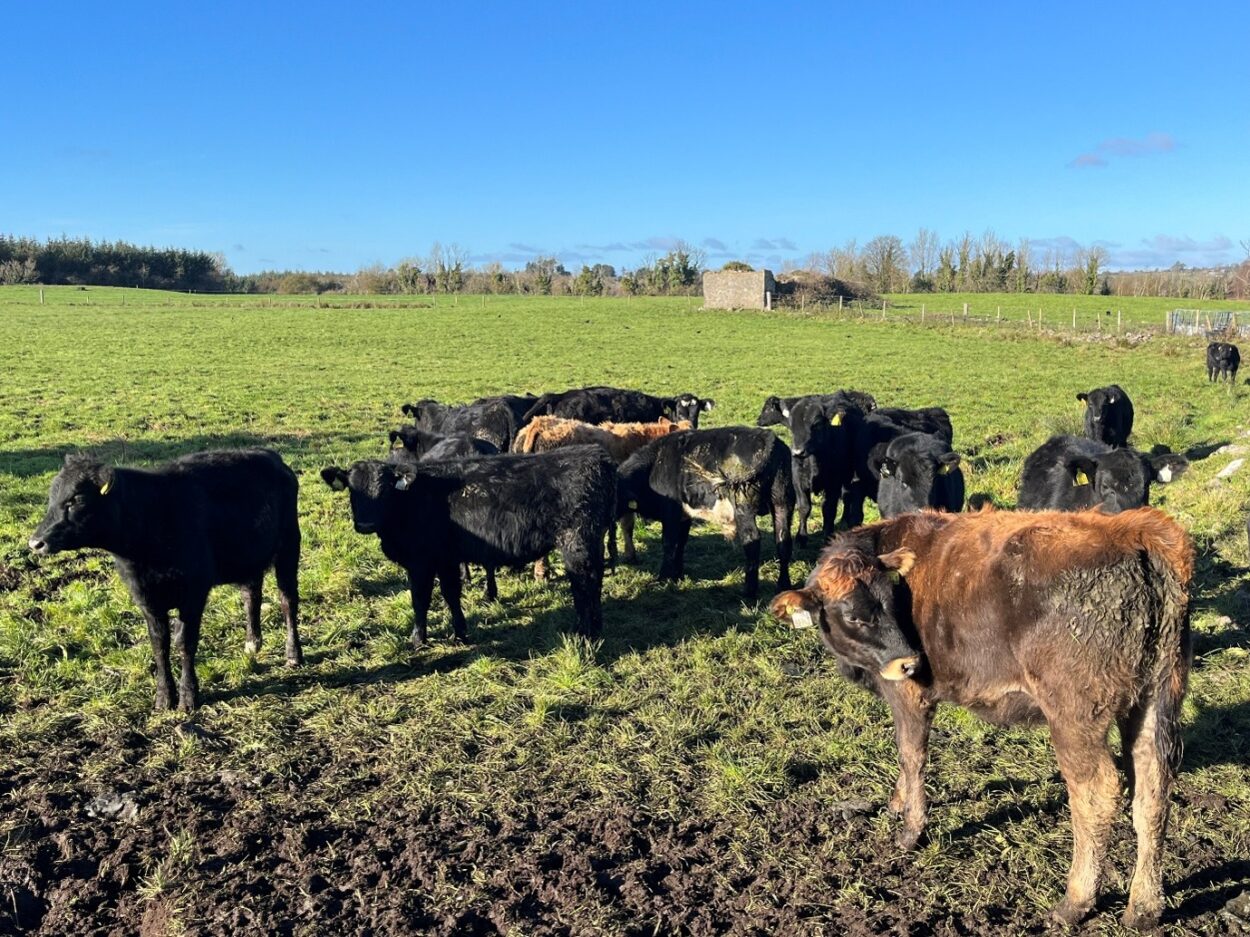
Figure 3: The dairy beef cattle will be moving to the redstart this month
The growing bulls are eating 4kg of ration/head/day while the heifers are on 3kg/head/day. Shane will soon be feeding them at mix through the diet feeder which will reduce the handling of meal and will allow it to be fed out consistently with the silage.
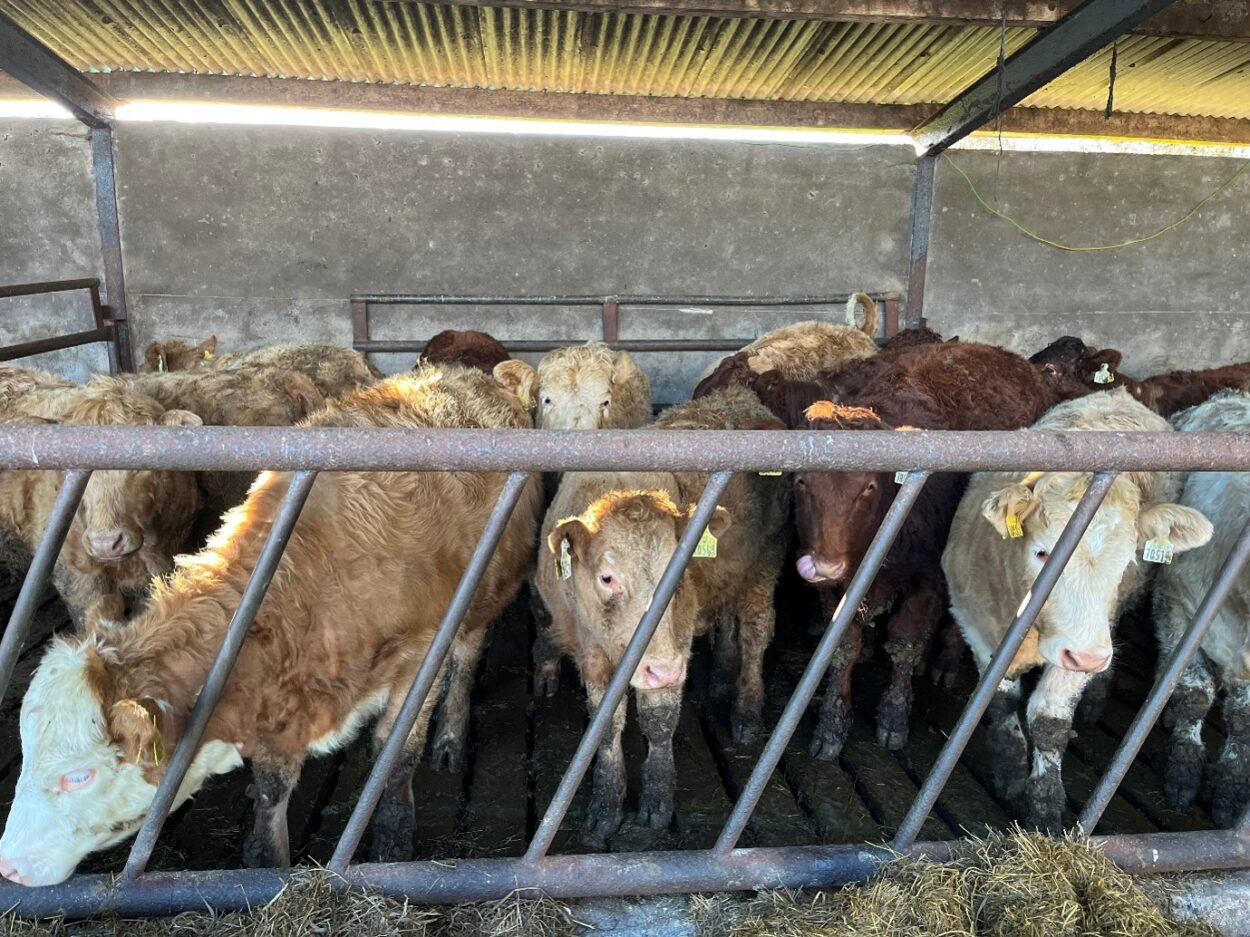
Figure 4: The 2026 born suckler heifers
The dairy beef calves are on 2kg of a 12% crude protein ration at grass.
Silage samples were taken on the farm with results as follows: