
Hedgerow management – how best to manage your hedges
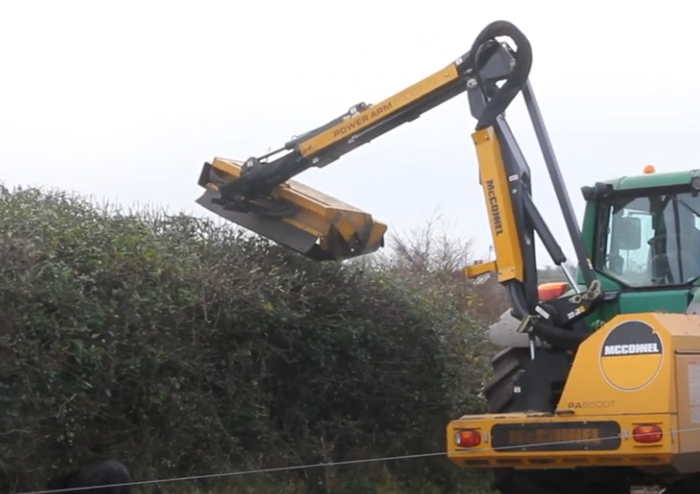
Many hedgerows benefit from periodic cutting to maintain species diversity and prevent vigorous plants from dominating. As part of Hedgerow Week 2026, a partnership between the Heritage Council and Teagasc, we examine some of the important points to consider when managing your hedgerows.
Timing is important
Cutting at the wrong time can disturb or destroy nesting birds, their eggs and nests, which are protected under Irish and EU law.
Section 40 of the Wildlife Act restricts hedge and vegetation removal during the bird‑nesting season; as a practical rule, work is generally only permitted between 1 September and 28 February. Limited exemptions exist but any work that destroys or disturbs nests may still be an offence.
Diversity
Farmers, landowners and roadside hedge authorities should aim for some structural diversity across the hedgerow. Plan a range of hedgerow heights if possible; some tall, and some shorter, to cater for a broader range of wildlife and to enhance the biodiversity value. You are not obliged to cut hedgerows, but where hedgerow cutting takes place as part of the course, these practical points can be followed:
Treeline hedges
Only carryout side‑trimming where overhanging branches are an issue. Never top the canopy of treeline hedges, unless there is a specific site management or safety reason for doing so.
Many of the high biodiversity value features of treeline hedgerows are evident in their tallest foliage and topping treeline hedgerows that have not previously been managed in this way will reduce these benefits and damage the structural integrity of the plant.
Topped hedges
Trimming from the top naturally controls the plant’s structure, encouraging lateral shoot development leading to bushier and denser regrowth. Don’t cut the crown below about 1.8m.
Regular, light trimming from a solid base to form a triangular profile encourages a thicker hedge. Ensure not to cut the hedge back to the exact same height and width year after year. This creates a dense, gnarled scar tissue at the trim line.
And, over time the hedge directs all its energy into producing a flurry of thin shoots from this line, while the base of the hedge becomes starved of light and life, leading to a gappy, ‘mushroom-shaped’ structure that is poor for wildlife and weak in its structure.
Using the correct machinery
Finger bar cutters with a pair of reciprocating blades are very suitable for trimming young leafy growth. A well sharpened flail cutter should only be used on soft growth of thorny species up to approximately 25mm thick, but never on woody species (such as willow, hazel and cherry): the resulting ragged ends can cause issues and invite disease. Woody species and thicker stems should be cut with a circular saw to provide a clean cut that will cap over and prevent disease and water ingress.
Rejuvenation
Mature, gappy hedges can be restored by infilling, coppicing or laying. Choose the method to suit the site and carry out works in phases so wildlife always has some cover.
Planting
Use locally sourced native species for infill or new planting (e.g. hawthorn, blackthorn, hazel, holly, willow, alder). Aim for multi‑layer structure (trees, shrubs, bramble) to provide year‑round shelter, nesting cover and food for wildlife.
Practical precautions
Check for nests before cutting, keep works within the permitted period where possible, and record reasons for any out‑of‑season work or exemptions relied upon.
The above was published as part of National Hedgerow Week 2026, a partnership between the Heritage Council and Teagasc.
Click here for more information on National Hedgerow Week 2026.
More from Teagasc Daily: Hedgerows – a lifeline for birds and insects
More from Teagasc Daily: Maintaining and improving water quality and mitigating climate change – the role of hedgerows
More from Teagasc Daily: Hedgerows and our heritage
More from Teagasc Daily: Shade and shelter – an understated benefit of hedgerows
More from Teagasc Daily: Hedgerows: ‘Commuter corridors’ for wildlife