
Farmer health programme informs EU best practice
Diana van Doorn, David Meredith
Internationally, farmers face significantly elevated risk of cardiovascular disease (CVD), yet they are a ‘hard-to-reach’ population through conventional health services. This gap represented both a serious occupational health challenge and an opportunity: delivering health interventions in settings that farmers already frequent, such as livestock marts and agri-branches, where engagement barriers could be overcome.
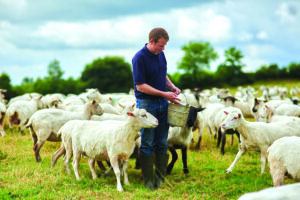
The ‘Farmers Have Hearts Cardiovascular Health Programme’ (FHH-CHP), developed through a Teagasc Walsh Scholarship, delivered a gender-sensitive, farmer-centred CVD intervention to 868 livestock farmers. The programme combined CVD health screenings at marts and agri-branches with tailored lifestyle change support. Programme effectiveness was rigorously evaluated after one year. Findings demonstrated measurable improvements in health outcomes and behavioural change and were published and disseminated to national and European policymakers. Teagasc researchers provided expert input to the European Agency for Safety and Health at Work’s (EU OSHA) review of work-related CVD prevention across European Union member states, and programme findings informed Ireland’s Farm Safety Action Plan.
EU OSHA selected the programme as one of five European best-practice case studies in occupational CVD prevention, with Teagasc expert input shaping the forthcoming EU OSHA report on work-related CVD prevention. This is a policy document that will inform occupational health strategy across all member states. At national level, 41% of participants in the Irish study improved their CVD risk profile, while 81% reported sustained behaviour change. Nationally, the programme’s findings informed Ireland’s Farm Safety Action Plan, and the Health Service Executive is now piloting a national programme rollout in 2026. This demonstrates a clear pathway from research to health service delivery at scale.
Contact: diana.vandoorn@teagasc.ie
Funding: Teagasc Walsh Scholars Programme; National Centre for Men’s Health South East Technological University; Tirlán; Health Service Executive; Irish Heart Foundation; University College Dublin
Impact pathways: Capacity Building; Policy Information and Support
CAP changes supporting farmer mental health
David Meredith, John McNamara, Joseph Firnhaber, Conor Hammersley
Farmers are exposed to multiple occupational stressors including isolation, climate change and financial and administrative burdens. Left unaddressed, these can result in mental health challenges, an issue increasingly recognised amongst EU policymakers. Despite this, mental health support for farmers and farm workers remains underdeveloped or fragmented across many EU Member States.
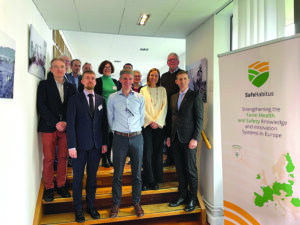
Through the EU Horizon-funded SafeHabitus project, Teagasc led a comprehensive programme of evidence generation and policy engagement. Activities included: a systematic scoping review of 603 studies on agricultural psychosocial stressors; focus groups with young farmers at a European Council of Young Farmers event; and a stakeholder workshop involving European experts including farmers, farm advisors, industry representatives and policymakers. A policy seminar was hosted at the European Parliament bringing together MEPs and farming organisations to explore policy options. The findings were synthesised into a policy brief, containing 10 evidence-based recommendations.
This body of work contributed to a landmark policy development requiring farm advisory services to raise awareness about mental health issues and availability of the relevant services. This marks the first time that mental health has been embedded within farm advisory services supported by EU agriculture policy. Once enacted, this provision has the potential to shape advisory services across all EU Member States, with direct benefit to Europe’s farming population.
Contact: david.meredith@teagasc.ie
Other contributors: CIHEAM (International Centre for Advanced Mediterranean Agronomic Studies); National Centre for Farmer Health (Australia); ZRC-SAZU (Research Centre of the Slovenian Academy of Sciences and Arts)
Funding: Horizon Europe
Impact pathway: Policy Information and Support
Improving farmers’ pension provision
Anne Kinsella
The sustainability of agriculture in Europe is deeply intertwined with the financial wellbeing of its farmers. In particular, low pension coverage and late retirement are limiting generational renewal.
This research compared EU pension systems to identify potential solutions to support Irish farmers in transitioning to retirement. Adopting a mixed-method approach combining desk-based research, interviews and surveys, it explored pension coverage among Irish farmers compared to five other European countries. The research also analysed different national approaches to farm retirement schemes, identified gaps in Ireland’s current system and suggested practical policy recommendations.
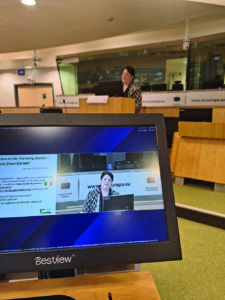
These research findings were presented to the United Nations Food and Agriculture Organization, European Committee of the Regions, European Commission DG Agri, Irish Commission on Generational Renewal, and the CAP unit of the Department of Agriculture, Food and the Marine, and disseminated through TResearch and RTÉ.
The solutions identified by the research to redress gaps in farmer pension coverage included the payment of Pay Related Social Insurance by successors/family members from when they begin working on-farm; the introduction of transitional provisions to ensure those currently not adequately covered by the system do not remain disadvantaged; and, as auto-enrolment does not extend to the self-employed farming community, consideration should be given to its extension to farmers in some form. This further exacerbates the requirement for a state pension system that is inclusive of all farmers.
As a direct consequence of this research project, these insights and other findings were listed in key recommendations of the government’s Generational Renewal Report (2025). The research project itself was heavily cited (over 20 times) in the report.
Contact: anne.kinsella@teagasc.ie
Other contributor: Maynooth University
Funding: Department of Agriculture, Food and the Marine
Impact pathway: Policy Information and Support
Modelling Ireland’s nitrates derogation impacts
Michele McCormack, Elodie Ruelle, Cathal Buckley, Trevor Donnellan, Kevin Hanrahan, Laurence Shalloo, Joe Patton, Pat Dillon
Ireland’s nitrates derogation permits farmers to operate at an organic nitrogen (N) stocking rate above 170kg/ha within the framework of European Union (EU) regulations. Drawing on robust data from the Teagasc National Farm Survey (2021–2023), this study quantifies the proportion of dairy farms exceeding the 170kg/ha threshold and evaluates the economic implications of removing the derogation at farm level. It also examined a range of mitigation strategies to offset the associated economic impact, including land rental, slurry export, contract rearing and herd reduction.
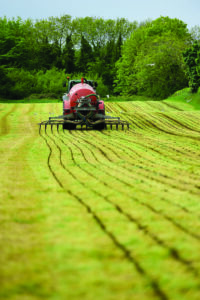
The analysis estimated that approximately 49% of dairy farms in Ireland, representing 65% of national milk production, operated above the organic nitrogen (N) stocking rate limit of 170kg/ha. Requiring these farms to comply with stocking rates below 170kg/ha would result in a national reduction of approximately 203,719 cows (14%) and a decline in milk production of 1.2 billion litres (15%). The findings also indicate that, if herd reductions were required, affected family farms would experience a substantial decline in income of approximately 39%. Although alternative mitigation strategies would also lead to significant income reductions, their impact would be comparatively less severe.
This research has had a direct impact on national policy development and the extension of Ireland’s nitrates derogation until the end of 2028. The research was commissioned specifically to inform the government’s formulation of the next Nitrates Action Programme (2026-2029) and to support negotiations with the European Commission and other EU member states. The analysis provided an evidence-based assessment of how changes to maximum organic stocking rates would affect Irish dairy farms.
Contact: michele.mccormack@teagasc.ie
Funding: Teagasc core funding; Department of Agriculture, Food and the Marine
Impact pathways: Policy Information and Support