
Healthier porridge from Irish-grown oats
Nefeli Lampoglou, Ewen Mullins, Atikur Rahman, André Brodkorb, Daniela Freitas
This project focused on creating added value for Irish tillage farming through advanced nutritional profiling of oats. Although oats are widely promoted for heart health, the amount required to achieve clinical benefits can vary considerably across oat varieties. Depending on the variety, reaching the same cardioprotective dose could require anywhere from 4–24 tablespoons of rolled oats per day, a very significant difference for consumer and product developers alike.
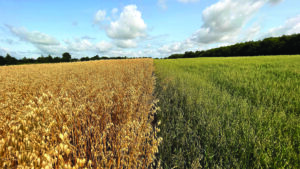
NutriOats is a multidisciplinary research project investigating the nutritional composition, digestibility and potential health effects of Irish-grown oats. In the largest nutritional diversity screening to date, published in a high-impact journal by Nature group, this project revealed an exceptionally wide compositional spread among 95 cultivars, among them Irish and European open-source heritage oats. Findings include some high yield varieties with over 20% protein content, which are suitable for the growing global plant protein food market.
This project is already influencing agricultural practice. Seed growers are starting to use results to prioritise cultivars that combine superior nutritional quality with strong yield and resilience traits. Seeds from seven lines have been provided to the Irish Seed Savers Association for on-farm evaluation, while Teagasc advisors are assessing their suitability in organic production systems. In parallel, material is being trialled with the Agrifood and Bioscience Institute as part of the Co-Centre for Sustainable Food Systems. Integrating science with agriculture testing, NutriOats is helping position Irish-grown oats as a leading option for healthy, climate-resilient food systems.
Contact: daniela.freitas@teagasc.ie
Other contributors: University College Cork; Irish Seed Savers Association; Agrifood and Bioscience Institute,
Northern Ireland; Co-Centre for Sustainable Food Systems
Funding: Research Ireland Pathway programme
Impact Pathway: Technology Development and Adoption
Biocontrol adoption in the mushroom sector
Joy Clarke, Helen Grogan, Brian McGuinness, Donal Gernon
The farm gate value of the mushroom industry was €158M in 2025. Disease control on mushroom crops is a major challenge within the sector, with an estimated 7–8% of Irish crops lost annually to disease. Due to resistance development and regulatory withdrawals, only one fungicide remains available to mushroom growers in Ireland. This project evaluated whether biocontrol-based treatments could provide effective disease management and assessed the resistance status of this key fungicide.
This project evaluated two bacterial biocontrol strains: a commercially available product used in other crop systems and a novel strain first isolated from a crop grown at the Teagasc Mushroom Research Unit. Laboratory experiments and multiple large-scale crop trials were conducted to evaluate effectiveness against the pathogens responsible for two major diseases (cobweb and dry bubble) affecting the mushroom industry. In parallel, resistance to the only remaining chemical treatment was also identified. BioProject findings were communicated directly to growers through Teagasc stakeholder events and international industry events, including the Dutch Mushroom Days.
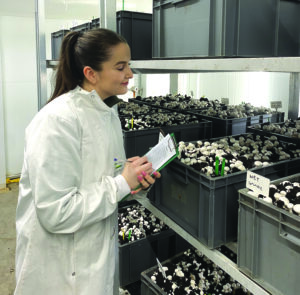
This project was the first to confirm resistance of mushroom pathogens to the only remaining fungicide available to growers, increasing grower awareness and shifting attitudes to disease management. The findings highlight the urgent need to integrate alternative disease-control products and to improve biocontrol effectiveness through mixed Integrated Pest Management strategies.
The first biocontrol-based treatment developed for use in the mushroom industry is now being rolled out to growers. Our research has increased grower confidence to adopt these sustainable biocontrol products by providing practical, evidence-based guidance for on-farm use.
Contact: joy.clarke@teagasc.ie
Other contributor: Maynooth University
Funding: Teagasc Walsh Scholars Programme
Impact pathway: Technology Development and Adoption
Citizen Science identifies tolerant ash trees
Dheeraj Rathore, Ricardo Pimenta
Ash dieback has severely reduced Ireland’s ash population, threatening biodiversity, landscape value, and future timber supply. A key challenge is identifying and conserving tolerant trees to support restoration and breeding, as traditional survey methods alone are insufficient to locate surviving healthy ash trees across the landscape. The ‘AshforFuture’ project combined research on ash dieback tolerance with a national citizen science initiative to identify healthy trees. Given that ash is widespread across hedgerows, farms, woodlands and private lands, public participation was essential to access trees beyond traditional surveys. Citizens acted as distributed observers, submitting over 300 reports with images and providing access to scientists for sampling healthy trees. Reported trees were verified, and selected genotypes were collected and grafted for inclusion into breeding and conservation programmes. Activities included stakeholder training, collaboration with local authorities and community groups and the development of tools such as disease severity scoring scales.
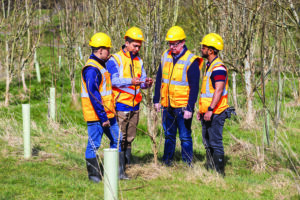
The initiative has significantly increased the identification of potentially tolerant ash trees, with public reports rising from 73 to 332 within one year. This enabled the collection and grafting of 389 genotypes from 26 counties, which are now integrated into national breeding and conservation programmes. Media engagement drove measurable behaviour change, with a single RTÉ Brainstorm article triggering a rapid increase in public reporting.
Overall, the approach has expanded the geographic and genetic diversity of candidate material beyond traditional surveys and enabled identification and protection of regeneration hotspots on private lands. This impact is strengthening Ireland’s capacity to restore ash and provides a scalable model for national tree health monitoring and conservation.
Contact: dheeraj.rathore@teagasc.ie
Other contributor: University College Dublin
Funding: Department of Agriculture, Food and the Marine; Department of Agriculture, Environment and Rural Affairs, Northern Ireland
Impact pathways: Capacity Building
Targeting contaminants in horticultural crop production
Kaye Burgess, Michael Gaffney, Martin Danaher, Elena Anedda
The HortAssure project addressed critical food safety challenges facing the horticulture sector by mitigating risks associated with microbiological and chemical contamination. It generated key evidence on contamination sources, particularly Listeria monocytogenes, while also addressing the lack of national data on chlorate levels in Irish horticultural produce. HortAssure conducted on-farm surveillance studies across commercial horticultural systems, producing crops with varying risk profiles.
A total of 750 samples from targeted surfaces, equipment in production and processing environments helped identify potential harbourage sites for L. monocytogenes, a pathogenic bacterium responsible for the disease listeriosis. Molecular analysis of isolates enabled the tracing of potential contamination pathways. Complementary lab-based studies assessed selected crops’ ability to support the growth of L. monocytogenes, providing important regulatory insights. Over 650 horticultural commodities were analysed for chlorate levels, generating the first national dataset of its kind.
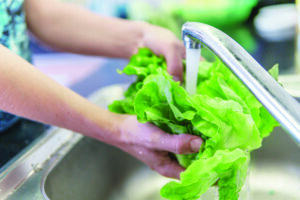
These integrated approaches provided evidence-based insights into contamination risks across the sector. HortAssure has strengthened food safety assurance by enabling more targeted, evidence-based risk mitigation strategies, directly communicating findings to improve on-farm practices and regulatory decision-making.
The project reduced uncertainty around L. monocytogenes growth, supporting compliance with evolving regulations. In addition, the national chlorate dataset demonstrated consistently low levels, providing a critical evidence base for future policy development.
Contact: kaye.burgess@teagasc.ie
Other contributors: Technological University Dublin; University College Dublin
Funding: Department of Agriculture, Food and the Marine
Impact pathways: Policy Information and Support; Capacity Building