
Safeguarding soil health through communities
Fiona Brennan, Elena Hayes, Veronica Nyhan, Saorla Kavanagh, Luis Lopez-Sangil, Karen Daly, Eimear Hutchinson, Karla Burke
Healthy soils underpin agricultural productivity and planetary health, yet practical skills to assess and manage soils are lacking among students, farmers, advisors and the public.
The ‘GroundTruth’ citizen-science initiative engaged communities nationwide in soil health and biodiversity assessments to raise awareness, build skills and improve soil stewardship. Participants were recruited through schools, farming networks and community groups, with a strong emphasis on inclusivity and accessibility. Each participant received a user-friendly resource pack with factsheets, step-by-step protocols and supporting media to build confidence and ensure consistent data collection. Citizen scientists submitted observations and photos online, which the project team collated to build a national picture of soil health. A dedicated national soil health week was held in September. The project also produced a handbook, ‘Farming for Soil Health’, along with tailored resources for schools and farmer discussion groups.
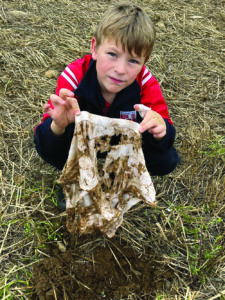
Growing attention to soil health and emerging EU soil policy underlines the significance of this initiative. Over one year it engaged over 14,000 people across 24 counties through more than 50 events, including webinars, radio interviews, farm walks, discussion groups and school visits. It also reached beyond traditional farming audiences, with 66% of participants identifying as urban or suburban. Participants reported increased awareness of citizen science (71%), improved confidence in conducting DIY soil tests, and in some cases changes in on-farm soil management.
Contact: fiona.brennan@teagasc.ie
Other contributors: Biodiversity Data Centre; Airfield Estate
Funding: Research Ireland and Department of Education; Supported by VistaMilk Research Ireland Centre and Teagasc
Impact pathway: Capacity Building
Modelling Ireland’s nitrates derogation impacts
Michele McCormack, Elodie Ruelle, Cathal Buckley, Trevor Donnellan, Kevin Hanrahan, Laurence Shalloo, Joe Patton, Pat Dillon
Ireland’s nitrates derogation permits farmers to operate at an organic nitrogen (N) stocking rate above 170kg/ha within the framework of European Union (EU) regulations. Drawing on robust data from the Teagasc National Farm Survey (2021–2023), this study quantifies the proportion of dairy farms exceeding the 170kg/ha threshold and evaluates the economic implications of removing the derogation at farm level. It also examined a range of mitigation strategies to offset the associated economic impact, including land rental, slurry export, contract rearing and herd reduction.
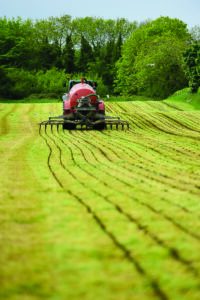
The analysis estimated that approximately 49% of dairy farms in Ireland, representing 65% of national milk production, operated above the organic nitrogen (N) stocking rate limit of 170kg/ha. Requiring these farms to comply with stocking rates below 170kg/ha would result in a national reduction of approximately 203,719 cows (14%) and a decline in milk production of 1.2 billion litres (15%). The findings also indicate that, if herd reductions were required, affected family farms would experience a substantial decline in income of approximately 39%. Although alternative mitigation strategies would also lead to significant income reductions, their impact would be comparatively less severe.
This research has had a direct impact on national policy development and the extension of Ireland’s nitrates derogation until the end of 2028. The research was commissioned specifically to inform the government’s formulation of the next Nitrates Action Programme (2026-2029) and to support negotiations with the European Commission and other EU member states. The analysis provided an evidence-based assessment of how changes to maximum organic stocking rates would affect Irish dairy farms.
Contact: michele.mccormack@teagasc.ie
Funding: Teagasc core funding; Department of Agriculture, Food and the Marine
Impact pathways: Policy Information and Support
On‑farm monitoring prompts slurry policy change
Pat Tuohy, Jack O’ Neill, Tomas Condon, Laurence Shalloo
The project addressed a critical gap in accurate data on slurry and dairy soiled water volumes produced on Irish dairy farms. Existing estimates were insufficient, limiting effective regulation, infrastructure planning and efforts to protect water quality. The project aimed to generate reliable on-farm data to inform policy, improve nutrient management and support more sustainable agricultural practices.
A total of 100 dairy farms were surveyed to quantify slurry and dairy soiled water volumes. The study also catalogued storage infrastructure, farm management practices and potential additional sources, such as runoff and silage effluent. Monitoring equipment was installed on each farm to record tank volumes at hourly intervals, with data collection running from late 2022 to early 2025. Researchers collaborated closely with policymakers and stakeholders, providing regular updates and data analysis. The resulting dataset delivered robust, real-world evidence on actual volumes produced, directly informing regulatory revisions regarding storage requirements, and best practice guidance for improved nutrient management and water quality protection.
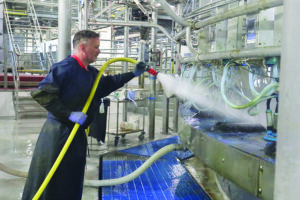
The project provided the first reliable dataset regarding current slurry and dairy soiled water volumes. Findings revealed that actual volumes produced on farms are significantly higher than previously estimated. This evidence directly informed revisions to the Government’s 6th Nitrates Action Programme, particularly in relation to storage requirements and farm management practices. By improving nutrient use efficiency and reducing risks of nutrient losses, the work supports sustainable dairy farming and water quality protection. It also strengthened policy confidence, enabling evidence-based decision-making, and highlighted the value of on-farm monitoring. The project’s impact extends beyond regulation by directly enhancing the environmental sustainability of the dairy sector.
Contact: patrick.tuohy@teagasc.ie
Funding: Department of Agriculture, Food and the Marine
Impact pathway: Policy Information and Support
Improving accuracy of Ireland’s livestock emission estimates
Paul Crosson, David Kelly, Jonathan Herron
Reducing agricultural emissions is a priority for Ireland. Methane from non-breeding cattle accounts for greater than 30% of agricultural emissions and is a major source of uncertainty in the national greenhouse gas emissions inventory. Improving estimate accuracy is essential to enhance national reporting and support evidence-based climate mitigation strategies.
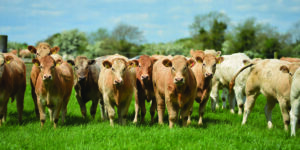
Using high-quality data from the Irish Cattle Breeding Federation, Teagasc National Farm Survey and the Central Statistics Office, Teagasc developed new, country-specific models for Irish cattle and sheep, replacing outdated factors previously used in Ireland’s national inventory.
This enabled the development of more detailed, system-specific emission models that better reflect modern animal performance, management practices and feeding systems. The work was developed in close collaboration with national inventory compilers and applied updated Intergovernmental Panel on Climate Change (IPCC) methodologies. The project supported knowledge transfer through engagement with policymakers and inventory stakeholders. The new models improve estimation accuracy, reduce uncertainty, and provide a robust platform to assess mitigation strategies and inform climate policy.
The models were incorporated into Ireland’s National Inventory Document 2025, significantly improving the accuracy of enteric methane estimates for Ireland’s grass-based livestock systems. Their adoption resulted in a reduction of 393.7ktCO₂e for sheep and 296.5ktCO₂e for beef, delivering a combined 8.4% decrease in reported enteric methane emissions. This represents a major advancement in Ireland’s greenhouse gas inventory, strengthening scientific robustness and supporting more evidence-based climate policy and mitigation planning.
Contact: paul.crosson@teagasc.ie
Other contributors: Irish Cattle Breeding Federation; Central Statistics Office
Funding: Teagasc; Department of Agriculture, Food and the Marine
Impact pathway: Policy Information and Support
Clover150 – reducing chemical nitrogen on farms
Michael Egan, Caitlin Looney, Michael Healy, Michael O’Donovan
Irish agriculture is facing a major challenge to reduce chemical nitrogen fertiliser in response to environmental regulations, climate change and increased farm costs. Farmers must adopt sustainable practices like incorporating white clover into grass swards and improving fertiliser management, while maintaining overall farm production. However, achieving and maintaining sufficient levels of white clover in grassland remains a significant challenge.
Research by Teagasc has demonstrated that incorporating white clover into grass swards delivers significant productivity and environmental benefits. Despite this, adoption across the industry has remained relatively low. To address this, 30 farmers participated in the Clover150 programme over five years (2021–2025). The programme aimed to reduce chemical fertiliser use while maintaining grass growth and lowering farm-gate nitrogen surplus.
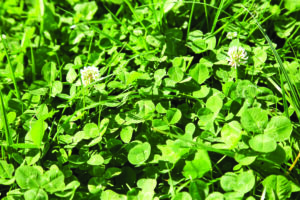
Teagasc researchers provided guidance on clover establishment, pasture management and fertiliser strategies. Participating farmers also hosted farm walks in collaboration with the Teagasc Grass10 campaign, showcasing practical implementation and supporting peer-to-peer learning to encourage wider uptake of clover-based systems.
Over five years, the Clover150 programme delivered significant on-farm and industry impact. Participating farmers successfully established clover on 75% of their farm area, achieving an average sward clover content of 19%. The incorporation of clover reduced nitrogen fertiliser use by 60kg N/ha, to an average of 176kg N/ha, while herbage production was maintained at 14t DM/ha. This resulted in a reduction in farm-gate nitrogen surplus to 150kg N/ha, thereby lowering the risk of environmental nitrogen losses and reduced farming input costs.
The Clover150 programme provides a proven blueprint for clover establishment, management and nitrogen reductions strategies, with wider industry influence evident with white clover seed sales having doubled to 353t since 2021.
Contact: michael.egan@teagasc.ie
Funding: Teagasc core funding; Dairy Research Ireland
Impact pathway: Technology Development and Adoption
Supporting the European Soil Directive
Réamonn Fealy, Karen Daly, Lilian O’Sullivan, Giulia Bondi, Niall Lehane, Fiona Brennan, Jesko Zimmerman, Owen Fenton, Felipe Bachion de Santa, Luis Lopez Sangil
The EU Soil Monitoring Law (SML) was initially proposed by the European Commission in a renewed effort to provide a framework for the protection of soils across member states. Translating the SML into a full directive required extensive negotiations with member states, which in turn required detailed support from soil experts at national level.
At the request of both the Department of Agriculture, Food and the Marine (DAFM) and the Department of Climate, Energy and the Environment (DCEE), Teagasc provided considerable and wide-ranging expert support to the Irish government teams involved in negotiating the law with the European Commission. This support drew on multidisciplinary research expertise and was delivered collaboratively by Teagasc environmental and economic researchers. Teagasc staff participated in multiple workshops with the DAFM and DCEE negotiating teams. In addition, they conducted frequent and detailed reviews of successive drafts of the proposed legislation issued by the European Commission. The Teagasc team met frequently to ensure feedback to the Commission was aligned and comprehensive.
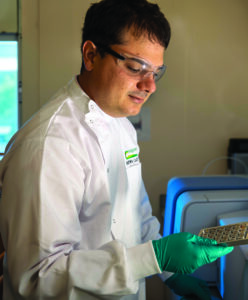
The proposed monitoring framework required careful scientific consideration of the optimum mapping and statistical approaches. Recommendations on appropriate soil descriptors to underpin baseline conditions were subject to extensive feedback to the Commission through the Government negotiating teams to preserve scientific integrity and data collection efficiency. Ongoing engagement by Teagasc staff during the legislation formation process has led to the successful final development of the adopted directive, which takes account of Irish soil conditions and existing data.
Contact: reamonn.fealy@teagasc.ie
Funding: Teagasc core funding
Impact pathway: Policy Information and Support
Optimised sulphur fertilisation boosts nutrient use efficiency
Patrick Forrestal, Claire Aspel
The agriculture industry faces an ongoing challenge to reduce nitrate leaching losses to water while sustaining agricultural output. This project identified sulphur nutrition as a key factor for improving the nitrogen use efficiency of applied fertiliser nitrogen on Irish grassland soils, while also increasing herbage yields and potentially reducing nitrate losses to water.
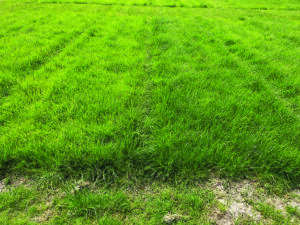
Field and lysimeter trials demonstrated a positive grass herbage yield response to sulphur application across a range of Irish soils. It was found that sulphur optimisation could reduce nitrate leaching to water by improving the grass uptake and yield response to applied nitrogen. This knowledge was disseminated to advisors, farmers, commercial stakeholders, policymakers and agricultural science students through in-service training, the Teagasc QQI Level 6 Crop Nutrition Course, technical conferences, field meetings, student lectures and a sulphur technical bulletin in collaboration with the Fertiliser Association of Ireland. This work is having national impact, improving awareness of sulphur’s importance in fertilisation programmes, with the fertiliser industry increasing availability of a range of sulphur-containing nitrogen and compound fertilisers suitable for silage and grazing. Based on this work, including sulphur in fertiliser programmes to reduce nitrate leaching was one of the March-April 2026 “Top Tips” of the Farming for Water European Innovation Partnership.
Continued optimisation of sulphur use has the potential to increase grassland productivity, improve nitrogen use efficiency, reduce farm N balances and decrease nitrate leaching to water — supporting the sector in addressing current environmental and productivity challenges.
Contact: patrick.forrestal@teagasc.ie
Other contributor: University College Dublin
Funding: Teagasc Walsh Scholars Programme
Impact pathway: Technology Development and Adoption
Sustainable sheep breeding
Nóirín McHugh, Edel O’Connor, Lucy Chipondoro, Fiona McGovern, Philip Creighton, Jonathan Herron
The €uro-Star sheep breeding indexes have been proven to increase farm profitability while reducing the carbon footprint per kilogramme of carcass produced. As climate targets increasingly focus on emissions intensity per animal, a new component to the breeding indexes is required to quantify total animal emissions while continually improving flock productivity.
Approximately 20,000 individual animal methane emissions records have been measured by Teagasc in collaboration with Sheep Ireland. This data has enabled the development of genetic models that predict the methane emissions from individual animals. Simultaneously, life cycle assessment has been undertaken to calculate the associated carbon costs with traits already included in the sheep breeding indexes. The integration of methane breeding predictions combined with the calculated carbon emission values on key traits underpinned the creation of a new methane sub-index within the €uro-Star sheep breeding indexes.
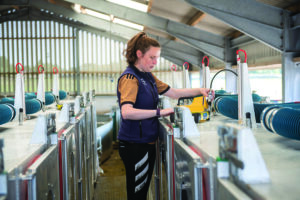
The methane sub-index is just one component of the overall breeding indexes and is integrated alongside key production traits, which importantly ensures that the €uro-Star indexes identify animals that simultaneously increase farm profitability while reducing emissions. Launched in late 2025, the updated €uro-Star sheep breeding indexes, incorporating the methane sub-index, will be used by Irish sheep farmers to select rams in the 2026 breeding season, supporting more productive and environmentally sustainable sheep farming.
Contact: noirin.mchugh@teagasc.ie
Other contributor: Sheep Ireland
Funding: Department of Agriculture, Food and the Marine
Impact pathway: Technology Development and Adoption