
NutriStock: Pioneering zero carbon food manufacturing
Shay Hannon, Sasa Novakovic
Teagasc scientists at the National Prepared Consumer Food Centre collaborated with food tech startup NutriStock to address the growing need for sustainable, nutritionally enhanced foods, alongside the challenge of developing a scalable, commercially viable production system in Ireland. The goal was to integrate novel technologies with traditional processes, creating a zero carbon and waste production model to meet demand for healthier, low-impact meal solutions.
The collaboration developed and scaled Nutristock’s novel food production system while exploring alternative processing and cooking technologies. Teagasc supported product development, process optimisation and technology integration to maintain nutritional integrity and ensure commercial viability. Through pilot-scale trials and technical expertise, the concept transformed into a scalable manufacturing model, enabling product development and accelerating NutriStock’s commercialisation.
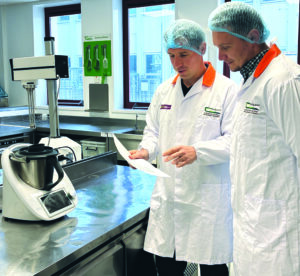
The project has significantly strengthened NutriStock’s capacity to produce high-value food product through the establishment of a scalable production system, culminating in the opening of a production facility in Co. Wexford. This achievement is significant for the company and the wider sector as it demonstrates integration of sustainable low carbon manufacturing leading to a commercially viable business model.
The scale of impact is already substantial, enabling market entry in the UK and Asia, with future potential to expand production capacity and product lines. NutriStock’s reach extends from local Irish supply chains to international food service and healthcare markets, positioning Ireland as a leader in sustainable food innovation with strong future growth potential.
Contact: shay.hannon@teagasc.ie
Other contributor: NutriStock
Funding: Enterprise Ireland
Impact pathway: Technology Development and Adoption
Public engagement highlights importance of agri‑food microbiomes
Paul Cotter, Paula Fernandez Gomez, Dara Leong, Fiona Brennan, Olivia McAuliffe, Orla O’Sullivan, John Kenny
This work highlights the interconnected nature of microbiomes (microbial populations) along food systems, and how this knowledge can be harnessed – to enhance crop resilience and productivity, improve animal health and performance, refine management practices in fishing and aquaculture, or prolong shelf life and reduce food spoilage during distribution.
A team of leading scientists, coordinated by Teagasc, reviewed existing data to determine the extent to which microbiome connections across food chains impacted on human, animal and global health. The resulting publication appeared in the high-profile journal Frontiers in Science, was accompanied by a webinar (viewed almost 300,000 times on YouTube), and by articles tailored for public and younger audiences. These outputs highlighted the work’s relevance with respect to policy, importance for developing countries and other societal impacts.

Agri-food system microbiomes form a complex, dynamic, and interconnected network that can be traced across soil and marine environments to primary agriculture, farming, and food processing sectors, ultimately influencing human gastrointestinal niches. These microbiomes impact human, animal and planetary health. This engagement highlighted the importance of these microbiomes to hundreds of thousands of individuals, ranging from teenagers upwards, and encompassing the public, farmers, food producers and processors, scientists, regulators and policymakers across the globe.
Contact: paul.cotter@teagasc.ie
Other contributors: Multiple researchers from other Irish and European institutes
Funding: Research Ireland; Horizon Europe
Impact pathways: Technology Development and Adoption; Capacity Building; Policy Information and Support
Healthier porridge from Irish‑grown oats
Nefeli Lampoglou, Ewen Mullins, Atikur Rahman, André Brodkorb, Daniela Freitas
This project focused on creating added value for Irish tillage farming through advanced nutritional profiling of oats. Although oats are widely promoted for heart health, the amount required to achieve clinical benefits can vary considerably across oat varieties. Depending on the variety, reaching the same cardioprotective dose could require anywhere from 4–24 tablespoons of rolled oats per day, a very significant difference for consumers and product developers alike.
NutriOats is a multidisciplinary research project investigating the nutritional composition, digestibility and potential health effects of Irish-grown oats. In the largest nutritional diversity screening to date, published in a high-impact journal by Nature group, this project revealed an exceptionally wide compositional spread among 95 cultivars, among them Irish and European open-source heritage oats. Findings include some high yield varieties with over 20% protein content, which are suitable for the growing global plant protein food market.
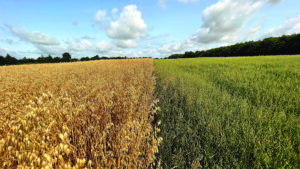
This project is already influencing agricultural practice. Seed growers are starting to use results to prioritise cultivars that combine superior nutritional quality with strong yield and resilience traits. Seeds from seven lines have been provided to the Irish Seed Savers Association for on-farm evaluation, while Teagasc advisors are assessing their suitability in organic production systems. In parallel, material is being trialled with the Agrifood and Bioscience Institute as part of the Co-Centre for Sustainable Food Systems. Integrating science with agriculture testing, NutriOats is helping position Irish-grown oats as a leading option for healthy, climate-resilient food systems.
Contact: daniela.freitas@teagasc.ie
Other contributors: University College Cork; Irish Seed Savers Association; Agrifood and Bioscience Institute,
Northern Ireland; Co-Centre for Sustainable Food Systems
Funding: Research Ireland Pathway programme
Impact Pathway: Technology Development and Adoption
Teagasc‑Cybercolors collaboration driving cheese colourant innovation
Prabin Lamichhane, Prashant Shelke, Karen Dawson
Collaboration between research and industry addressed a key limitation of traditional annatto-based cheese colourants, where 10–20% of the pigment is lost to whey, reducing its commercial value, product quality and sustainability. Teagasc supported Cybercolors Ltd. in advancing the scientific understanding of their patented emulsion-based cheese-colouring system as an alternative to annatto.
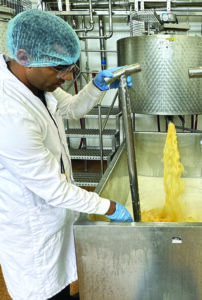
Recognising Teagasc’s scientific expertise, and with operations based at the National Food Innovation Hub, Moorepark, Cybercolors Ltd. initiated a collaborative research partnership to deepen the understanding of their formulation. Supported by Enterprise Ireland’s Innovation Partnerships Programme, this two-year project utilised advanced microscopy techniques at the National Food Imaging Centre, alongside dairy processing facilities at Teagasc Moorepark, to generate new insights into the formulation’s behaviour and underlying colouring mechanism. The project also examined the impact of the colour formulation on downstream processing. Ongoing knowledge transfer between Teagasc and Cybercolors Ltd. supported formulation optimisation and product improvement.
The knowledge generated enabled Cybercolors Ltd. to optimise its technology, strengthen technical credibility with clients, and respond more effectively to customer queries. As a result, the company has expanded its client base and seen a significant increase in demand for its colouring formulation. Building on this success, the company is now progressing the licensing of the knowledge and expertise generated through the project.
Contact: prabin.lamichhane@teagasc.ie
Other contributor: Cybercolors Ltd.
Funding: Enterprise Ireland; Innovation Partnerships Programme
Impact pathways: Technology Development and Adoption; Capacity Building
Targeting contaminants in horticultural crop production
Kaye Burgess, Michael Gaffney, Martin Danaher, Elena Anedda
The HortAssure project addressed critical food safety challenges facing the horticulture sector by mitigating risks associated with microbiological and chemical contamination. It generated key evidence on contamination sources, particularly Listeria monocytogenes, while also addressing the lack of national data on chlorate levels in Irish horticultural produce. HortAssure conducted on-farm surveillance studies across commercial horticultural systems, producing crops with varying risk profiles.
A total of 750 samples from targeted surfaces, equipment in production and processing environments helped identify potential harbourage sites for L. monocytogenes, a pathogenic bacterium responsible for the disease listeriosis. Molecular analysis of isolates enabled the tracing of potential contamination pathways. Complementary lab-based studies assessed selected crops’ ability to support the growth of L. monocytogenes, providing important regulatory insights. Over 650 horticultural commodities were analysed for chlorate levels, generating the first national dataset of its kind.
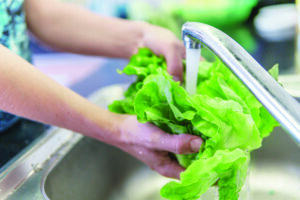
These integrated approaches provided evidence-based insights into contamination risks across the sector. HortAssure has strengthened food safety assurance by enabling more targeted, evidence-based risk mitigation strategies, directly communicating findings to improve on-farm practices and regulatory decision-making.
The project reduced uncertainty around L. monocytogenes growth, supporting compliance with evolving regulations. In addition, the national chlorate dataset demonstrated consistently low levels, providing a critical evidence base for future policy development.
Contact: kaye.burgess@teagasc.ie
Other contributors: Technological University Dublin; University College Dublin
Funding: Department of Agriculture, Food and the Marine
Impact pathways: Policy Information and Support; Capacity Building