June 2026 Future Beef Newsletter
Sign up to receive the Teagasc Future Beef newsletter
Technical Updates: Cut costs, not corners — fertilise 2nd cut properly | Why buy nitrogen when red clover can fix it for you?
Farm Updates: Suckler Beef Breeding Update from Kildalton Agricultural College | John Barry’s Winter Feed Plan in Tipperary
Top Tips | Upcoming Events | The Beef Edge Podcast
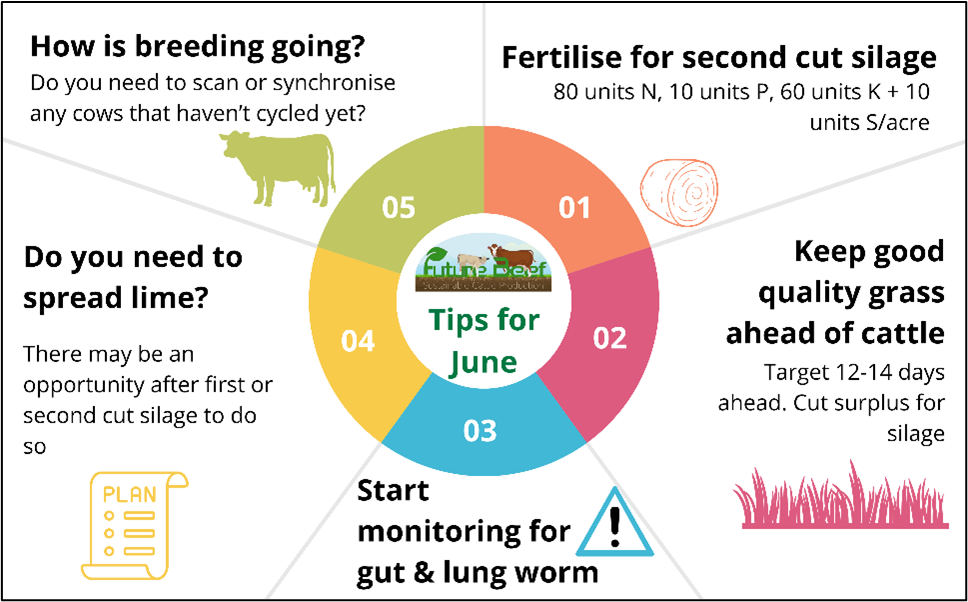
Top Tips for June
Upcoming Events:
- Fri 5th June at 6.30pm: Farm walk on John and James Dunne, Tinnacrannagh House, Portarlington, Co. Offaly, R32V127

- Weds 1st July: Beef2026 Open Day at Teagasc Grange, Dunsany, Co. Meath
Technical Update: Cut costs, not corners — fertilise 2nd cut properly
Second cut silage will be a valuable crop on many farms to replenish and build silage reserves for the coming winter. This crop tends to be lower yielding compared to first cut silage. Where first cut has been cut it is important to ensure that second cut crops are fertilised adequately to ensure a good yield of grass at harvest time.
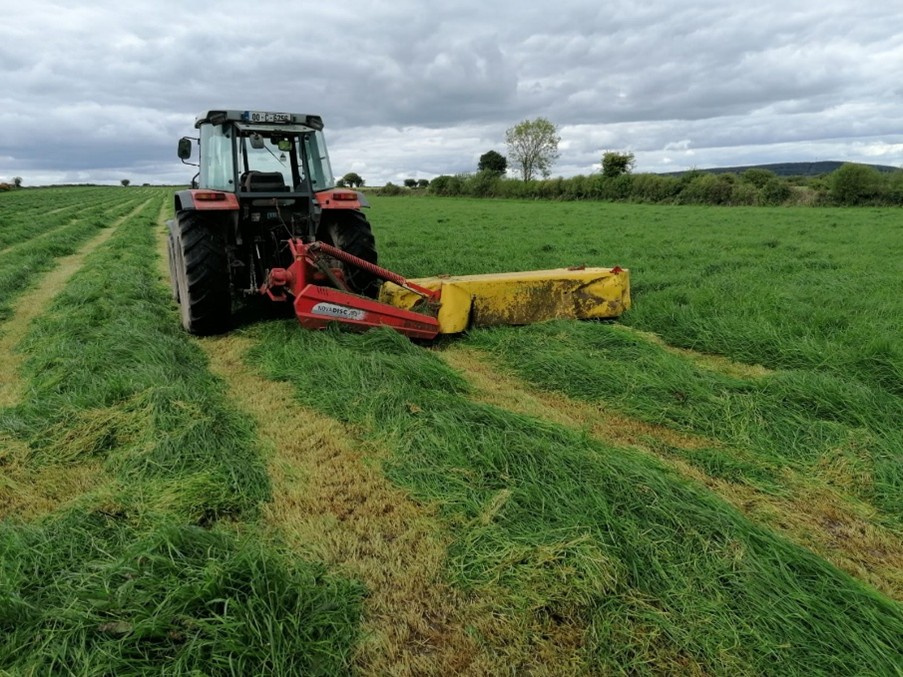
Fertilise second cut silage to replenish winter feed reserves
Balanced nutrition drives yield: Apply the correct N, P, K and S based on expected yield to maximise grass growth.
- Nitrogen (N):
- Main driver of growth; typically 50–100 kg N/ha (40-80 units/acre) depending on yield.
- Adjust for slurry N contribution.
- Phosphorus (P) & Potassium (K):
- Essential for crop bulk and regrowth.
- Grass removes approx. 8-16 kg P/ha (6-13 units/acre) and 50-100 kg K/ha (40-80 units/acre) depending on yield.
- Sulphur (S):
- Apply 8–15 kg S/ha (6-12 units/acre) per cut to improve N efficiency and yield.
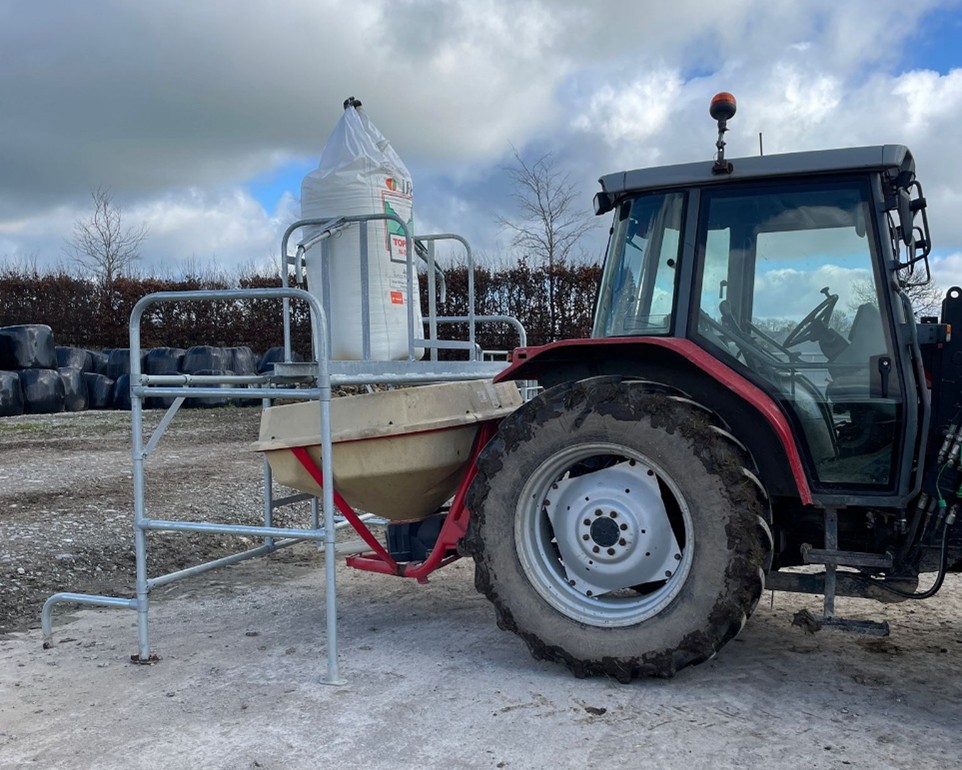
2,500 gallons of slurry contains 23 units N, 13 units P & 75 units K
- Use slurry efficiently:
- Apply cattle slurry after 1st cut to recycle nutrients.
- Use LESS (low emission spreading) to improve N recovery and reduce losses.
- 1,000 gallons of cattle slurry is worth €33 at 6% dry matter.
- 2,500 gallons of cattle slurry can supply 15-23 units N, 13 units P & 75 units K per acre. This can then be topped up with 57-65 units of nitrogen/acre in the form of protected urea (e.g. 1.3 bags of 46% N/acre or 2 bags of 29-0-14+7.5 S/acre)
You can read more here.
Why Buy Nitrogen When Red Clover Can Fix It For You?
Why sow red clover?
- High nitrogen fixation: Red clover swards can fix up to 250 kg N/ha/year, reducing reliance on chemical nitrogen fertiliser and lowering input costs.
- Forage quality: Delivers higher digestibility and protein, supporting improved animal performance.
- Performance: Expect 20-25% higher intakes, contributing to better liveweight gain and finishing potential in beef systems.
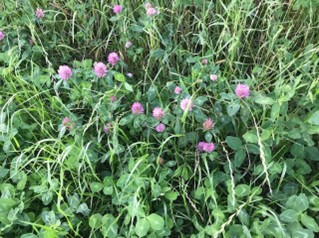
Red clover can fix up to 250 kg N/ha/year
Where?
- Fields with soil pH > 6.5 for optimal clover persistence.
- Ensure Index 3 or 4 for phosphorus (P) and potassium (K).
- Particularly suited to outblocks that are laboursome to graze with stock.
Sowing considerations:
- Use recommended red clover varieties (see UK Recommended List) for reliability and yield.
- Sow in spring/early summer for best establishment conditions.
- Seed mix: 4 kg/acre red clover + 10–12 kg/acre perennial ryegrass.
Management:
- Operate a cutting system (3–4 cuts/year) at 6–8 week intervals.
- Main production period: mid-May to September.
- Cut above the plant’s growing point.
- Wilt for <48 hours to avoid excessive leaf loss.
- Aim for good preservation while minimising leaf shatter.
- Avoid poaching and machinery damage, especially to crowns.
- Maintain adequate P and K nutrition (10-12 units P/acre/cut & 100 units K/cut).
- Keep low covers over winter to allow light penetration and persistence.
Farm Update: Suckler Beef Breeding Update from Kildalton Agricultural College
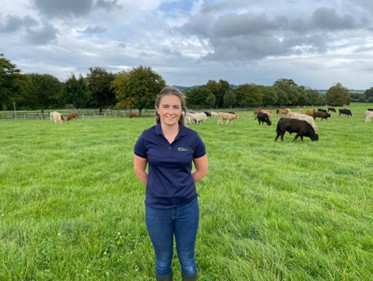
Beef technician Noeleen Brereton at Teagasc Kildalton.
Kildalton Agricultural College currently manages a high-performing spring calving suckler herd of 53 Limousin x Simmental cows. The herd ranks among the top 10% of Euro-Star suckler herds in Ireland, with a replacement value of €135. Noeleen provides an update on breeding, finishing weights and silage on the farm:
- Calving finished in late March, producing 57 live calves from 55 cows over a compact 12-week calving period.
- The 2026 breeding season began on 3 April and runs until mid-to-late June.
- Heat detection is carried out using tail paint, vasectomised teaser bulls and regular daily observations.
- Thirteen replacement heifers are due to calve at 24 months, with fixed-time AI and sexed semen used successfully.
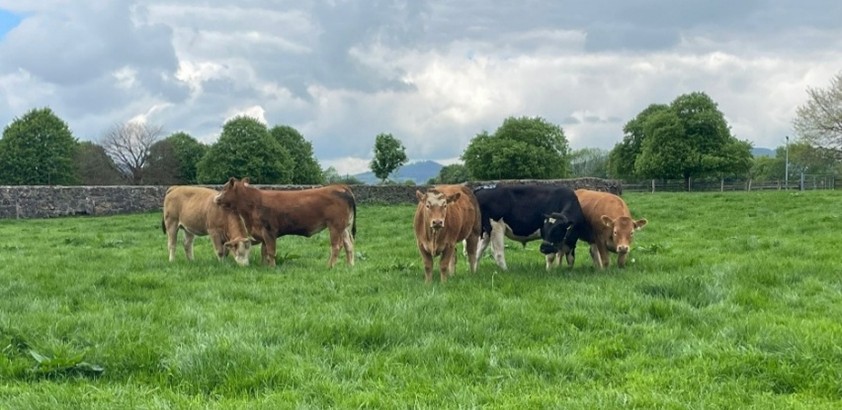
Replacement heifers with FR Teaser bull fitted with chin-ball harness
- Top maternal cows were bred to high maternal index AI sires including Loyal, Sterling and Drumline S.
- Terminal cows were bred using Charolais stock bulls and Belgian Blue AI sires to improve carcass performance and beef output.
- Over six weeks, 51 of 53 cows were served, achieving an 80% non-return rate.
- Nineteen spring 2025-born bulls are progressing through the U16-month bull beef system with excellent average daily gains.
- Bulls reached an average weight of 691kg by May after intensive feeding on silage, concentrates and ad-lib diets.
- Red clover silage yielded 8.8 bales per acre, supporting sustainable forage production and efficient nutrient management.
- Fertiliser and slurry applications were carefully targeted to improve silage quality and maximise grassland performance on the farm.
Watch the video below where Noeleen details the herd update and to see the cows and finishing bulls on the farm:
Click here to read more.
Farm Update: John Barry’s Winter Feed Plan in Tipperary

John with his wife Sarah and their son Jack
John Barry farms in Newtown, Nenagh, Co. Tipperary. His 80-cow suckler enterprise comprises 50 spring-calving and 30 autumn-calving cows, with a strong focus on grassland management, breeding performance and feed planning.
Key actions on the farm this month include:
- Rebuilding fodder reserves following a challenging winter that required the purchase of additional silage.
- Planning ahead for winter feeding, with a PastureBase fodder budget showing a requirement of approximately 265 tonnes of silage DM for winter 2026/27.
Securing winter feed supplies early, with around 200 silage bales already harvested and first-cut silage scheduled for early June.
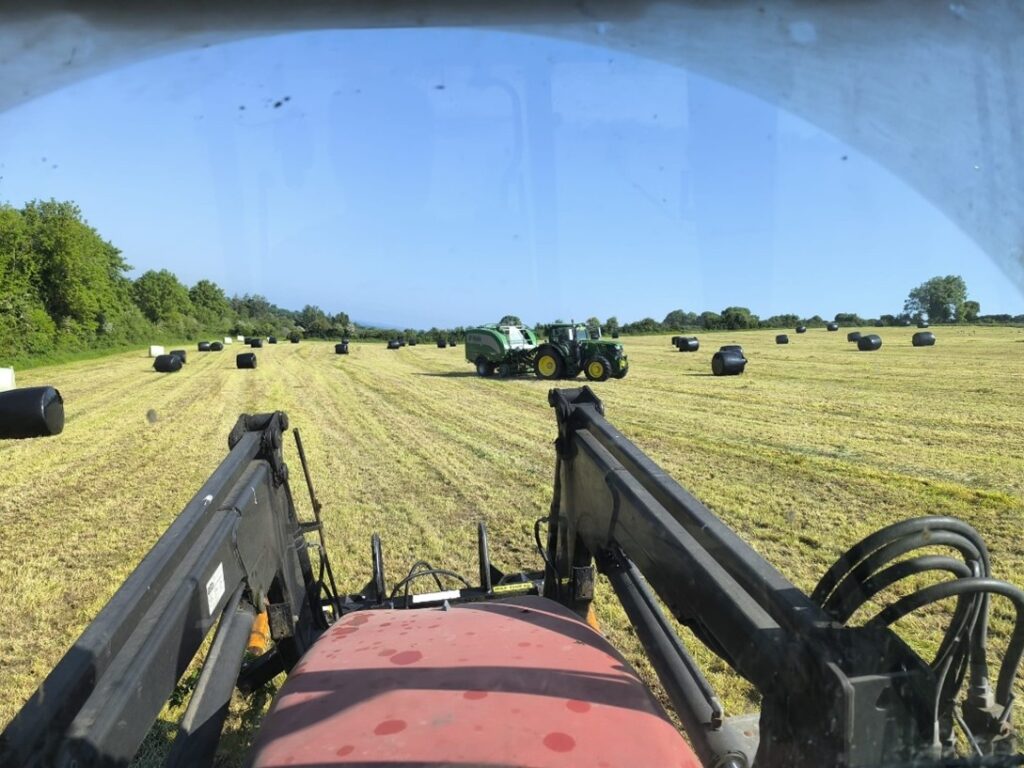
John cut surplus silage on 24th May and baled it two days later
- Matching silage quality to stock needs, ensuring high-quality forage for growing and lactating animals while reducing concentrate costs.
- Maximising slurry value, using farm-specific slurry analysis results to guide nutrient applications and reduce chemical fertiliser requirements.
- Preparing second-cut silage ground, with slurry and protected urea applications planned immediately after first cut.
- Driving genetic progress, with AI underway in the spring-calving herd before the introduction of a Limousin stock bull.
- Maintaining a compact calving pattern through strong fertility management, targeted sire selection and a clear culling policy.
These measures are aimed at improving farm profitability, reducing costs and ensuring sufficient feed supplies for the coming winter.
Click here to read more.
The Beef Edge Podcast
The Beef Edge is Teagasc’s weekly podcast covering news, information, tips and advice for beef farmers. It is available on iphone, Android and Spotify. Scan the QR code below or visit this link.