August 2026 Future Beef Newsletter
Sign up to receive the Teagasc Future Beef newsletter
Technical Updates: Dry Weather: Protect Grass Supply, Herd Performance and Fertility | Weaning Success Starts in August
Farm Updates: From AI Success to Finishing Decisions: Inside James Skehan’s Suckler Herd | Strong Performance, Tight Grass and Key Decisions Ahead for Ruairi Cummins
Top Tips | Upcoming Events | The Beef Edge Podcast
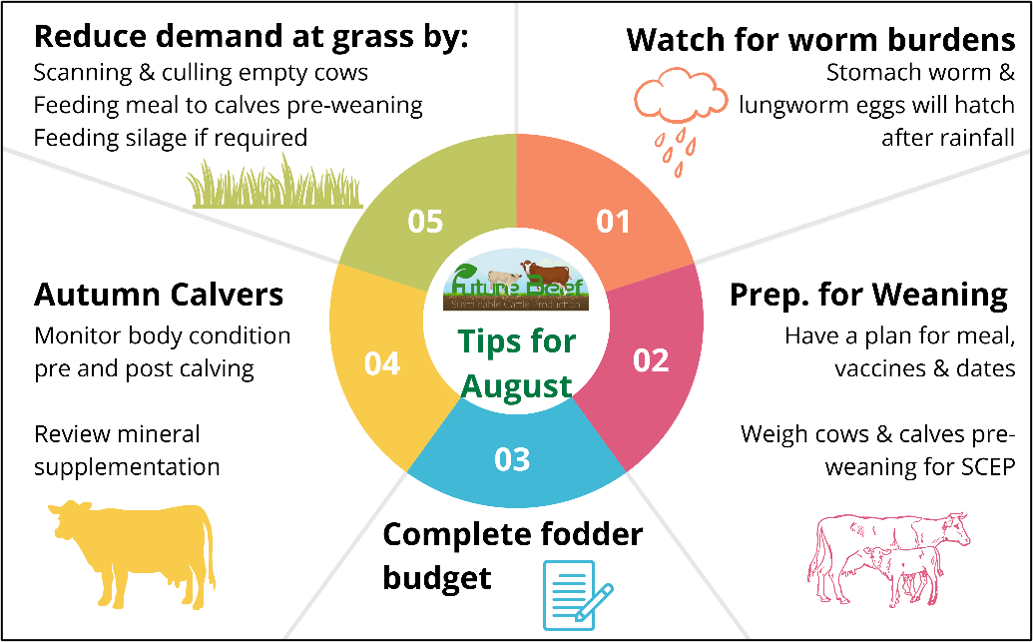
Top Tips for August
Upcoming Events
- Fri 4th September at 6pm: Farm walk on James Skehan’s farm, Ballynevin, Bridgetown, Killaloe, Co. Clare V94VW1H

Technical Update: Dry Weather: Protect Grass Supply, Herd Performance and Fertility
- Monitor water supplies, as lactating suckler cows may require 40–70 litres daily during hot weather.
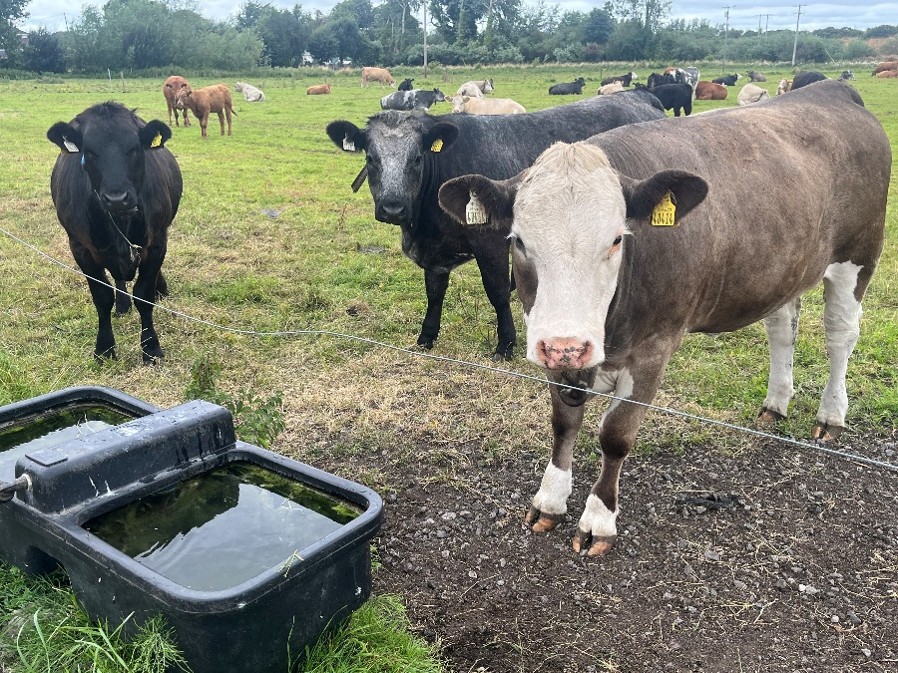
Access to clean water at all times is a necessity
- Assess grass supplies regularly and base management decisions on current farm conditions rather than forecast rainfall. Soil moisture deficits vary between farms and paddocks.
- Graze available grass before it burns off, targeting a 4 cm post-grazing residual to maximise utilisation during drought.
- Protect productive paddocks by slowing grazing rotations and introducing silage, hay or concentrates early to reduce grass demand.
- Reduce stocking pressure by selling finished cattle, culling unproductive cows, weaning autumn-born calves, and prioritising replacement heifers and spring-calving cows.
- Feed sufficient silage to meaningfully reduce grazing pressure, rather than offering occasional bales that have little impact. 1 bale of silage will feed 10 cows & calves for approx. 1 day.
- Protect suckler cow fertility by maintaining consistent nutrition throughout the breeding season, as sudden feed shortages can significantly reduce conception rates.
- Prioritise first-calving cows, ensuring they receive adequate feed and water to support growth, milk production and successful breeding.
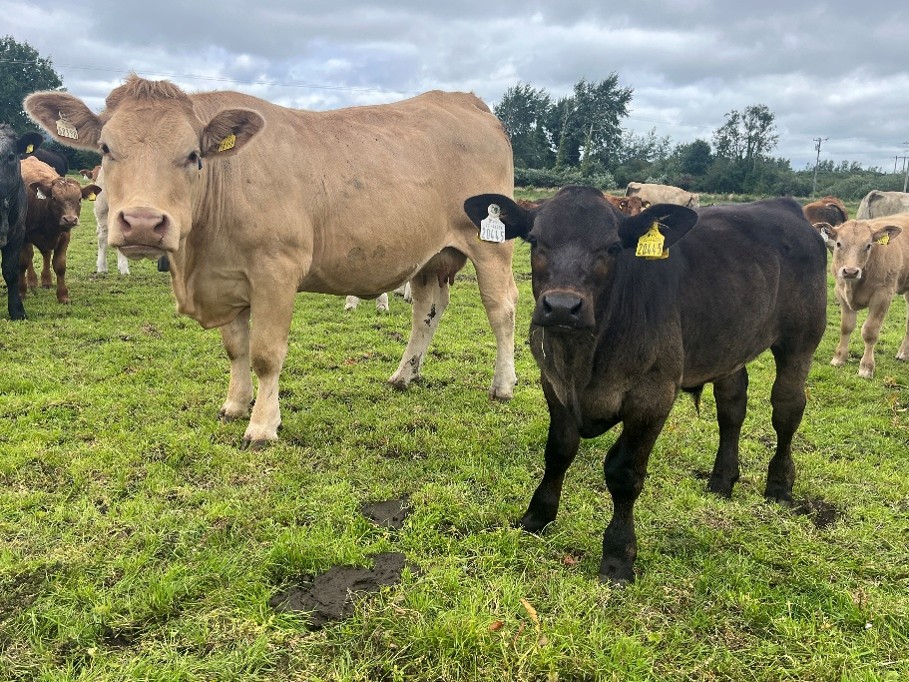
First calving cows should be prioritised
- Check bulls daily, ensuring they remain active, fertile and have access to shade, water and sufficient feed.
- Delay fertiliser and slurry applications on severely dry soils until meaningful rainfall is forecast, but apply nitrogen promptly where grass is still actively growing.
- Always feed cattle safely, keeping stock away from machinery and avoiding dangerous situations around supplementary feeding.
You can read more at:
Technical Update: Weaning Success Starts in August
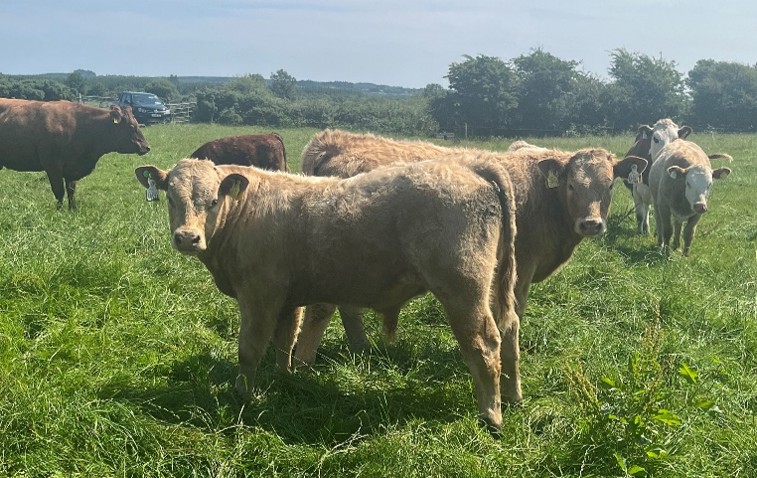
Early preparation can make all the difference at weaning
- Start planning for weaning in August to reduce stress, improve calf health and maximise performance. On one Future Beef farm, good weaning management resulted in calves being 45 kg heavier at housing.
- Weigh cows and calves for SCEP pre-weaning.
- Begin vaccination programmes early, as clostridial and pneumonia vaccines (including Mannheimia, RSV and PI3) can take 4–6 weeks to provide full protection before weaning.
- Avoid carrying out stressful procedures together. Castrate calves at least four weeks before weaning, or delay until two weeks after housing, to minimise stress and support immunity.
- Introduce creep feed four weeks before weaning, aiming for calves to consume 1 kg/day before weaning. Increase concentrates after weaning to 2 kg/day for steers and heifers and 3 kg/day for bull weanlings.
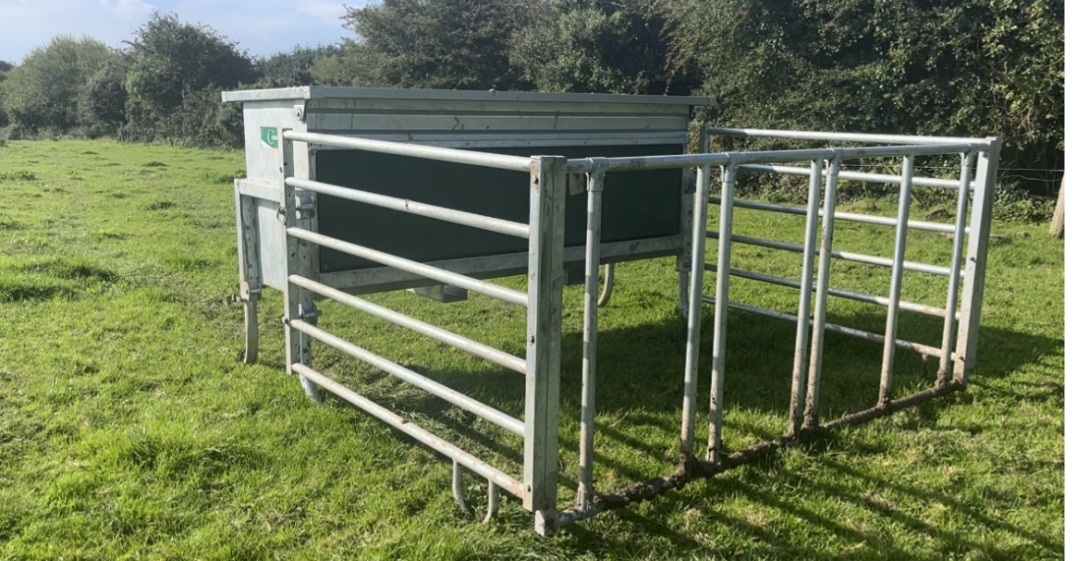
Creep feeders are useful to encourage calves to eat ration
- Use low-stress weaning techniques, such as creep grazing, leaving calves in familiar surroundings and removing cows gradually rather than moving calves.
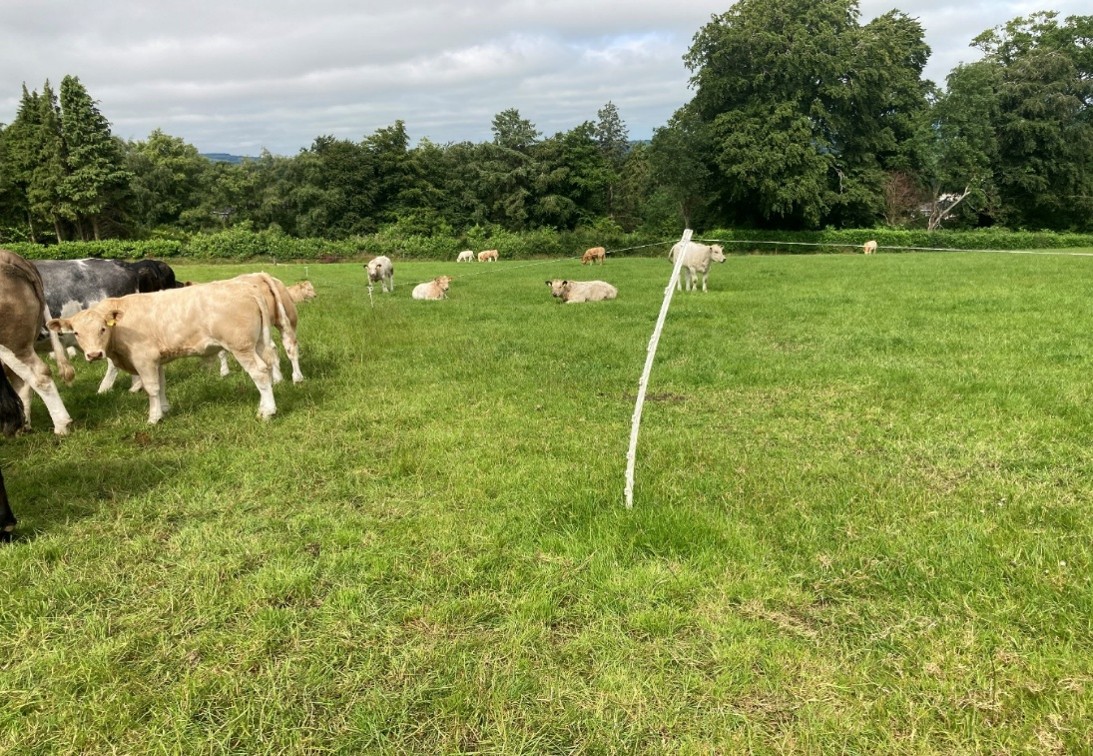
Raising the electric fence is a cheap way to allow calves to creep graze
- Prepare housing, fencing and feeding facilities in advance to ensure a smooth transition and encourage calves to adapt quickly.
- Monitor parasite burdens using faecal egg counts and treat only where necessary, while continuing to observe calves for signs of pneumonia, coughing or scour.
- Wean during settled weather where possible and use calm, consistent handling to reduce stress and protect animal performance.
You can read more here.
Farm Update: From AI Success to Finishing Decisions: Inside James Skehan’s Suckler Herd
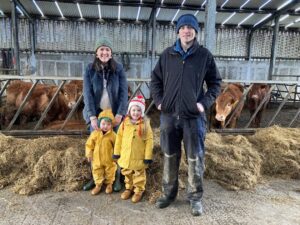
James with his wife Joanne and their children Nellie & Macarton
James Skehan is farming 29ha in Ballynevin, Co. Clare. He operates a 27 suckler cow to store/beef herd on a part-time basis. The herd is spring calving which suits grass growth on James’s farm. 60% of this year’s calves were born to AI, with the remainder born to his Limousin stock bull.
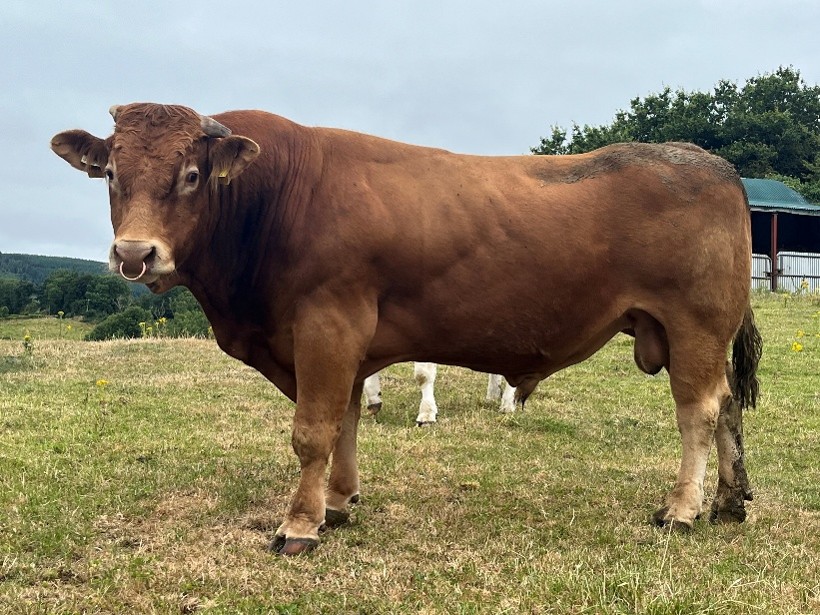
The Limousin stock bull
- Calving started on 18th February and finished on 5th April, with 81% of the herd calved in 6 weeks, supporting more efficient herd management and labour planning.
- Synchronisation protocols were used for both cows (€30/head) and heifers (€33/head) to tighten the breeding season and improve AI efficiency.
- Strong conception rates were achieved, with 8 of 9 heifers and 15 of 25 cows holding to the first AI service. Repeat cows ran with a Limousin stock bull, while one repeat heifer received a second AI service.
- Replacement heifers were bred to easy-calving Angus (AA4089, AA9607) AI sires to maximise the likelihood of calving at 24 months, while mature cows were inseminated to Limousin (LM6172, LM3713), Charolais (CH5980), Simmental (SI8520) and Aubrac (AU1515) sires.
Pregnancy scanning is planned for August to assess breeding performance and identify any empty females. Two cull cows were excluded from the breeding programme. The 2026-born calves remain at grass with their dams, with creep feeding scheduled to begin in August to support growth before weaning.
The 2025-born steers averaged 492 kg at their latest weighing and received their first worm treatment of the grazing season. Steers over 450 kg are receiving 2–3 kg/day of a maize-based finishing ration while continuing to graze, with performance monitored ahead of a September decision to either sell live or finish indoors. Lighter steers (<450 kg) will remain on a grass-only diet until housing, with finishing planned for early 2027.
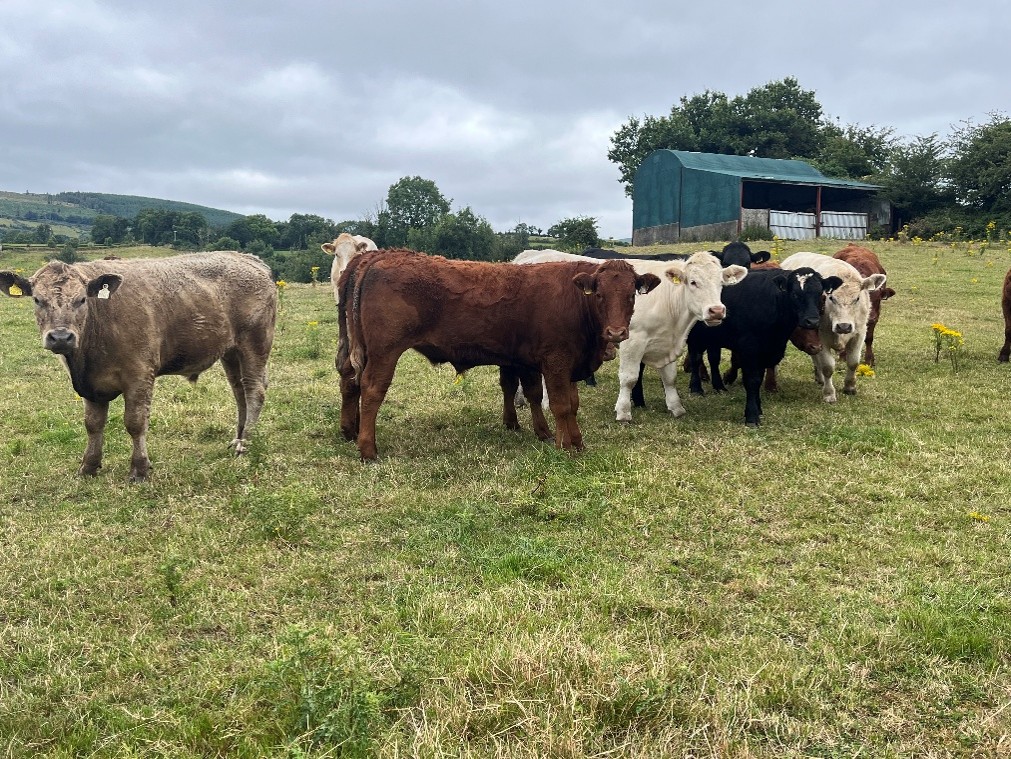
The 2025 born steers averaged 492kg on 22nd July 2026
James is hosting a national farm walk on 4th September 2026 at 6.30pm. Attendees will get the opportunity to learn about the farm financials, the suckler herd, details of bulls used, grazing infrastructure & soil fertility, this year’s breeding heifers, red clover, herd health and participate in a live finishing demonstration. They will also have the opportunity to chat with beef industry staff on the night to discuss rations, feed ingredients, herd health, breeding decision and water quality actions for their own farms.
You can click here to read more about James’s farm.
You can watch a video update from James as he discusses the breeding season, feed update and details of his upcoming walk here:
Farm Update: Strong Performance, Tight Grass and Key Decisions Ahead for Ruairi Cummins
Ruairi with his daughter Laura
Ruairi Cummins operates a spring-calving suckler-to-beef system in Kilmoganny, Co. Kilkenny. He farms approximately 35 ha, while also working part-time off-farm. His system includes 45 spring-calving suckler cows where bull calves are finished as under-16-month bulls and heifers are generally sold as stores at 16–18 months.
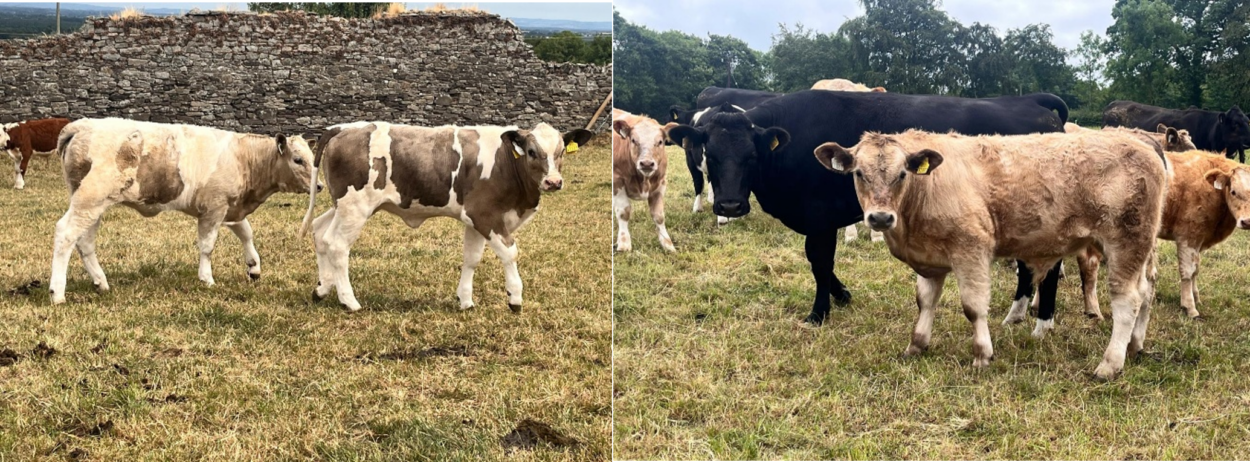
Selection of Ruairi’s 2026-born calves, showing the evenness of the group
His latest update highlights the importance of acting early when grass supplies tighten.
Animal performance remains excellent. His young bulls averaged 410kg carcass weight at just 14.6 months, while replacement heifers are gaining 1.28kg per day and now average 463kg, keeping them firmly on track to calve at 24 months.
Calving was compact, with 84% of calves born in the first six weeks, but the focus has now shifted to protecting performance through the dry period. The breeding season finished on June 15, making it vital to avoid any severe drop in cow intake during the following month.
Ruairí has combined cow groups, sold heavy steers, introduced extra forage and planned creep feeding for calves. These steps reduce demand, simplify management and help protect cow condition, pregnancy and calf growth.
He is also holding back on fertiliser and reseeding until meaningful rain arrives, while monitoring calves for parasite risks after the dry spell.
With 435 bales of silage and 80 bales of hay available, Ruairí has a strong fodder reserve, but his priority remains clear: tighten up, feed early, reduce demand and protect the performance already achieved.
Click here for Ruairí’s full update and the practical steps other farmers can take now.
The Beef Edge Podcast
Teagasc Grass10 advisor, Nikki Kennedy & Future Beef Programme Manager, Martina Harrington, discuss management tips during the current drought conditions on the Beef Edge podcast. Listen & Follow on Apple/Spotify: https://podfollow.com/the-beef-edge.