
November 2026 Future Beef Newsletter
Sign up to receive the Teagasc Future Beef newsletter
Technical Updates: Winter housing: Have your cattle enough space? | Planning For The Unexpected On Your Farm
Farm Updates: Planning Ahead for Breeding and Finishing Success on Ed’s Farm | 100% scanning success as autumn farm work gathers pace in Roscommon
Top Tips | Upcoming Events | Catch Up | The Beef Edge Podcast
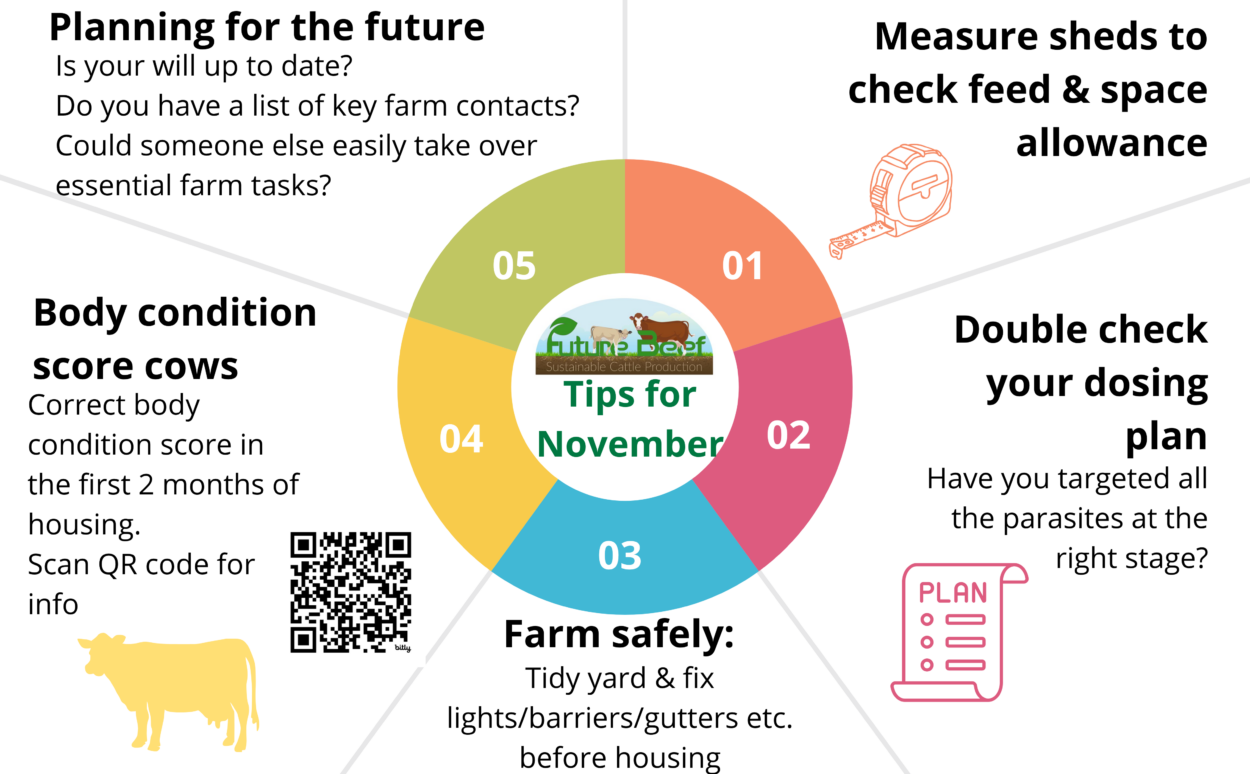
Top Tips for November
Upcoming Events:
- Mon 30th November at 5pm: Teagasc National Beef Conference at Hodson Bay Hotel, Athlone, Co. Roscommon where the theme will be ‘Profitable Beef Farming, Balanced Lifestyle’.
- Future Beef farmers Aonghusa Fahy and Olivia Hynes will be featuring in a panel discussion on the night. You can read more here.
Catch Up In Case You Missed It:
- Watch a recording of our ‘Maximising Profit from Weanlings’ webinar here:
- Watch back on our ‘Better Nutrition, Faster Finishing, More Profit’ webinar here:
Technical Update: Winter housing: Have your cattle enough space?
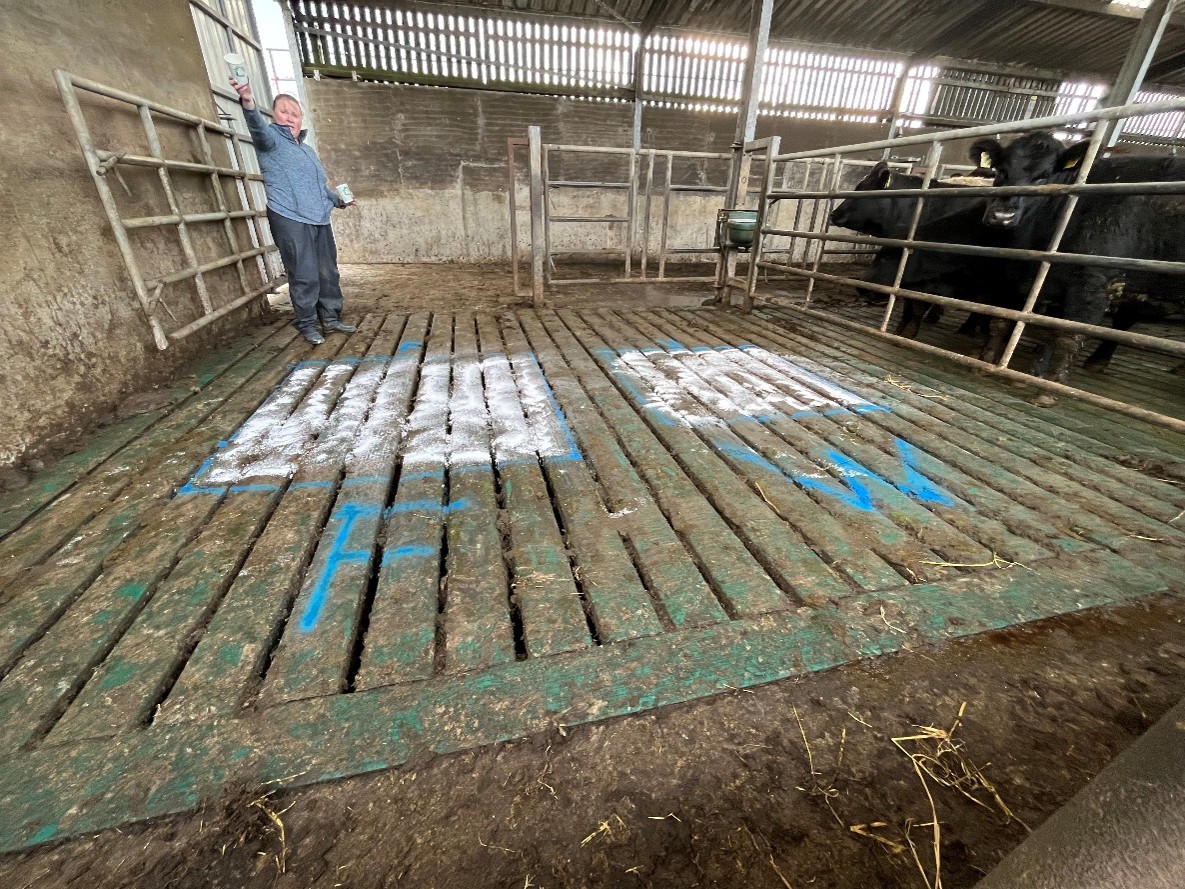
Measure feeding and lying space in each pen and stock accordingly
Adequate winter housing space allowance is essential for Irish beef farmers aiming to maximise cattle performance, health and welfare. The advice is to calculate pen capacity carefully to avoid overcrowding and ensure cattle have sufficient lying and feeding space throughout the winter.
Recommended space allowances vary by animal weight and housing type:
- Suckler cows require approximately 3m² per head on slats or 4–5m² on straw
- Weanlings weighing 220–300kg need 1.2–1.5m² on slats or 1.8–3m² on straw
- Store cattle weighing 310–450kg require 1.5–2m² on slats or 2.4–3m² on straw
- Finishing cattle need particular attention and range from: 2.2m² for 550kg cattle to 2.9m² for 800kg cattle on slats
Teagasc research highlights that 2m² per head is insufficient for finishing animals, with a minimum recommendation of 2.7m².
Feed space is equally important. Allow the following:
- Weanlings: 400–500mm per head when feeding concentrates and 225–300mm when feeding ad-lib roughage
- Store cattle: 500–600mm per head when feeding concentrates and 250–300mm when feeding ad-lib roughage
- Finishing cattle & suckler cows: 600–700mm per head when feeding concentrates and 400–500mm when feeding ad-lib roughage
Before housing, measure sheds, calculate stocking rates and allow for expected weight gain. Getting beef cattle housing, space allowance and feed access right can improve winter performance and farm profitability.
You can read more here.
Technical Update: Planning For The Unexpected On Your Farm
The Future Beef farmers met up recently to discuss how to be more prepared if an unexpected event occurred on their farm. Key questions included:
- Do you get regular health check-ups?
- Do you have financial protection in the event of illness or an accident? E.g. Through farm insurance, life assurance, income protection, Farm Relief policy, serious illness cover or accident policies
- Does your farm insurance provide appropriate cover for temporary or relief workers?
- If someone was to run your farm in the morning, what key information would they need? Have you a whiteboard on the farm where some of this information is recorded? For example:
- Essential contacts: vet, merchant, feed supplier, contractor, accountant, solicitor and bank.
- A farm map showing paddock names and numbers
- Livestock routines: feeding, watering, calving, lambing where relevant, animal health, medicines, emergency procedures, bale stacks labelled for poor/good quality silage, herd health plan.
- Breeding: AI dates, bull details, scanning, calving dates, breeding records, how to access calving camera.
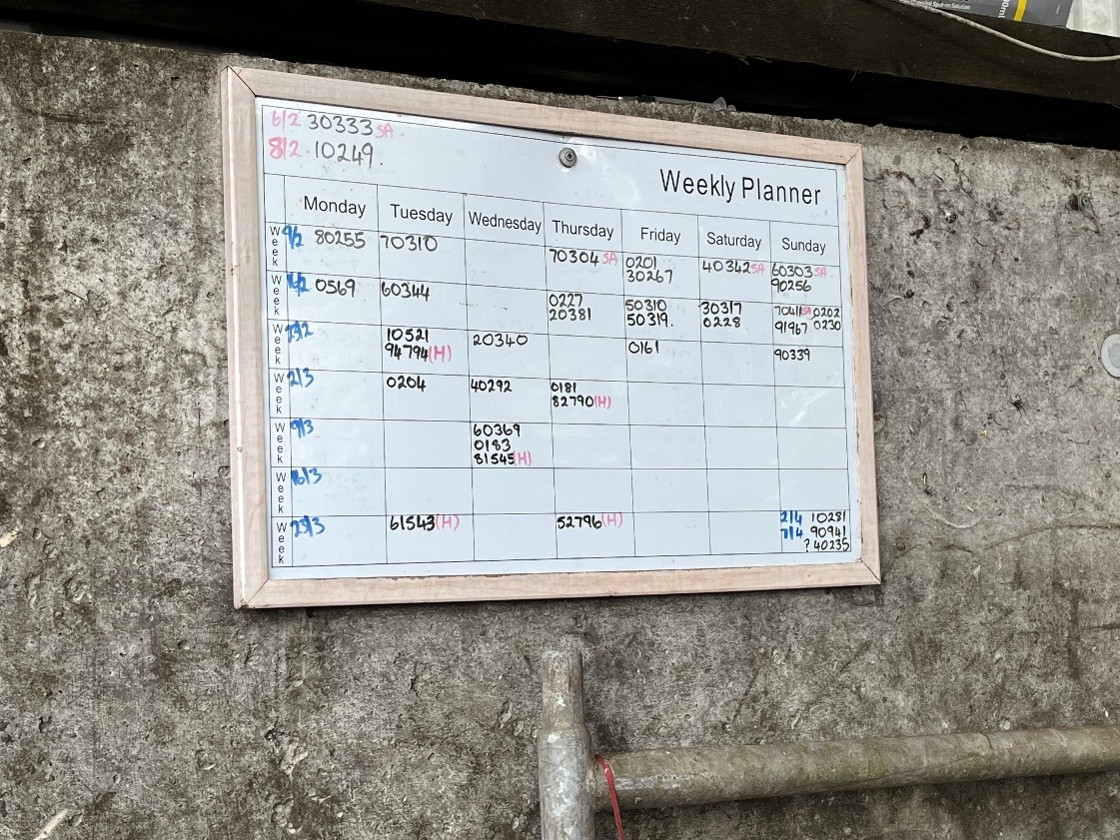
Whiteboard in a farm shed with expected calving dates for cows & heifers
- Grassland: farm and paddock maps, Eircodes for outfarms, keys for locks, electric fencer, paddock numbers, water supplies & location, gates and temporary vs. permanent fencing.
- Machinery: keys, starting and operating key equipment, fuel, maintenance, safety instructions, coloured cable ties to mark where pipes for machinery go.
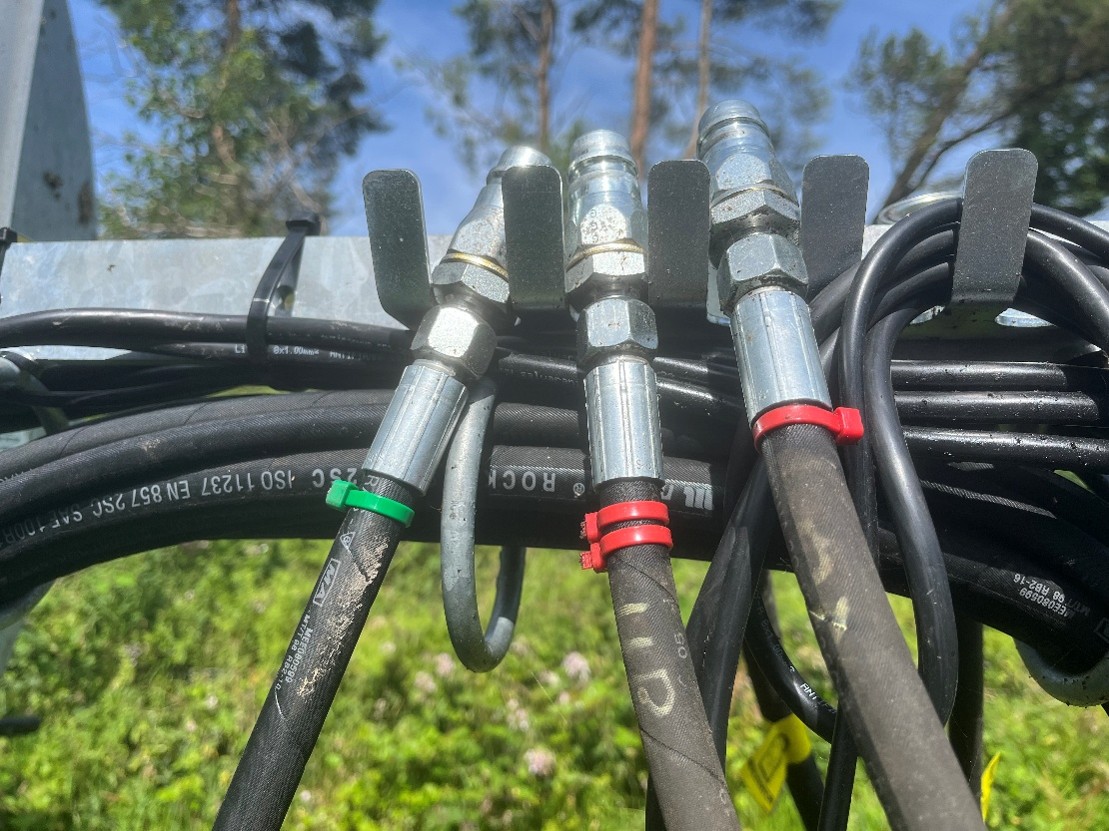
Coloured cable ties can show where hydraulic pipes are to be connected
- Contractors: who to call for slurry, fertiliser, silage, reseeding, repairs and relief labour.
- Farm administration: herd number, livestock records, nitrates obligations, schemes, deadlines, inspections and online systems.
- Access and authority: who can access records, communicate with agencies and make decisions, and what permissions are required?
- Note: Document to follow on the Future Beef website
5. What other personal details would your family need to know? For example:
- Insurance policies, renewal dates and claims contacts.
- Bank, loan and mortgage details; where statements and financial records are kept.
- Accountant, solicitor, land ownership and tenancy documents.
- Herd number, scheme details, application deadlines and relevant correspondence.
- Where important documents are stored and who is authorised to access them.
6. Have you an up-to-date will? Do your family members know where to locate it?
Having a back-up plan in place can save a lot of stress on yourself and family members.
Farm Update: Planning Ahead for Breeding and Finishing Success on Ed’s Farm

Ed with his mother Breda
Ed is farming 39ha in 3 main land blocks in Meelin, Co. Cork, which includes a Special Protection Area (SPA). He operates a a 24-cow suckler-to-weanling system and a dairy calf-to-beef enterprise with 70 calves. He uses 100% AI in the suckler herd and Commercial Beef Value (CBV) is a major focus when buying his dairy-bred calves. He works full-time off farm.
Autumn calving is nearly complete on Ed’s farm, with 18 live calves on the ground. Attention has now turned to suckler cow fertility and breeding management, with a pre-breeding scan carried out two weeks before breeding commenced on 12 October.
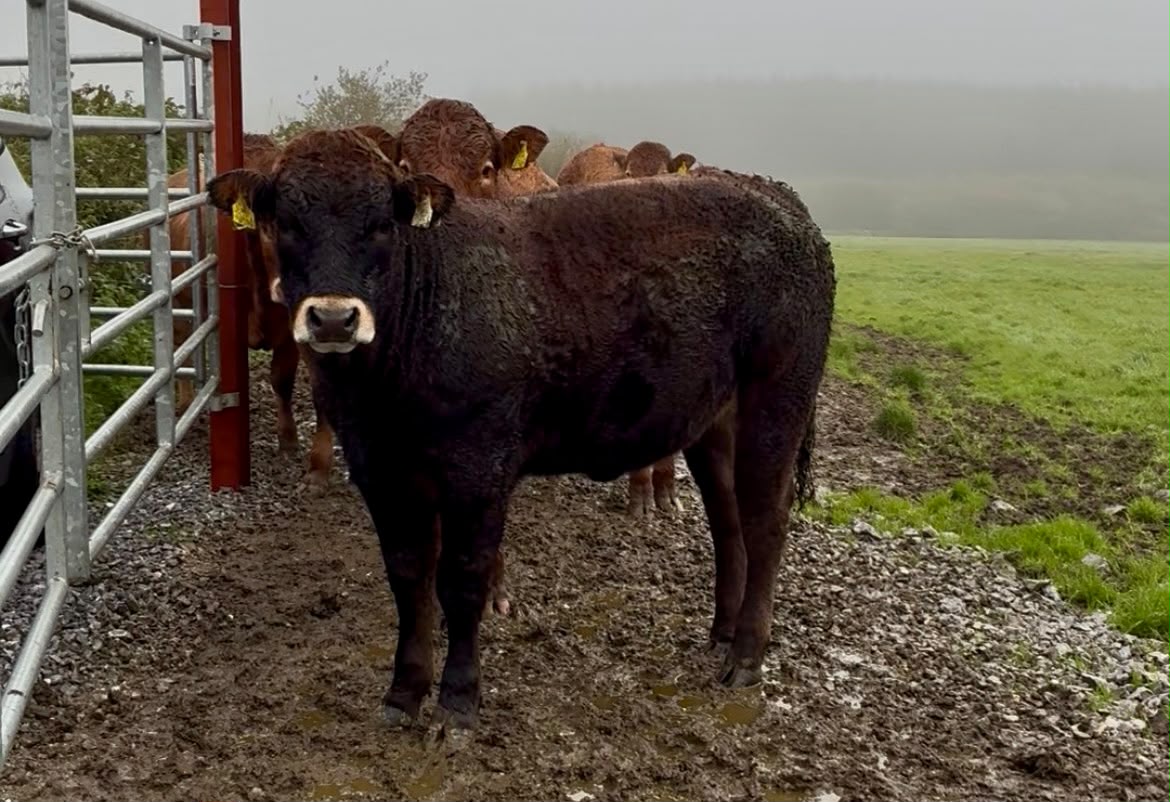
Some of the calves
The pre-breeding scan identified two cows with potential reproductive issues. Both cows were subsequently treated, highlighting the importance of early scanning and intervention to improve cow fertility and prepare the herd for the breeding season.To date, 15 cows have been inseminated using AI, with the majority receiving sexed semen. Ed has used sexed male semen from Drumline S 1185 (LM9577) and Sliabh Feilim Sterling (LM8929), alongside sexed female semen from Brontemoor Salering (LM9655) and Sliabh Feilim Sterling (LM8929).
Managing silage supplies and cattle finishing
Ed’s dairy-beef cattle are currently being fed silage alongside 8–11kg of concentrate meal per head daily. With silage reserves relatively tight this winter, he has increased concentrate feeding to help stretch available silage supplies while maintaining cattle performance.
The target is to have the steers ready for slaughter during the second week of November, at approximately 22 months of age. Careful feed management will be important to achieve the desired finishing performance while making the best use of available winter forage.
How is Ed managing tight silage supplies while keeping his dairy-beef cattle on track for finishing? Watch the full video to hear more about his suckler breeding programme, use of sexed semen, feeding strategy and plans for finishing cattle.
You can read more about Ed’s farm here.
Farm Update: 100% scanning success as autumn farm work gathers pace in Roscommon
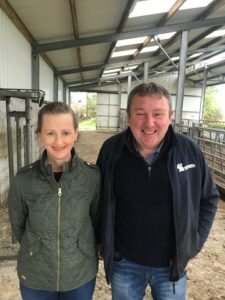
Shane and his wife Gráinne
Shane Keaveney is farming 44ha alongside his wife Gráinne and their 3 children in Ballinlough, Co. Roscommon. They have 40 spring-calving cows with bulls finished under 16 months of age with heifers not kept for breeding sold as forward stores. They run a Charolais stock bull and have used a Saler stock bull for breeding replacements in the last 2 years. They also buy in 34 dairy beef calves that are sold from the farm under 22 months of age.
They are busy this autumn with the following tasks underway:
- 100% scanning success: Shane and Grainne scanned 46 suckler cows and heifers on 2 October, all of which were confirmed in-calf to either the Salers or Charolais stock bull.
- Suckler calf management: Calves were weaned in mid-September using nose paddles for 5–7 days pre-weaning. The second Bovipast booster was administered on 29 September, with lungworm and fluke treatments due.
- Dairy beef health: Calves affected by stomach worms (498 eggs per gram) and mild coccidiosis were treated promptly and recovered well. Dairy beef bulls gained 0.79 kg/day, while heifers gained 0.78 kg/day since August.
- Redstart for winter feed: A Redstart catch crop was sown on 20 August to provide winter grazing for 30 dairy beef weanlings while new housing is completed. Cattle will graze for approximately four weeks, supplemented with high-quality silage and 1–2 kg of ration daily.
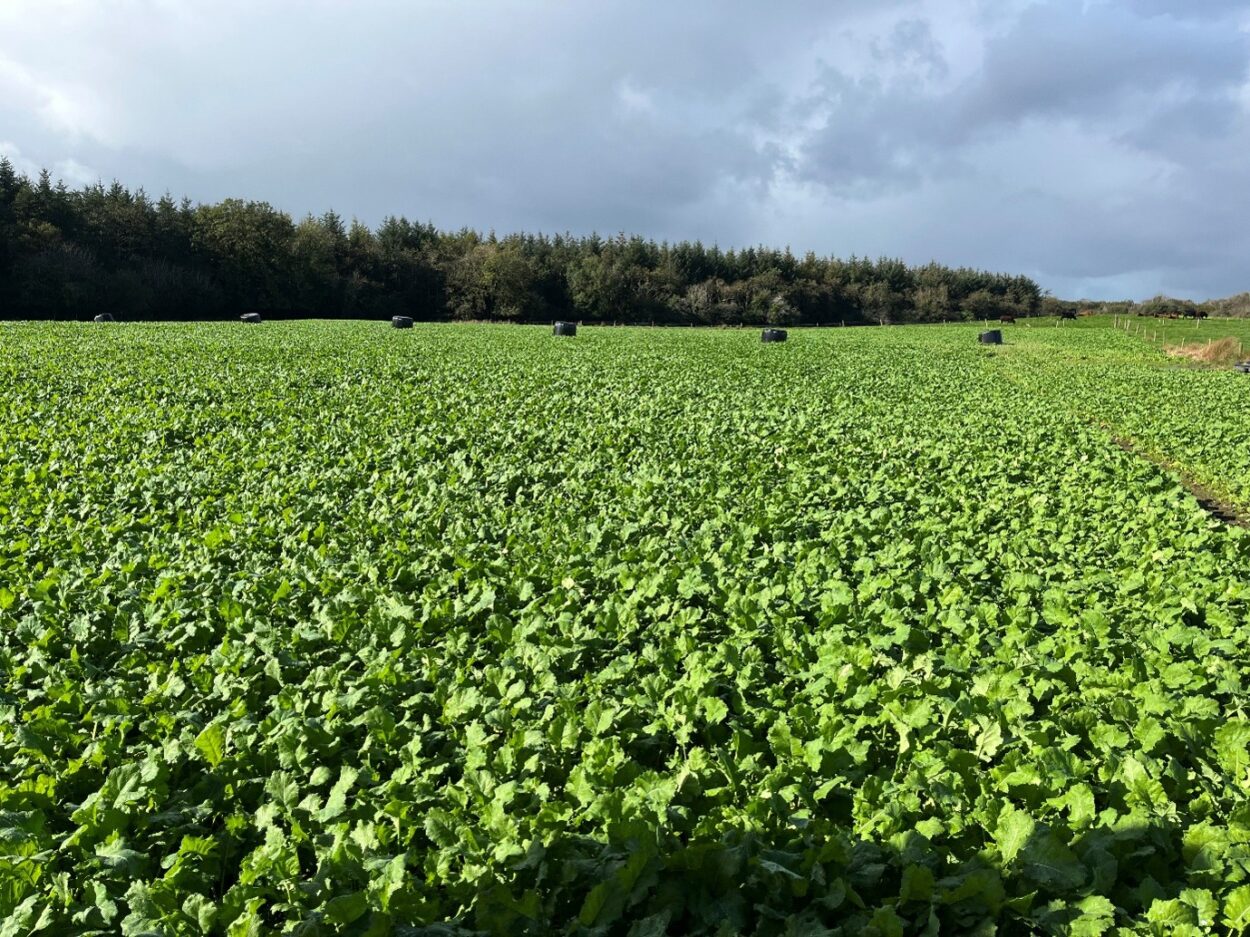
Redstart crop with bales in situ
- Safe catch crop grazing: A 4 m watercourse buffer, adequate lie-back area, gradual crop introduction and mineral supplementation will support animal health and environmental protection.
- Beef performance: Fourteen suckler bulls averaged 379 kg carcass weight at 15.4 months, returning €2,507/head. Five dairy beef bulls averaged €1,741/head.
- Farm investment: A new slatted tank and shed are progressing, supported by TAMS grants of 60% for the tank and 40% for the shed, with housing targeted for Christmas
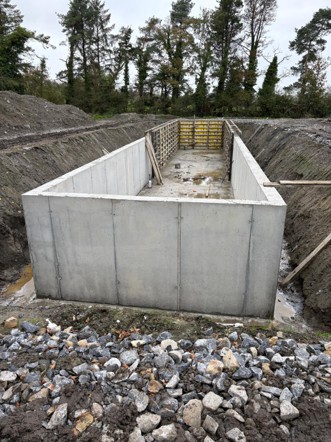
The new tank is progressing well
You can read more about Shane and Grainne’s new slatted unit and latest weights and sales here.
The Beef Edge Podcast
The Beef Edge is Teagasc’s weekly podcast covering news, information, tips and advice for beef farmers. It is available on iphone, Android and Spotify. Scan the QR code below or visit the Teagasc Beef Edge podcast.